The Ultimate Guide to Scaffold Plank Load Capacity: Standards, Charts, and Safety
Dec 18, 2025Every day in the construction or engineering sector, Man's greatest enemy — gravity — puts us one step closer to tragedy. Without being able to see them, we depend on temporary (scaffolding) structures and put our lives in jeopardy based on what we stand on. Of all the materials we use when constructing a scaffold, we primarily rely on the quality of the scaffold plank for our safety.
Additionally, understanding and working with scaffold plank load capacities are essential requirements to avoid life-threatening accidents. (Assuming you fall within the industry, as a scaffolding rental company, construction project manager, or materials supplier) To remain compliant, you must understand the limitations of your equipment.
This guide discusses in detail the technical specifications, OSHA standards, materials that comprise a plank, and the total amount of weight a scaffold plank is capable of supporting safely.
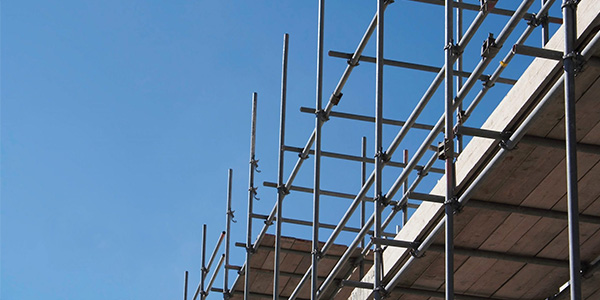
OSHA (Occupational Safety and Health Administration) reports that in any given year, scaffolds are involved in a large number of violations and injuries within the construction industry. Because scaffolds are a common area where workers are exposed to potential hazards, overloading is often a primary reason for the collapse of structures.
A plank that fails is more than just a broken piece of wood or metal; it is representative of:
Choosing the right type of plank with the appropriate rated load for use as a first line of defence against these potential activities is a key consideration for the procurement and safety manager.
The first thing you need to do when calculating the capacity of a scaffold is to identify the different types of loads that a scaffold can support:
What to Keep in Mind: When determining the scaffold plank's load capacity, we are primarily concerned with how much Live Load it will safely hold without deflecting more than the allowable amount (usually 1/60th of the total span).
In the United States, the OSHA Standard 1926.451 establishes guidelines for scaffolds and load capacities. There are three basic categories of scaffold duty ratings, which will assist you in deciding on the appropriate plank configuration for your project.
Note: Scaffolds must be capable of supporting their own weight and at least four times the maximum intended load. This 4:1 safety factor is a critical buffer for unexpected stresses.
The load capacity is heavily influenced by the material of the plank. For trading companies and distributors, offering the right mix of inventory is vital.
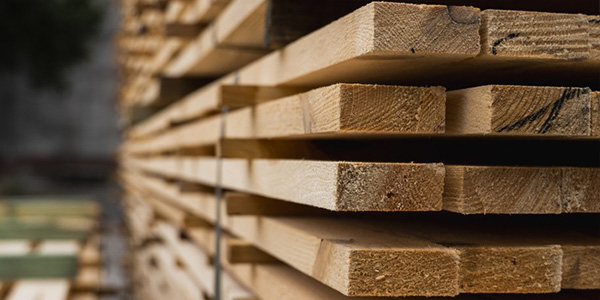
Traditional solid wood planks are still widely used. However, they are susceptible to inconsistencies such as knots and grain slope, which can affect strength.

LVL is made from a number of layers of wood that have been put together using glue to form a composite material.
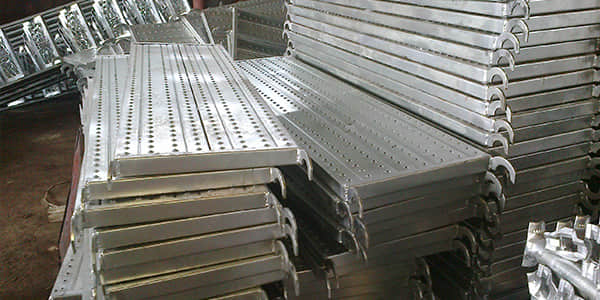
Metal planks often come with built-in hooks and non-slip surfaces.
One of the most common mistakes on job sites is ignoring the span—the distance between the scaffold transoms (supports).
|
Span (ft) |
Safe Working Load (psf) |
Duty Rating |
|
6 ft |
75 psf |
Heavy Duty |
|
8 ft |
50 psf |
Medium Duty |
|
10 ft |
25 psf |
Light Duty |
Even a plank rated for 75 psf can fail if it is damaged. Before every shift, a "competent person" (as defined by OSHA) must inspect the planks. Here is what to look for:
When sourcing scaffold planks for your inventory or your construction site, "scaffold plank load capacity" should be your primary filter. While cost is always a factor, the price difference between a certified, high-capacity LVL board and an ungraded lumber piece is negligible compared to the cost of an accident.
For rental companies, stocking high-capacity, engineered planks is a selling point that assures your clients of reliability. For construction firms, adhering to strict load capacity calculations is the hallmark of a professional, safety-conscious operation.
Ensure your team is trained, your materials are certified, and your calculations are accurate.
Do not leave safety to chance. Whether you need high-grade LVL scaffold planks or durable steel boards that meet rigorous international standards, we are here to help.
[Contact Us Today] for a consultation on the best scaffolding materials for your specific load requirements, or request a quote for our certified safety planks.
Scaffold planks must be inspected by a competent person before each work shift and after any occurrence that could affect their structural integrity (such as a storm or an impact).
Visual Check: Look for end splits, saw cuts, notches, rot, or insect damage.
Sound Check: Some inspectors tap the wood to hear for internal rot (good wood sounds solid; rotten wood sounds hollow or dull), though visual inspection is primary.
No. You should generally avoid painting scaffold planks with opaque finishes. Paint can hide defects like cracks, splits, or rot, making visual inspection impossible.
Exception: You may coat the ends of the planks to prevent splitting, or use a transparent/slip-resistant preservative that does not obscure the grain.
Tags :
Phone : +86 -13922304881
Email : aj-steven@dghualifeng.com.cn


Friendly Links :
Kitchen Cabinet© 2025 Guangzhou AJ Building Material Co.,Ltd All Rights Reserved


 en
en fr
fr es
es