Dependent vs. Independent Scaffolding: A Comprehensive Technical Guide
Jan 19, 2026Choosing the best way to provide access to your construction project is essential to its success. The overall goal of providing a safe work environment is achieved differently depending on the kind of scaffolding that will be used.
Most likely, you will see two different types of scaffolding at your job site or while executing your duties. Both dependent scaffolding and independent scaffolding can be classified as the same type of scaffolding. However, each has unique features associated with each scaffolding system. Knowing the differences between these two types of scaffolding allows you to properly erect them according to building codes.
In this article, you will learn about the many differences that exist mechanically between the two systems, as well as when you need to use one versus the other.
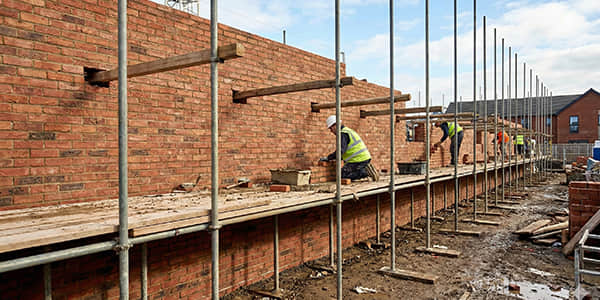
The terms putlog (or single) scaffolding are commonly used by builders to describe dependent scaffolding. Dependent scaffolding has been defined by some as having no independent support and therefore relies on the wall or other structures that surround its base for continued support.
Dependent scaffolds, or scaffolds that rely on a single set of vertical supports (standard) and transverse horizontal putlogs to connect to the platform above, rely on both vertical and horizontal supports for their stability. The vertical support members are located on one side of the scaffolding system, while the transverse members provide support to the platform by connecting to the supporting verticals.
Historically, in bricklaying, there has been dependent scaffolding (i.e., scaffolding that is attached to the wall as it is being built). The support of the dependent or continuous scaffold will always be through the wall as it goes up. A dependent scaffold tends to be a cost-effective option for simpler masonry jobs because once the dependent scaffold is removed from the wall, filling in the small holes left by the putlogs is relatively easy (pointing).
Requires fewer tubes and fittings (single row of standards).
Directly interacts with the building fabric.
Generally limited to brick and block construction.
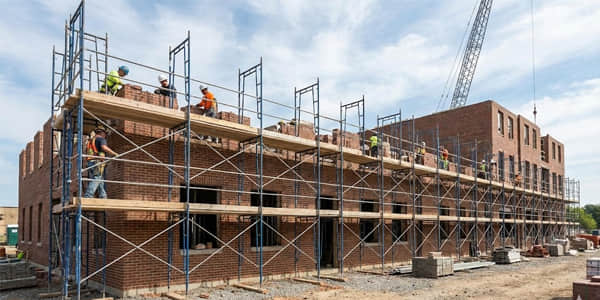
Independent scaffolding, widely known as Double Scaffolding, is the most versatile and commonly used system in modern construction.
The defining feature of this system is that it is structurally self-supporting regarding vertical loads. It does not rely on the building to carry the weight of the platform, materials, or workers.
Because it does not need to penetrate the wall for vertical support, independent scaffolding is the standard solution for:
Having two rows of standards will result in a greater quantity of material required.
It's also non-invasive in that it will not change or add to the vertical load-bearing capacity of the building.
It's able to handle both large quantities of loading and the storage of materials.
To clearly distinguish between the two systems, consider the following comparison based on structural components and usage:
|
Feature |
Dependent (Putlog) Scaffolding |
Independent (Double) Scaffolding |
|
Standards |
Single row of vertical tubes. |
Double row of vertical tubes. |
|
Wall Interaction |
Invasive: Putlogs rest inside the wall. |
Non-Invasive: Stands close to the wall (needs ties only). |
|
Vertical Support |
Support is vertically provided by the base and wall of the building |
Supported entirely by the ground (via standards). |
|
Components |
Uses Putlogs (flattened ends). |
Uses Transoms (standard tubes). |
|
Hole Patching |
Required (putlog holes must be filled). |
Not required (surface remains intact). |
|
Primary Use |
New brickwork construction. |
General access, stone masonry, renovation. |
When choosing a scaffold system for a construction project, there are technical considerations to take into account:
1) Foundation - the existing foundation material of the building.
Natural stone foundations will only allow Independent Scaffold Systems to be used. A dependent system can only be constructed using masonry (smaller bricks/tiles/blocks) following standard putlog sizes/dimensions.
2) Loading Requirements - load requirements on independent scaffolds will typically be easier to configure than those of dependent scaffolds; independent scaffolds have a double row system, which means additional reinforcing capacity and therefore safer storage of pallets of heavy materials located on the lift area of an independent scaffold.
3) Finish Quality - a high-quality finish is one of the top priorities in preparing and applying a finish. Independent scaffolding will allow workers easy access to all surfaces, resulting in a lessened need to patch holes and the elimination of colour discrepancies from the use of different materials used for patching holes.
Bricklaying & Masonry's Dependent System (Putlog) is a system of scaffoldings that can give the trades a cost effective and efficient means to erect their new work and finish their projects, compared to using an Independent System. The Independent Double Scaffold System provides a non-intrusive way to construct and erect scaffoldings and also provides flexibility in the usage of the Dependent varies for different types of construction and maintenance projects. Weight loads are higher in Dependent Systems compared to Independent Systems; therefore, Portable Systems will be usable on large, medium, and small jobs, in all types of construction and maintenance.
When deciding what type of scaffolding system to use, it is essential to take into account product costs, but as equally important are the limitations of your scaffolding systems, the limitations, rules, and regulations of each specific building where the scaffolding will be used.
If you would like our help deciding on the correct materials and configurations for your project, please reach out to us through the appropriate means of communication. We will be happy to provide you with the best solutions for your site.
Why is dependent scaffolding often called "Putlog Scaffolding"?
Does independent scaffolding require ties to the building?
Is independent scaffolding more expensive than dependent scaffolding?
Email : aj-steven@dghualifeng.com.cn


Friendly Links :
Kitchen Cabinet© 2026 Guangzhou AJ Building Material Co.,Ltd All Rights Reserved


 en
en fr
fr es
es