For some, painting very tall walls/ceilings will pose ups and downs on either side of the spectrum for project managers and individuals doing their own home improvements (DIY). For many years, scaffolding has been a go-to solution for projects in this arena, and although it has proven to be reliable, scaffolding can also be cumbersome and expensive, including needing major setup time, needing major structural space, and oftentimes major rental costs associated with it.
With technological advances related to painting tools and equipment today, it is possible to paint and achieve professional-level results without relying on scaffolding by using the ground as your working platform. If you wish to decrease the costs associated with project overhead, or if you wish to perform your project faster than previously possible, master the art of painting to “maximum height” without scaffolding, change a project.
To assist you with successfully completing painting all vertical heights, we have put together a complete guide to all of the tools, techniques, and safety requirements for completing such projects safely and with ease.
1. The Essential Toolkit for High-Reach Painting
To bypass the need for a metal forest of scaffolding, you must invest in the right high-reach gear. The goal is to extend your reach while maintaining the same precision and pressure you would have at arm’s length.
Extension Poles: The Backbone of Your Project
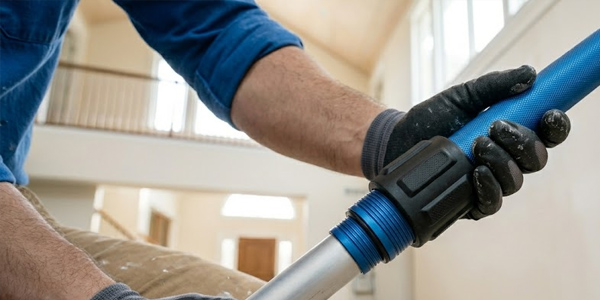
One of the most important tools for doing your job correctly is a quality telescoping extension pole. Don’t use a cheap, lame wooden stick to help you out; most professional-quality poles are made either out of fiberglass or aluminum.
- Length: Extension poles are generally available in lengths of anywhere between 4 and 20+ feet in length.
- Looks: Search for locks that are either a “Quick-Click” locking device or a “Power Lock”, which are all designed to ensure that the pole remains in position without collapsing or twisting while you are applying pressure against the wall.
Specialized Brush Extenders
- Sometimes, a roller isn’t enough. For cutting in corners or painting trim at height, you need a brush extender. This tool clamps onto your paintbrush and attaches to the extension pole, allowing you to adjust the angle of the brush to match the intersection of the wall and ceiling.
The Right Rollers and Sleeves
- Friction and paint retention become of particular importance when painting at a distance. Therefore, it is important to select a heavy-duty roller frame that does not flex when using a long pole. Additionally, using high-capacity microfiber sleeves that hold more paint will minimize how many times you have to lower the pole to the paint tray.
2. Advanced Preparation: Setting the Stage
Painting high walls requires more prep work than standard rooms because fixing a mistake at 15 feet in the air is twice as difficult as fixing one at eye level.
Cleaning High Surfaces
- High corners are usually the place where dust and spider webs accumulate. To remove dust and debris from surfaces, you can use a vacuum cleaner with a long extension or a microfiber duster attached to an extension pole. Dust will prevent paint from adhering to it, and debris stuck to your roller will leave ugly textures on your painted surface.
Protecting the Perimeter
- Using a long pole will give you a leverage advantage, but it also increases the likelihood of drips happening; therefore, canvas drop cloths are preferable since they absorb any paint that spills, rather than allowing the paint to pool on top of the plastic surface, which could get tracked out of the area.
3. Mastering the "Cut-In" Without a Platform
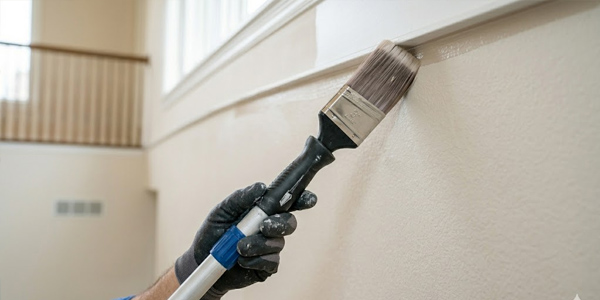
The "cut-in"—painting the edges where the wall meets the ceiling—is the most technical part of any job. Doing this from the ground requires a steady hand and the right setup.
The Swivel Tool Technique
Using an adjustable brush tool on an extension pole, set the angle so the bristles are perpendicular to the ceiling line.
- Load Sparingly: Dip only the tip of the brush in paint to avoid drips running down the pole.
- Steady Pressure: Place the brush an inch below the line, then slowly "push" the paint up to the edge.
- The "Slow-Motion" Rule: Movements with a 12-foot pole should be slow and deliberate. Rapid movements create centrifugal force, causing paint to splatter.
4. Rolling Technique: Efficiency and Uniformity
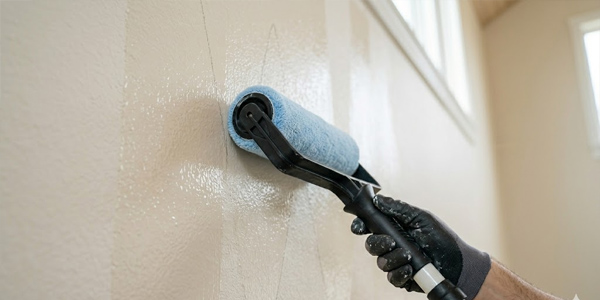
Rolling a high wall requires a different physical approach than standard painting. It is as much about ergonomics as it is about aesthetics.
The "W" Pattern
To ensure even distribution, use the "W" or "M" technique. Start at the top of the reachable section and roll a large "W" on the wall, then fill in the gaps without lifting the roller.
Vertical Strokes and Overlapping
- Bottom-Up: Always start your stroke from the bottom and push upward. This prevents the weight of the paint-heavy roller from causing runs at the top.
- Overlapping: Each pass should overlap the previous one by about 50%. This "wet-on-wet" technique eliminates "holidays" (missed spots) and ensures a seamless finish.
5. Safety Protocols: Working Smart
Even without scaffolding, working at height involves risks. Whether you are using tall ladders or long poles, safety is paramount.
Ladder Safety (The 4-to-1 Rule)
If you must use a ladder to reach the mid-point of a high wall:
- Placement: For every 4 feet of height, the base of the ladder should be 1 foot away from the wall.
- Three Points of Contact: Always maintain two hands and one foot, or two feet and one hand, on the ladder.
- Level Ground: Never use bricks or scrap wood to level a ladder; use dedicated ladder levelers.
Managing Physical Strain
Painting with an extension pole is physically demanding on the shoulders and lower back.
- The Power Stance: Stand with one foot forward and one foot back to create a stable base.
- Switch Sides: Regularly swap your lead hand to prevent repetitive strain on one side of your body.
6. When Scaffolding Alternatives Aren't Enough: The Hybrid Approach
While poles and ladders handle most situations, some architectural features (like winding staircases or domed ceilings) may require a hybrid approach.
Aerial Lifts: For large-scale commercial projects, a scissor lift or "cherry picker" can be more efficient than scaffolding. They are mobile, take up less floor space, and can be adjusted instantly.
Work Platforms: A simple, adjustable work platform (bridging two ladders) can provide a stable base for areas that require intricate detail work without the footprint of full-scale scaffolding.
7. Conclusion: Professional Results at Any Height
Painting high walls without scaffolding is not just about saving money—it’s about streamlining your workflow and maintaining a safer, less cluttered job site. By equipping yourself with high-grade extension poles, mastering the art of the long-distance cut-in, and adhering to strict safety standards, you can achieve a flawless finish that rivals any platform-based job.
Consistency, patience, and the right equipment are the keys to turning a daunting vertical task into a manageable and successful project.
Ready to Elevate Your Next Project?
If you're planning a large-scale renovation or need professional-grade equipment to tackle high-reach challenges, we are here to help. Contact us today to explore our range of high-performance painting tools, or speak with our experts to find the best solutions for your specific project needs. Let’s make your vision a reality—safely and efficiently.
FAQ
Is it safe to paint a two-story wall without scaffolding?
- Yes, it is safe as long as you use the correct equipment and follow safety protocols. Professional-grade telescopic extension poles allow you to stay firmly on the ground while reaching heights of up to 20 feet. If a ladder is required for mid-level work, ensure it is placed on a level surface following the 4-to-1 safety rule and never overreach sideways.
What is the best extension pole length for high walls?
- For standard high ceilings (around 10-12 feet), a 4-to-8 foot adjustable pole is usually sufficient. For two-story foyers or Great Rooms (15-20 feet), you will need a heavy-duty pole that extends to 16 or 24 feet. Aluminum or fiberglass poles are recommended over wood to prevent bending and ensure better control.
How do I "cut in" the ceiling line without a platform?
- Cutting in (painting the edges) from the ground requires a swivel paintbrush extender. This tool allows you to lock your brush at a specific angle. By using a slow, steady motion and loading the brush with a minimal amount of paint, you can create a clean line where the wall meets the ceiling without ever leaving the floor.



 en
en fr
fr es
es