The Ultimate Guide to Scaffold Electrical Safety: Mitigating Risks and Ensuring Compliance
Apr 13, 2026On a construction site, scaffolding and electricity present a significant risk. Scaffolding allows access at high elevations; however, because of its metal components, scaffolding is also a very good conductor of electricity. According to the construction industry safety reports, approximately 15% of construction worker fatalities are related to electrical hazards; a large number of these fatalities occur when scaffolding comes into contact with energy sources from overhead power lines.
This guide will discuss the necessary components to consider when implementing scaffold electrical safety and include tools to help protect your employees, such as actionable information, technical information, and checklists.
Knowing how serious electrical dangers are is the starting point for stopping them from happening. Information from safety groups shows some key things:
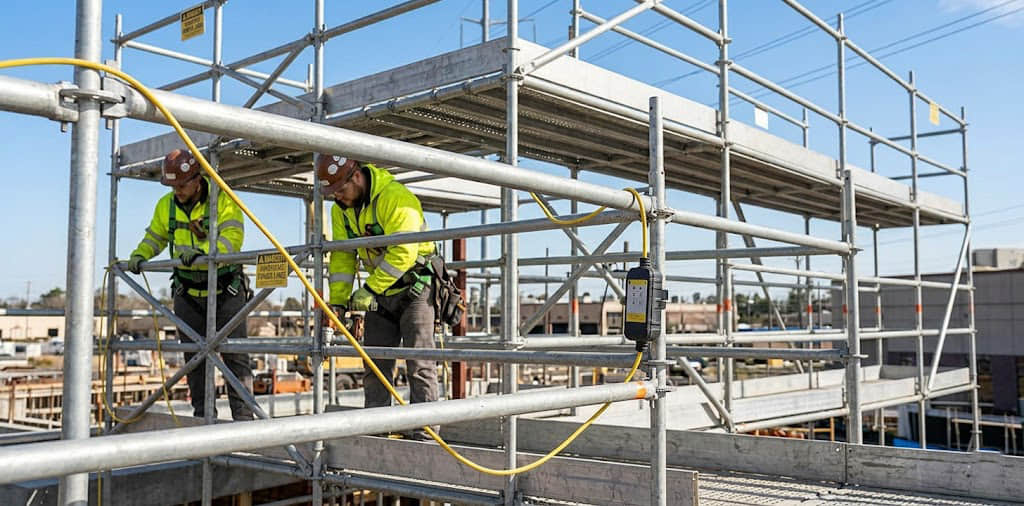
The most effective way to prevent electrocution is to maintain a strict buffer zone. OSHA and international safety standards dictate specific clearances based on the voltage of the power lines.
|
Voltage (Nominal, kV, Alternating Current) |
Minimum Clearance Distance (Feet) |
Minimum Clearance Distance (Meters) |
Required Action |
|
Less than 50 kV |
10 Feet |
3.05 Meters |
Standard safe buffer zone. |
|
50 kV to 200 kV |
15 Feet |
4.60 Meters |
Increased monitoring; line markers suggested. |
|
200 kV to 350 kV |
20 Feet |
6.10 Meters |
Pre-job coordination with the utility company. |
|
350 kV to 500 kV |
25 Feet |
7.62 Meters |
Professional insulation or de-energization. |
|
Over 750 kV |
45 Feet |
13.72 Meters |
Maximum protection; site-specific engineering required. |
Note: If the voltage is unknown, maintain a minimum of 20 feet until a qualified utility representative confirms the actual voltage.
You cannot have a scaffold without having a Ground Fault Circuit Interrupter (GFCI). A GFCI monitors the flow of the current. A GFCI detects a differential of as little as 5 milliamperes of the current between going in and coming out of a tool, indicating that there is leakage of current, possibly through the worker's body.
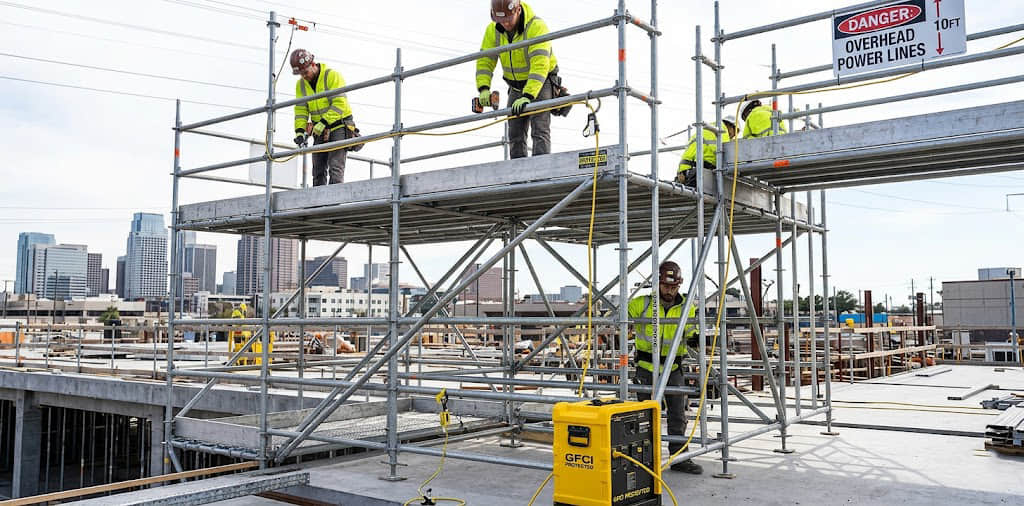
Use the following table as a daily reference for your safety officers and site foremen.
|
Inspection Item |
Action Required |
|
Overhead Lines: Are there any overhead wires within 10ft of the scaffold? |
If Fail: Relocate the scaffold or contact the utility. |
|
Grounding: Has the scaffold been grounded in a way that prevents static and/or leakage? |
If Fail: Install grounding clamps/rods. |
|
Tool Condition: Are all of the electric tools insulated and in good condition? Is there any damage to the cords? |
If Fail: Remove the tool from service immediately. |
|
GFCI Protection: Are all of the electrical sources protected by GFCI devices that have been tested? |
If Fail: Install portable GFCI adapters. |
|
Worker Training: Has each person who works on the scaffold received training on the hazards associated with using electricity? |
If Fail: Conduct "Toolbox Talk" before work begins. |
|
Conductive Materials: Are metal pipes, rebar, or any other conductive materials kept away from electrical conductors? |
If Fail: Assign a dedicated spotter. |
In tight urban environments where the "10-foot rule" is physically impossible to maintain, contractors must implement secondary defenses:
If a scaffold becomes energized due to a line strike:
Electric safety on scaffolds is not only a compliance requirement, but also a technical need. When construction companies adhere to the minimum distances outlined in Table 1 and follow the checklist items found in Table 2, they help to minimize their liability and protect their single greatest asset - workers.
Don't wait for an accident or a building inspection to raise your safety standards and create a safer working environment.
Call our Engineering Team today for an individual Scaffold Safety Assessment. We will provide you with all the information and equipment required to comply with OSHA Regulations and deliver Professional Training for Site Safety - to make sure your project stays on schedule and continues to be safe.
According to OSHA standard 1926.451(f)(6), the minimum clearance for power lines with a voltage of up to 50kV is 10 feet (3 meters). For any lines over 50kV, the distance should be increased by 0.4 inches for every additional 1kV.
Extreme caution is required. While scaffolding can be used in light rain, electrical work should be suspended if tools or the scaffold itself become wet. Water significantly increases conductivity, and the risk of a GFCI tripping or a short circuit becomes much higher. Always ensure all electrical connections are weather-protected.
Yes. Fiberglass (GRP) scaffolding is non-conductive, making it the preferred choice for electricians and maintenance teams working near high-voltage sources. While more expensive than steel, it eliminates the risk of the structure becoming energized, providing an essential secondary layer of protection.
Tags :
Email : aj-steven@dghualifeng.com.cn


Friendly Links :
Kitchen Cabinet© 2026 Guangzhou AJ Building Material Co.,Ltd All Rights Reserved


 en
en fr
fr es
es