The Ultimate Guide to Scaffolding System Types: Pros, Cons, and How to Choose
May 21, 2026Scaffolding systems have developed over recent years to support three main goals: The safety of employees, increased productivity, and the stability of the scaffolding system in relation to external environmental influences and various loads. Whether it is a high-rise building, an industrial plant like a refinery, or a maintenance measure for structures of infrastructure, the scaffolding system is the temporary safety basis for the workforce.
Temporary construction structures are used for building all over the world. Choosing the right scaffolding for a project can take a lot of time to get the scaffolding up to speed, and it also costs a lot of extra time and presents a number of problems for the project manager. Not only does it slow down the project whilst the worker attempts to ensure that the larger number of workers required will take to complete the work safely.
In this guide, we will look at the mechanics behind the temporary building staging systems available worldwide, outline their advantages and disadvantages, and also take a look at their areas of application to help you decide whether to purchase a scaffolding system or to rent scaffolding.
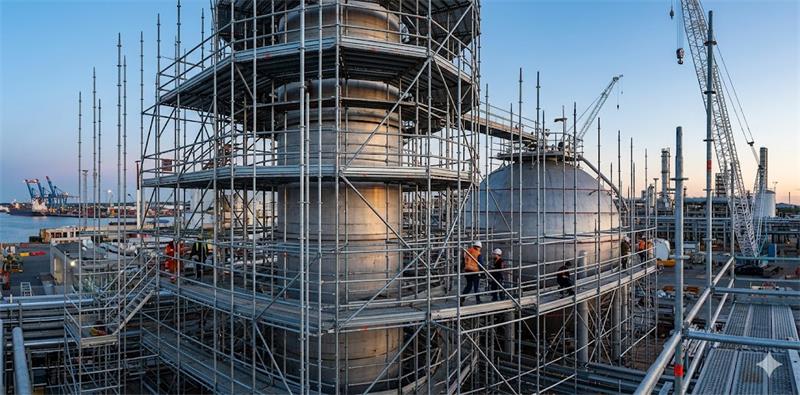
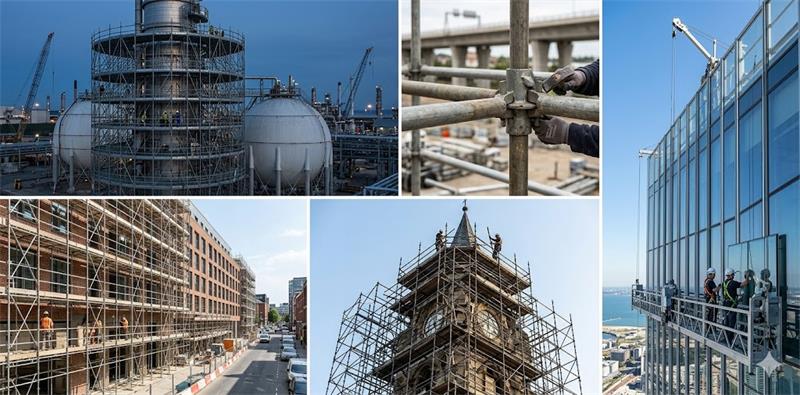
Modular scaffolding systems, also known as system scaffolding, typically are made up of pre-fabricated uprights (posts) and corresponding ties, etc., together with other components that are connected at fixed connection points for the scaffolding. This form of access is becoming more the norm for large sites worldwide, especially as it offers rapid construction, as well as a high loading capacity when compared to other forms of access construction.
All the scaffolding systems used around the world, the two most popular scaffolding systems available in the global market are among
The Ringlock system is highly regarded for its versatility and speed. Its defining feature is a circular rosette welded onto the vertical standard every 500mm, allowing up to eight attachments (ledgers and braces) to be connected at various angles using a secure wedge pin mechanism.
Pros:
Cons:
Cuplock is another globally utilized modular system. It uses a unique "cup" locking mechanism where a fixed lower cup and a sliding upper cup lock up to four horizontals together with a single hammer blow.
Pros:
Cons:
Frame scaffolding is the most recognizable type of temporary staging, heavily utilized in commercial and residential sectors across North America and parts of Asia. It relies on prefabricated welded steel or aluminum frames connected by cross braces to form rigid towers.
Pros:
Cons:
Often called "tube and clip" or "loose pipe" scaffolding, this traditional method relies on two core components: steel or aluminum tubes and various types of couplers (swivel, right-angle, and sleeve).
Pros:
Infinite Adaptability: Because there are no fixed connection points, tubes can be cut and clamped at any height, depth, or angle. It can conform to virtually any structural anomaly.
Low Material Cost: Raw steel tubing and heavy-duty clamps are relatively inexpensive to purchase.
Cons:
Labor-Intensive: Requires highly skilled, certified scaffolders to measure, align, and manually bolt every single node. Assembly times are significantly longer than those of modular systems.
High Loss Rate: Small loose parts like couplers easily go missing on busy construction sites, increasing replacement expenses over time.
Best Used For: Irregularly shaped historical restorations, tight spaces around complex industrial piping, and projects where modular components physically cannot fit.
Unlike the previous ground-supported options, suspended scaffolding features a platform suspended from an overhead structure (usually roofs or parapets) using heavy-duty steel wire ropes and electric hoists.
Pros:
Unlimited Vertical Reach: Perfect for ultra-tall structures where erecting ground-supported scaffolding would be financially and structurally impossible.
Minimal Ground Footprint: Keeps sidewalks and ground levels completely clear for pedestrian traffic or other construction operations.
Cons:
Strict Safety Vulnerabilities: Highly susceptible to high winds. Minor mechanical failures in hoists can trigger catastrophic safety risks, demanding rigorous daily inspections and fall-arrest systems.
Best Used For: Window cleaning, facade repairs, high-rise painting, and glass installation on skyscrapers.
To summarize how these systems stack up against each other, review the comparative baseline below:
|
Scaffolding Type |
Assembly Speed |
Load Capacity |
Flexibility / Adaptability |
Labor Skill Requirement |
Cost Efficiency (Long-Term) |
|
Ringlock Modular |
Very Fast |
High to Extreme |
Excellent (360° Angles) |
Medium |
High (Durable & Fast) |
|
Cuplock Modular |
Very Fast |
High |
Moderate (90° Only) |
Medium |
High (Low Maintenance) |
|
Frame Scaffolding |
Fast |
Low to Medium |
Low (Linear Only) |
Low |
Excellent for light work |
|
Tube & Coupler |
Slow |
Medium |
Infinite |
Very High |
Low (High Labor Costs) |
|
Suspended |
N/A (Top-down) |
Low (Platform Only) |
Specialized |
High (Safety Focused) |
High for Skyscrapers |
To optimize safety and project profitability, evaluate your project requirements against these core metrics:
There is no single "best" scaffolding system; there is only the right system for your specific project constraints. Balancing structural safety regulations, assembly speed, and equipment costs dictates whether you opt for the advanced flexibility of Ringlock, the fast simplicity of Frame systems, or the traditional adaptability of Tube and Coupler.
Investing time into selecting the correct staging equipment ensures higher worker productivity, absolute regulatory compliance, and protected project margins.
Whether you are scaling up your inventory for a major municipal tender, expanding your rental fleet, or seeking reliable equipment for an upcoming commercial build, choosing the right partner is vital.
[Contact Our Engineering and Equipment Experts Today] for a comprehensive project assessment, detailed load calculations, and competitive pricing quotes tailored precisely to your operational needs.
What is the main structural difference between modular and traditional tube and coupler scaffolding?
Why is the Ringlock system preferred for industrial and oil & gas projects?
How do frame scaffolding systems compare in terms of cost efficiency?
Email : aj-steven@dghualifeng.com.cn


Friendly Links :
Kitchen Cabinet© 2026 Guangzhou AJ Building Material Co.,Ltd All Rights Reserved

 en
en fr
fr es
es