• The Enduring Legacy of China's Bamboo Scaffolding
    The Enduring Legacy of China's Bamboo Scaffolding Sep 23, 2025
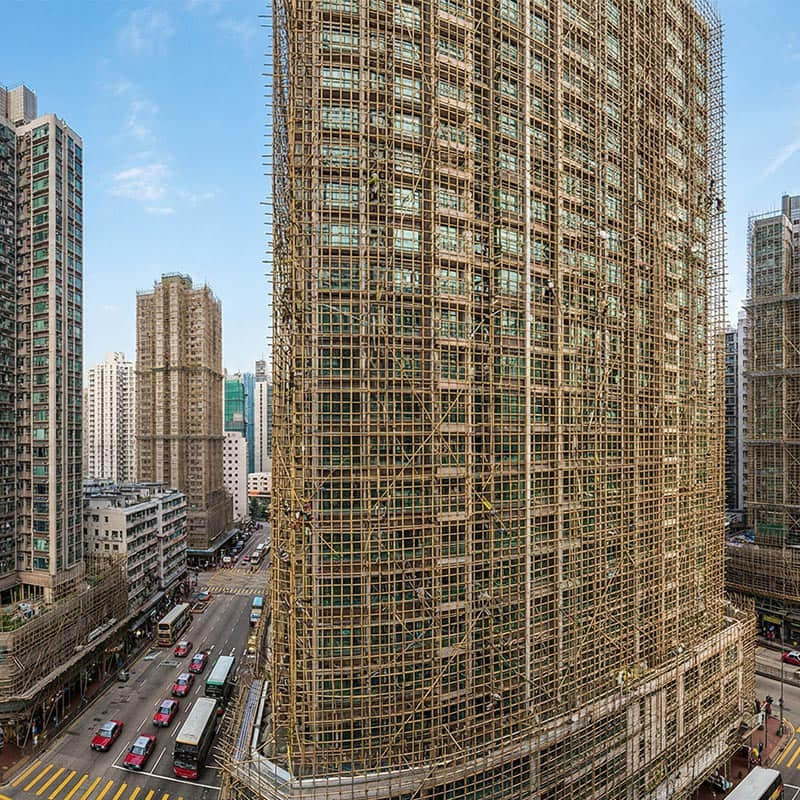
    When you visualize a modern skyscraper, or, for that matter, when you look across a construction site, what do you envision? No doubt, you see a bare structure featuring steel and aluminum, arranged in an organized way and riveted.  But, in urban centers in China and other Asian cities, you will observe something else - not steel or aluminum scaffolding, but bamboo scaffolding. This is not an incongruent throwback to the past. You are witnessing the reverent bamboo tradition of using bamboo that combines creativity, utility, and a dimension that is immensely culturally relevant. So, they use bamboo for construction scaffolding in China - indeed, and the narrative is rich as the bamboo groves.     A Past Intertwined with a Nation’s Identity     The use of bamboo as a building material in China is not a recent innovation; bamboo has been used as a structural material for thousands of years, intertwined with the development of architecture and engineering in China. Bamboo’s many virtues—as a strong, flexible, and fast-growing structural material- made it an ideal material long before the invention of industrial metals. Early representations show the use of bamboo scaffolding in every level of building typologies from simple structures to complex courtyards, palaces, and fortifications, not necessarily for aesthetic choice, but to indicate an educational, thoughtful, and/or dispositional respect and balance in living with the natural world. Bamboo scaffolding was not a new invention then. The system of bamboo scaffolding is a practice that Western and Eastern architects developed into a skill that has been handed down from builders over the centuries.     Cultural Importance - More Than a Material     In China, bamboo is not just a plant, but an important cultural metaphor: durability, integrity, and elegance. The metaphor of bamboo bending in the wind but never breaking is embedded in Chinese culture and philosophy and is used visually in building scaffolding applications. Bamboo scaffolding is a temporary structure meant to provide transient support for a permanent building. It is an appropriate metaphor for both life and the birth of something. The scaffolding stands erect and steadfast – a quiet partner in delivering a new building, only to be traumatized at the end of its useful life while leaving within the structure a legacy of strength and support. Constructions have a cyclical nature where a naturally occurring material assists in the creation of a man-made structure. The tradition of using bamboo in constructing scaffolding is a compelling cultural narrative. Additionally, bamboo scaffolding is often positioned as a representation of human collaboration and craftsmanship. The details of weaving and lashing the poles are precise, require teamwork, and utilize a natural intuition of working with the material. It is a style of building that focuses on human hand and skill, rather than mechanical reproduction, at a time when our world often embraces technology and loses sight of real people designing and building.     The Practical Benefits One May See Today   While its cultural and historical roots run deep, the ongoing utilization of the use of china bamboo scaffolding today is also a result of its practical benefits.   • Cost-effective and sustainable - One of the world's fastest-growing plants, it only takes bamboo a few years to reach its full potential. An incredibly sustainable source of growth and construction material, bamboo provides the opportunity for a renewable and recyclable resource. Bamboo is also many times less expensive to produce and transport, and, in any proposed construction, costs tens of thousands of dollars less than steel framing and will save considerable expense during assembly.   • Flexibility and adaptability - Unlike rigid metal poles, bamboo poles are so flexible that scaffolders can come up with custom-built shapes or structures that can curve around complex buildings or fit into often-tight spaces. This is extremely important when scaffolding is installed in crowded and often chaotic urban environments that frequently characterize many of China's largest cities.   • Lightweight and ease of use - Bamboo is not only strong, but also lightweight and easy to use. When properly utilized, workers can locally transport each component and erect every component faster and easier, which ultimately saves labor costs with maximum efficiency. In many cases, a highly-skilled crew of scaffolders can assemble a five- or six-story bamboo scaffold in substantially less than half the time of a similar structure in steel.       The Art of the Build: A Skill Preserved   Bamboo scaffolding assembly is an artistic cultural craft.  It is an advanced and virulent skill that is typically learned through family apprenticeship.  The process utilizes proper technique and posture, and is more than simply knowing how to lash two poles together - it requires dizziness to counter gravity with understanding both lateral loads and vertical loads.  It also requires respect for the limitations of the material you are working with.  The scaffolders all use traditional and original lashing and knot organizations to secure the poles together, but the true strength and resultant structure is the combination of planning with specialists and engineers, and the assembly by builders. What is especially intriguing is the combination of traditional craft and technological methods to perform and build advanced architectural structures. They lead in high-tech futuristic architecture and supplant the latest technology with craft that enriches and preserves our human fabric of society with the utmost respect, value, and worth.     Looking Forward   As China continues to dominate the construction industry around the globe, the presence of bamboo scaffolding along with cranes and steel beams is a textbook image of the blending of Chinese history and modernization. Although traditional steel and aluminum scaffolding both have their uses, they will never replace the legacy of Chinese bamboo scaffolding; as an industry, it is obvious that sustainable, artistry, and the value of using natural, sustainably sourced materials to build amazing structures must be respected. More than a temporary use structure, bamboo scaffolding is living history, as it continues to remain and stand proud for the builders who build the future.       FAQ   Is bamboo scaffolding safe? Yes, when constructed by skilled professionals, bamboo scaffolding is surprisingly safe and robust. Its strength-to-weight ratio is remarkable, and the natural flexibility of the material allows it to absorb wind loads and shocks better than some rigid materials. However, its safety relies heavily on the expertise of the scaffolders and the quality of the bamboo used.   How does bamboo scaffolding compare to steel scaffolding? Bamboo scaffolding offers several advantages, including being more eco-friendly (sustainable and renewable), more cost-effective, and more flexible for fitting into irregular spaces. Steel scaffolding, on the other hand, is known for its consistent strength, durability, and longer lifespan, making it suitable for very large, long-term projects and extreme loads. The choice often depends on the project's scale, budget, and location.   How long does a bamboo scaffolding last? A well-built bamboo scaffold can be used for the duration of a typical construction project, which could be several months. The bamboo poles themselves can be reused for multiple projects. Their lifespan is determined by factors like the species of bamboo, how it was treated and stored, and the climate conditions.   Is bamboo scaffolding still used today, or is it a thing of the past? While many modern projects use steel or aluminum, bamboo scaffolding remains a common and practical choice in many parts of China, Hong Kong, and other parts of Asia, particularly for low to mid-rise buildings and temporary structures. It is not just a historical relic; it is a living tradition that continues to be a viable and respected construction method.   What type of bamboo is used for scaffolding? The most common species of bamboo used for scaffolding is Moso bamboo (Phyllostachys edulis), known for its exceptional strength and thick walls. Other large, thick-walled bamboo species are also used, carefully selected for their maturity and structural integrity to ensure safety.
  • Reaching for the Sky: How High Can Bamboo Scaffolding Actually Go?
    Reaching for the Sky: How High Can Bamboo Scaffolding Actually Go? Feb 27, 2026
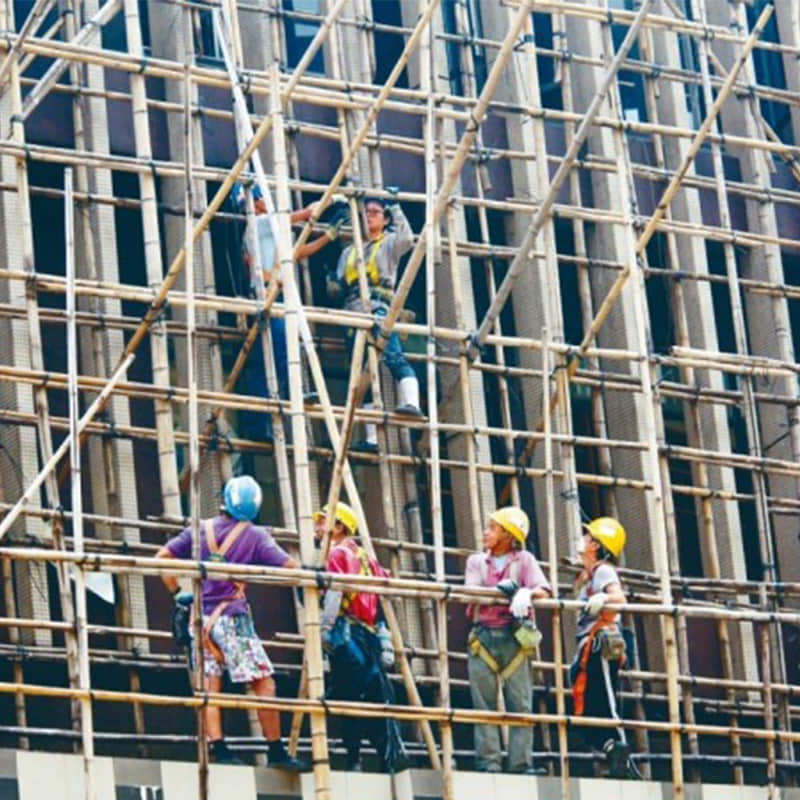
      Bamboo scaffolding is one of the oldest and most enduring technologies in the construction industry. While modern steel and aluminum systems often dominate international markets, bamboo remains a vital, highly efficient, and sustainable material in many regions. A frequent question that arises among project managers, safety officers, and engineers is simple yet profound: How high can bamboo scaffolding actually go? The answer is not a single number, but rather a complex interplay of engineering, local building regulations, and environmental factors.       Understanding the Structural Integrity of Bamboo   In order to understand how tall bamboo can grow, it is important to first consider the properties of a scaffold pole made from bamboo. Bamboo species such as Bambusa blumeana have a very high strength to weight ratio that has led to their nickname of being "green steel." When properly lashed together with nylon or galvanized wire, bamboo creates a flexible yet highly resilient structure. Unlike rigid metal systems that may buckle under extreme stress, bamboo scaffolding has the unique ability to sway and absorb kinetic energy, which is particularly beneficial in high-wind regions. However, this flexibility is also what necessitates strict height limitations. As the structure grows taller, the cumulative load—both of the workers, heavy materials, and the weight of the bamboo itself—increases, requiring advanced structural bracing and more frequent tie-ins to the building facade.       The Role of Regulatory Standards   In many jurisdictions, the "maximum height" of bamboo scaffolding is dictated by safety codes rather than the material's physical failure point. Regulatory bodies prioritize the safety of the workforce and the public, leading to defined operational ceilings. For instance, in regions where bamboo scaffolding is standard practice, local regulations often impose specific height limits for: Independent Scaffolding: Used for building exterior work, usually limited to a specific number of stories to ensure stability. Double-Row Scaffolding: Designed for heavier loads, requiring more robust anchoring systems. These regulations ensure that the structure does not become unstable due to bending, shear stress, or wind-induced loads. A project that ignores these code-mandated height limits risks catastrophic structural failure, regardless of the quality of the bamboo used.       Factors Influencing Maximum Height   If you are planning a project that involves high-rise bamboo scaffolding, several factors will determine your operational limits: 1. Structural Bracing and Tying The height a scaffold can reach is directly proportional to how well it is anchored to the host structure. Without robust ties that meet engineering specifications, a tall scaffold is essentially a vertical beam prone to toppling. Proper spacing and installation of these ties are the single most important factor in extending a scaffold's height safely. 2. Wind Load and Exposure Bamboo structures act differently under wind loads compared to rigid steel frames. In typhoon-prone or high-altitude areas, the surface area of the netting or debris protection attached to the scaffold significantly increases the wind force. As the structure gets taller, wind pressure increases, creating a "sail effect" that can destabilize the scaffolding if not properly calculated and reinforced. 3. Material Quality and Maintenance The strength of bamboo is not uniform. Age, moisture content, and the presence of defects significantly affect load-bearing capacity. High-altitude projects demand rigorous inspection schedules. Poles must be inspected for cracks, rot, and insect damage before being cleared for use in a tall assembly.       Bamboo vs. Modern Metal Systems   While steel scaffolding provides a predictable, rigid structure suitable for almost any height, bamboo offers a competitive edge in terms of sustainability and cost-efficiency in specific environments. Feature Bamboo Scaffolding Metal Scaffolding Flexibility High (Energy absorbent) Low (Rigid) Material Weight Extremely Light Heavy Sustainability Renewable / Biodegradable Resource-intensive Max Height Regulated (varies by region) Theoretically unlimited For mid-to-high-rise projects, the decision often comes down to the local regulatory environment and the speed of assembly. Experienced bamboo scaffolding teams can erect structures faster and with greater agility than teams assembling heavy steel, provided they operate within the safety margins defined by engineering best practices.       Best Practices for High-Altitude Bamboo Structures   To maximize the safety and utility of bamboo scaffolding at greater heights, follow these industry-standard practices: Engineering Oversight: Every high-rise scaffolding plan must be reviewed by a qualified engineer. Relying on "rule of thumb" assembly for structures exceeding standard heights is a recipe for disaster. Continuous Inspection: Perform daily checks, especially after high winds or significant weather changes, to ensure no lashes have loosened and no ties have failed. Dynamic Load Management: Never overload high-altitude sections. Spread materials evenly and ensure that the load-bearing capacity of the bamboo poles at the lower levels is sufficient to carry the combined weight of the upper levels. Professional Training: Ensure that all erectors are certified and experienced specifically in the mechanics of high-altitude bamboo assembly. This is not a task for general laborers.       Conclusion   The height of bamboo scaffolding is less about the physical capacity of the material and more about the management of structural integrity, wind load, and regulatory compliance. With the right engineering approach, high-quality materials, and strict adherence to safety protocols, bamboo continues to be a viable and effective solution for complex construction projects. Ultimately, the goal is to reach the height necessary to get the job done without compromising the safety of the site. As construction technologies evolve, the integration of traditional bamboo techniques with modern engineering oversight remains the gold standard for success.     Are you planning a project and need professional scaffolding solutions or expert consultation? Don't leave your structural safety to chance. [Contact our engineering team today] for a consultation on scaffolding design and compliance, or browse our inventory of high-quality construction materials tailored for your next project.       FAQ   Q: Is there a universal height limit for bamboo scaffolding?  A: There is no single global height limit for bamboo scaffolding. The maximum allowable height is determined by local building regulations, specific site conditions, and the engineering design of the structure. Always refer to regional construction safety codes, which specify height limitations based on wind zones, load-bearing requirements, and the structural stability of the system. Q: Does wind speed affect the maximum height of bamboo structures?  A: Yes, wind is a critical factor. As the structure increases in height, wind loads exert greater pressure on the bamboo frame, particularly when debris netting or safety covers are attached, which can create a "sail effect." High-altitude assemblies require more frequent and robust anchoring to the building facade to offset these lateral forces. Q: Why is bamboo often considered for high-rise projects despite the availability of steel?  A: Bamboo offers unique advantages in cost-efficiency, rapid assembly, and sustainability. Its natural flexibility allows it to absorb kinetic energy and sway slightly under stress, whereas rigid metal systems may suffer from buckling under specific loads. In many regions, bamboo remains the preferred material due to its adaptability to complex building geometries.
Leave a Message
If you are interested in our products and want to know more details, please leave a message here, we will reply you as soon as we can.
Submit

Need Help? Chat with us

Leave a Message
If you are interested in our products and want to know more details, please leave a message here, we will reply you as soon as we can.
Submit
Contact us #
+86 -13922304881

Our hours

Mon 11/21 - Wed 11/23: 9 AM - 8 PM
Thu 11/24: closed - Happy Thanksgiving!
Fri 11/25: 8 AM - 10 PM
Sat 11/26 - Sun 11/27: 10 AM - 9 PM
(all hours are Eastern Time)

Home

Products

whatsApp

contact