• Top 10 Scaffolding Companies in the World (2026 Edition)
    Top 10 Scaffolding Companies in the World (2026 Edition) Apr 23, 2026
    Scaffolding has become increasingly important in the construction industry, acting as a temporary framework with a critical function in ensuring safety and efficiency on-site. Due to an increase in population and the continued growth and complexity of infrastructure projects, there is a greater demand than ever before for advanced scaffolding and formwork solutions. Selecting the proper partner can greatly affect the outcome of a project, including whether it finishes on time and without compromising safety. To assist you in making the best decision possible regarding your choice of scaffolding provider, we have performed an analysis of each company’s respective market share, technological advancements, and project portfolios. The result is a concise list of the ten largest scaffolding manufacturers globally as of 2026.     1. BrandSafway (United States)   This company is huge in size and continues to be successful because they are able to provide not only tools for rent but, more importantly, a complete list of services which includes providing more than just rental of equipment. They have been known as a leader in many industries, such as the construction, commercial, and energy fields, with an integrated approach that adds more value through the combination of scaffolding, insulation, and specialty coatings.       2. PERI SE (Germany)   PERI has become one of the largest companies in the world for the manufacture and supply of formwork and scaffolding. Their engineering capabilities are well recognized because of their ability to design and use digital technology to support their construction activities. With their emphasis on building information modeling (BIM) and automating various functional areas, PERI has become the preferred supplier to be a part of any major infrastructure project.       3. AJ Scaffolding (China - Global Leader in Manufacturing)     A company that manufactures A+ scaffolding systems (scaffolding systems), AJ Scaffolding is becoming one of the country's top manufacturers and exporters of scaffolding systems. AJ Scaffolding has established a strong reputation through its innovative design, manufacturing processes, and an uncompromising commitment to quality control systems. Innovative design, compliance with all international safety standards (ISO/CE), and factory-direct prices make AJ Scaffolding the first choice for construction companies, material distributors, and others around the world that require dependable, cost-effective products.       4. Altrad Group (France)   Altrad maintains a strong global position as a result of its strategic acquisitions and currently provides localized solutions to customers in more than 50 countries. Altrad’s combination of large-scale production and extensive experience as a preferred supplier of large-scale public utility maintenance projects demonstrates the strength of Altrad’s commitment to its customers.     5. Layher Holding GmbH & Co. KG - Germany   Layher is a leading modular scaffolding manufacturer and is recognized as the "Gold Standard" in modular scaffolding. Layher has developed an Allround Scaffolding System that utilizes a unique "Bolt-Free" connection technology. They will continue to be a leader in the industry by producing a lightweight, high-strength steel to help reduce transport costs and labour time, as well as by continuing to innovate in the areas of safety and sustainability.       6. Doka Group - Austria   Doka is a leading company in the world in the manufacture of formwork and scaffolding. Doka offers a total solutions approach, which includes everything from technical planning through to supervision of assembly on site. This total solutions approach allows Doka to provide the fastest growing construction markets with highly efficient, cost-effective solutions.       7. ULMA Construction - Spain   ULMA Construction is a company that focuses on safety, sustainability, and high-performance durability for its scaffolding systems. ULMA is the preferred scaffolding supplier for contractors who require a long-term return on investment (ROI); ULMA has been able to penetrate the renewable energy sector, particularly in relation to the construction of wind turbines, due to their abilities to create high-performance, durable scaffolding systems.       8. RMD Kwikform (UK)   RMD Kwikform is a leading provider of engineering solutions with global reach, serving Europe, the Middle East, and Asia. Our heavy-duty shoring systems and a comprehensive range of scaffolding solutions are used on large and complex projects across a variety of industries, from major civil engineering and infrastructure construction to large industrial schemes. All of our systems are designed to be fast and simple to assemble whilst still meeting critical safety standards.       9. Waco Kwikform (Australia)   Waco Kwikform is a major supplier of scaffolding and formwork rental equipment in the Oceania market, with recent inroads into South East Asia. Waco Kwikform has a good, safe working practice in place and has developed a leading-edge scaffolding system known as “Kwikstage”. The Kwikstage scaffolding system is ideal for the Mining and Industrial markets, providing a sturdy, versatile and reliable frame for a variety of applications.       10. KAEFER (Germany)   KAEFER Scaffolding is an experienced industrial scaffolding contractor. Providing scaffolding solutions for Oil & Gas, Chemical, and Pharmaceutical projects. We aim to deliver the highest quality access solutions to all our clients, helping to reduce plant downtime to a minimum.     Why Leading Construction Firms are Choosing AJ Scaffolding   While European giants have long dominated the market, companies like AJ Scaffolding have redefined the industry by bridging the gap between high-end engineering and manufacturing efficiency. Key reasons include: One-Stop Solutions: From design and production to global shipping, AJ Scaffolding handles the entire lifecycle of scaffolding procurement. Stringent Safety Standards: Every component is tested to meet international certifications, ensuring safety for workers at any height. Factory-Direct Advantage: By eliminating unnecessary middlemen, AJ Scaffolding provides high-grade materials at a price point that optimizes project budgets.         Conclusion   The global scaffolding market in 2026 is defined by a shift toward digitalization, safety, and supply chain reliability. Whether you are an engineering firm tackling a landmark skyscraper or a distributor looking for the most reliable components, these top 10 companies represent the height of industry standards. Ready to Elevate Your Next Project? Finding the right scaffolding solution is the first step toward a safe and successful build. If you need expert advice on sourcing the best materials or selecting a partner for your next major contract, visit AJ Scaffolding today to explore our full range of products and get a customized quote.       FAQ   What are the most important factors to consider when selecting a scaffolding supplier? When evaluating a global scaffolding partner, prioritize safety certifications (such as ISO, CE, or ANSI), production capacity, and material quality (e.g., Q235 or Q345 galvanized steel). Additionally, consider their experience in international logistics and their ability to provide technical support, such as CAD drawings or structural calculations.     How does AJ Building ensure the quality of its scaffolding products? AJ Building implements a rigorous multi-stage quality control process. This includes raw material inspection, automated welding consistency checks, and load-bearing stress tests. All products undergo hot-dip galvanization to ensure maximum corrosion resistance and a long service life in harsh environments.   Can I get customized scaffolding solutions for non-standard projects? Yes. Leading companies like AJ Building offer OEM and ODM services. Our engineering team can collaborate with your project planners to design and manufacture customized components that meet specific architectural requirements or unique site constraints.  
  • What's the Load Capacity of Aluminium Scaffolding? The Complete Resource for Safe & Efficient Use
    What's the Load Capacity of Aluminium Scaffolding? The Complete Resource for Safe & Efficient Use Apr 18, 2026
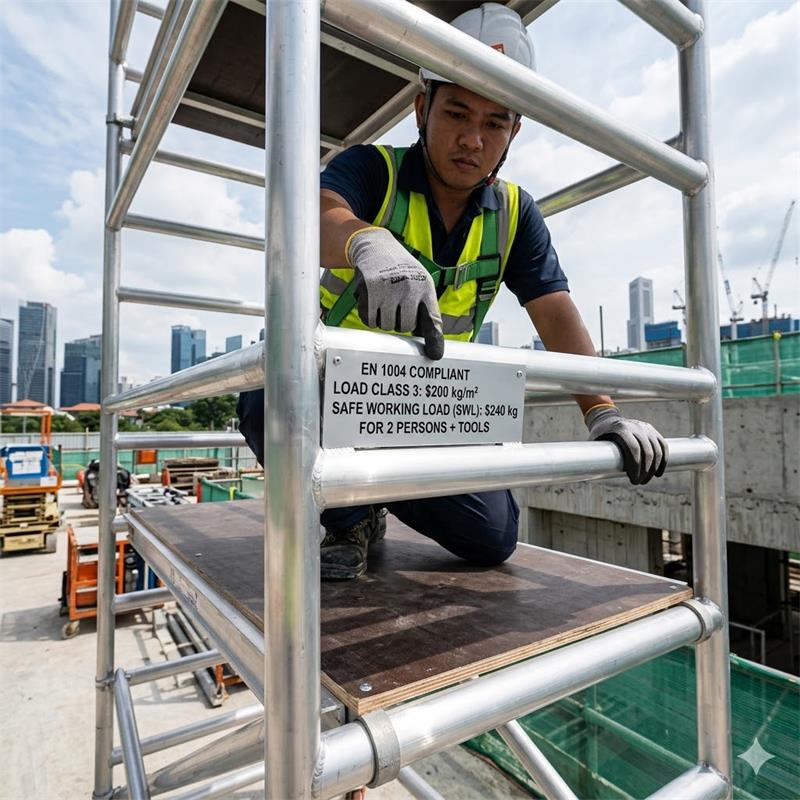
    Aluminium scaffolding is now a widely used common component of modern construction and maintenance activities that require flexibility and low-cost solutions, as well as resistance to environmental degradation. However, the single most important question that all project managers, safety representatives, and clients must consider before using aluminium scaffolding is: What weight can be safely placed on an aluminium scaffold? Misjudging the amount of weight a scaffold can safely hold puts both your site at risk for a disaster (catastrophic) or creates inefficiency in that site’s operations (inefficient). To help you better understand the differences in how to determine load ratings, as well as safety regulations across countries, and the differences between aluminium and steel, this detailed guide provides you with all of the information needed to keep your jobs safe and productive.     Why Load Capacity is the Backbone of Scaffold Safety   Load Capacity is the maximum amount of weight that can be added to a scaffold without exceeding the limits of the scaffold and causing it to fail. When looking at the total load that a scaffold can carry, the total load consists of all the workers on the scaffold, as well as any tools or materials on the scaffold. Aluminum is an attractive choice for scaffolding due to its high strength-to-weight ratio, but there are limitations to the material's engineering properties that require strict compliance with engineering guidelines. In regard to safety of use, engineers will use a Safe Working Load (SWL) when determining how to use the scaffold safely. The SWL includes a safety factor (usually 4 to 1) to account for dynamic loads, such as walking on the scaffold or wind. Exceeding the SWL represents a safety violation and creates structural failure risks.     Deciphering Load Classes: The EN 1004 Standard     High-grade aluminium mobile towers usually have a design and test standard of EN 1004. An internationally established standard which divides all scaffolding into categories of ‘Load Classes’ based on their load capacity per square metre. Class 2 Scaffolding Weight Capacity: 150kg/m2 (kilograms per square metre) Appropriate Uses: Light-duty applications such as painting, cleaning, or very minor electrical repairs. Only one worker will be present on the platform at any given time, along with minimum hand tools; there is also no need for maximum tool length under these conditions. Class 3 Scaffolding Rated for 200 kg/m2. Recommended use of scaffold class 3: The Industry standard for general construction. Will support two men, all types of power tools, and a moderate amount of building materials.   Pro Tip: Always refer to the manufacturer’s identification plate. A legitimate tower scaffold built to the EN 1004 standards will contain the class rating, maximum platform height, and maximum total weight that can be on the tower.     Distributed vs. Point Loads: A Critical Distinction     One of the most frequent misjudgments made on the construction site is a miscalculation of how the load is distributed across the platform. It is necessary to understand the physics of how loads are distributed to avoid the possibility of failure on a platform through deck failures.   Uniformly Distributed Load (UDL) Assumes that the load will be evenly distributed throughout the entire surface. Example: The standard Class 3 deck is 2.0m (long) x 0.6m (wide) = 1.2m2. The calculations for the UDL on that deck are: 200 kg/m2 x 1.2m2 = 240 kg total capacity.   Concentrated Loads (Point Loads) A concentrated point load refers to an entire weight from a specific location on the structure, which will be deposited on one small area of the structure, i.e., a uniform weight that's placed at a specific location (a heavy bucket of mortar taken off-staging or a piece of machinery). Even though the weight may be below the uniformly distributed load (UDL) limit, a concentrated point load can still result in cracking the structure. Always distribute heavy materials on the structural transoms (horizontal support beams) and not on the center of the platform.     Aluminium vs. Steel Scaffolding: The Load Capacity Trade-off   Typically, the considerations for selection of an application for either of these materials will have little to do with which is “better”, but more so about which is “correct” based upon load requirements of the structure.   The Strength-to-Weight Ratio When comparing steel to aluminium, the primary difference can be attributed to density and the resulting capacity. Steel typically has a higher density than aluminium, providing a greater overall load capacity (commonly classified as Class 4 or Class 5) for loads up to 600 kg/m2. Therefore, steel is the material of choice for heavy masonry-type applications and Shoring. Contrarily, the advantage in using aluminium over steel is the Efficiency-to-Load Ratio of aluminium.   Feature Aluminium Scaffolding Steel Scaffolding Typical Load Class Class 2 & 3 (150-200kg/m2) Class 4, 5 & 6 (300-600kg/m2) Dead Load Very Low (1/3 the weight of steel) High adds stress to the base structure. Assembly Speed Fast; no tools or cranes required. Slow, labor-intensive, and heavy. Corrosion Highly resistant; ideal for outdoors. Prone to rust if not galvanized.   The "Rigidity" Factor Steel has a higher Modulus of Elasticity, making it feel more rigid. Aluminium, being more flexible, may exhibit a slight "bounce." While this is mathematically safe within the SWL, it requires workers to be properly trained on the equipment's behavior to maintain confidence at height.       Key Factors That Reduce Effective Capacity     A scaffold's rated capacity is only valid if the structure is built correctly. Several factors can "downgrade" your safety margin: Tower Height - With increased height, lateral stability is reduced. In order to keep their centre of gravity low, high-reaching aluminium towers must be equipped with outriggers (stabilizers) to provide support at their base. Environmental Forces - The amount of pressure that is present from wind. When towelling off, the maximum load ratings normally apply for wind speeds up to 45km/h. Beyond 45km/h, the tower must be connected or tied to a fixed structure. Caster Integrity - The entire load of the unit is resting on the casters; if a tower has an 800kg rating and uses very poor quality casters, then the casters will become the weakest link in the chain of safety for collapse. Therefore, make certain that all casters are properly locked and rated for the load of the tower. Leveling - A scaffold that is even 1% out of plumb loses vertical load-bearing efficiency. Use adjustable legs to ensure the structure is perfectly level.       Maintenance: Ensuring Long-Term Load Integrity     To ensure your aluminium scaffolding consistently meets its rated capacity, regular inspections are mandatory. Look for: Creases And Dents: If there are any dents, you will have a lower resistance against buckling (the strength of an object when pushed sideways). Welded Joints: Look closely at the welded joints for any signs of abnormal wear along the edges, particularly where the rungs come in contact with the frame. Platform Hooks: Make sure the platform hooks have not become elongated or bent, because they are the main points that bear the weight (transfer loads) on the platform.     Conclusion   To comprehend the load-bearing limits of an aluminum scaffold, one needs not only to be compliant but also to facilitate the accomplishing of tasks that would normally require more employees working than if they had to carry those loads on a daily basis. A Class 3 aluminum scaffold has a packing weight that makes it portable for use on projects that include light-to-medium construction, • Facade (exterior) and interior maintenance. Because it is portable and provides sufficient capacity, it offers a superior ROI compared to heavy-duty steel. Always refer to the manufacturer’s specifications for weight loads, distribution, and point, and train your workers about how to recognize their differences.   Ready to Secure Your Job Site? Don't rely on luck for safety! Our qualified team will assist you in selecting a solution from our extensive portfolio of rental and sales options for heavy-duty aluminium scaffold towers, as well as providing guidance about acquiring compliant equipment certified to EN 1004. To receive an individualized proposal and comprehensive equipment safety review, please [reach out to our Engineering Team] today!     Frequently Asked Questions (FAQ)   How many people can safely stand on an aluminium scaffold platform? This depends on the Load Class and the platform size. For a standard Class 3 aluminium tower, the platform is typically designed to support two people along with their tools, provided the combined weight does not exceed the Safe Working Load (usually 200kg/m2). Always check the manufacturer's specific rating before ascending.   Can I use aluminium scaffolding for heavy masonry work? While aluminium is incredibly strong, it is generally rated for light to medium-duty work. For heavy masonry involving large quantities of bricks or heavy mortar tubs, steel scaffolding is often preferred due to its higher load class (Class 4 or 5). If you use aluminium, ensure you are strictly following Class 3 limits and distributing the weight evenly.   Does the load capacity change as the scaffold gets higher? The platform load capacity (150-200kg/m2) remains the same, but the structural stability decreases as height increases. To maintain safety at greater heights, you must use stabilizers (outriggers) or tie the scaffold to a permanent structure to prevent tipping and to support the vertical load safely.
  • The Definitive Guide to Scaffold Toe Board Requirements: An In-Depth Resource
    The Definitive Guide to Scaffold Toe Board Requirements: An In-Depth Resource Apr 16, 2026
      Construction safety can be measured in inches due to the high level of risk involved at a construction site. While the primary focus of scaffold safety is typically placed on fall protection systems and structural stability, the safety of workers and the public is also largely dependent upon toe boards. The construction industry has a “fatal four,” and falling objects are still one of them. A bolt, a wrench, or a brick slipped from the work platform can all be deadly. That’s where scaffold toe boards provide a needed level of safety. In this guide, we will cover the requirements and specifications for scaffold toe boards, as well as how to follow the regulations outlined by OSHA and ACI.     1. About Scaffold Toe Board   A scaffold toe board is a vertical edge of a platform that is fastened down and prevents tools or scrap, or anything else, from falling from height off the work area. The guard rails provide protection for workers from falling off, while the toe boards provide protection to the general public or those below the work platform. Falling object protection systems, as outlined in OSHA 1926.451(h), require toe boards to be installed in order to be compliant if employees are required to be in or pass under the scaffold.     2. Key Regulatory Requirements for Toe Boards   To maintain compliance and ensure maximum safety, toe boards cannot be "improvised." They must meet specific dimensional and structural criteria. Height Requirements The most critical dimension is the vertical height. Minimum Height: According to the OSHA regulations, along with many other International Standards, the tops of all toe boards shall be situated at least 3.5 inches (9 cm) above the walking/work surface. Standard Practice: Many employers who care about safety will use either 4" or 6" toe boards as an additional margin of safety when working with loose materials like rocks, stones, or small parts.   Clearance and Gaps Toe boards may not work properly if there are large spaces that exist beneath the toe boards. Maximum Gap: The gap between the base of the toe board and the surface of the platform (flooring) shall not be greater than one-quarter inch (0.6 cm). This will prevent small objects (nails, screwdrivers, etc.) from falling through the opening underneath the toe boards.   Structural Strength Toe boards are not merely decorative; they must withstand physical impact. Resistance to Force – Toe Boards shall typically provide at least a resistance of 50 lbs. (Approx. 222 N) of force in both the horizontal and vertical directions. Stiffness – Toe boards shall be secured in place and constructed of either solid material or mesh with openings no greater than 1/2 inch. They will be built to maintain their shape and integrity under normal operating conditions.     3. Material Standards: Wood vs. Steel vs. Aluminum     Choosing the right material for your toe boards impacts both the longevity of your equipment and the ease of installation. Material Pros Cons Timber (Wood) Cost-effective, easily cut to fit custom scaffold shapes. Susceptible to rot, cracking, and warping; requires frequent inspection. Steel Extremely durable, high impact resistance, ideal for heavy-duty industrial sites. Heavier to transport; prone to corrosion if not galvanized. Aluminum Lightweight, corrosion-resistant, easy to install with modular systems. Higher initial cost; can be dented by heavy machinery impact.   For long-term ROI, many scaffolding rental companies prefer galvanized steel or aluminum toe boards due to their ability to withstand multiple cycles of assembly and disassembly without degrading.       4. Installation Best Practices for Maximum SEO & Safety     Proper installation is the bridge between a "compliant" site and a "safe" site. Follow these steps to ensure your toe boards are effective: Perimeter Coverage in Full: Toe boards must be put at every end and side that is open on the platform. Any openings in the perimeter can allow debris to fall out. Sealing and Overlap Between Boards: Multiple boards used should be either overlapped or flush with one another. The ends of the toe boards should not be left with any gaps between the ends of the board. Fastener that is Secure: Fasten toe boards to the scaffold posts (uprights) with dedicated toe board clips or wire. Simply using gravity will not provide enough resistance for the toe boards to stay in place. Integration with Netting: In high-traffic urban areas, use toe boards and debris netting ("fans") together. The toe boards will stop the larger loads (i.e., heavy material dropping to the ground), and the netting will catch any smaller material (i.e., dust and particles).     5. Common Compliance Pitfalls to Avoid   During safety inspections, several common errors often lead to fines or "stop-work" orders: Use of Damaged Materials: A toe board constructed from a broken board would violate regulations regarding the structural integrity of materials used around foot traffic on scaffolds if the structure of a toe board is compromised under the 50lbs force test. Not Using Toe Boards on the Ends of Scaffolds: Toe boards are often placed on the long sides of a scaffold, while the toes are placed on the ends of the scaffold. This leaves an important gap, placing workers in jeopardy of falling off the scaffold without the use of a toe board. Mismatched Toe Board Height: A 2x4 timber can be used as a toe board since it is 3.5 inches in height; however, if the platform has not been constructed uniformly, this one may not meet code as a toe board due to the effective height below that required by code. Failure to Inspect Scaffolds after Adverse Weather: Wind and rain can cause fasteners to come loose. Therefore, it is required that toe boards be inspected every day prior to the use of a scaffold.       6. The Economic Impact of Proper Toe Board Usage     Beyond the moral obligation to protect lives, adhering to scaffold toe board requirements makes financial sense for construction and engineering firms. Avoidance of Fines: OSHA penalties for "Serious" violations can exceed $15,000 per instance. Lower Insurance Premiums: A clean safety record with zero "falling object" claims helps in negotiating lower workers' compensation and liability insurance rates. Project Efficiency: Preventing dropped tools means less time wasted retrieving items and less money spent on replacing damaged equipment.       Conclusion   The scaffold toe board may be the smallest part of your temporary structure, but its role in site safety is monumental. By ensuring your toe boards meet the 3.5-inch height requirement, maintain minimal gaps, and possess the structural strength to withstand impact, you are protecting your workforce, the public, and your company's reputation. Compliance is not just about checking a box—it is about creating a professional, controlled environment where workers can focus on the task at hand without fearing for those below.     Need to Upgrade Your Site Safety? Whether you are a building contractor looking for compliant scaffolding components or a distributor seeking high-quality safety equipment, we are here to help. [Contact Our Safety Experts Today] to explore our range of OSHA-compliant steel and aluminum toe boards, or request a quote for your next major project. Let’s build a safer future together.     FAQ Is a toe board always required on all scaffolding? According to OSHA and international safety standards, toe boards are required on any scaffold platform that is more than 10 feet (in some jurisdictions, 6 feet or 2 meters) above a lower level, specifically when people are required to work or pass underneath the scaffold. If there is a risk of tools or materials falling onto someone, toe boards are mandatory regardless of height.   Can I use a standard 2x4 timber as a scaffold toe board? Yes, but with a caveat. A standard "2x4" actually measures 1.5 x 3.5 inches. Since the minimum height requirement is 3.5 inches, a 2x4 meets the bare minimum. However, if the board is slightly worn or the platform is uneven, it may fall out of compliance. Many professionals prefer a 2x6 (which measures 5.5 inches) to ensure they are always above the safety threshold.   What should I do if materials are piled higher than the toe board? If you are stacking bricks, tiles, or debris higher than the 3.5-inch toe board, the toe board alone is no longer sufficient. In these cases, you must install paneling or screening (such as fine mesh) from the toe board to the top of the guardrail until the materials are secured.
  • The Ultimate Guide to Scaffold Electrical Safety: Mitigating Risks and Ensuring Compliance
    The Ultimate Guide to Scaffold Electrical Safety: Mitigating Risks and Ensuring Compliance Apr 13, 2026
    On a construction site, scaffolding and electricity present a significant risk. Scaffolding allows access at high elevations; however, because of its metal components, scaffolding is also a very good conductor of electricity. According to the construction industry safety reports, approximately 15% of construction worker fatalities are related to electrical hazards; a large number of these fatalities occur when scaffolding comes into contact with energy sources from overhead power lines. This guide will discuss the necessary components to consider when implementing scaffold electrical safety and include tools to help protect your employees, such as actionable information, technical information, and checklists.     1. The High Cost of Electrical Negligence   Knowing how serious electrical dangers are is the starting point for stopping them from happening. Information from safety groups shows some key things: Contact: 39% of deaths by electrocution result from a worker physically touching an energized component while standing on a scaffold. Arc Flash: Electricity is known to "jump" (arc). Therefore, you do not need to make physical contact with a wire to be electrocuted by contact. Fines: Failure to comply with OSHA standards for scaffolding continues to rank in the Top 10 Violations every year. Fines range as high as $15,000 each for a single violation.       2. Technical Standards: Minimum Safe Approach Distances     The most effective way to prevent electrocution is to maintain a strict buffer zone. OSHA and international safety standards dictate specific clearances based on the voltage of the power lines.   Table 1: Minimum Clearance Distances for Scaffolding   Voltage (Nominal, kV, Alternating Current) Minimum Clearance Distance (Feet) Minimum Clearance Distance (Meters) Required Action Less than 50 kV 10 Feet 3.05 Meters Standard safe buffer zone. 50 kV to 200 kV 15 Feet 4.60 Meters Increased monitoring; line markers suggested. 200 kV to 350 kV 20 Feet 6.10 Meters Pre-job coordination with the utility company. 350 kV to 500 kV 25 Feet 7.62 Meters Professional insulation or de-energization. Over 750 kV 45 Feet 13.72 Meters Maximum protection; site-specific engineering required.   Note: If the voltage is unknown, maintain a minimum of 20 feet until a qualified utility representative confirms the actual voltage.       3. Critical Safety Protocols: The GFCI Requirement   You cannot have a scaffold without having a Ground Fault Circuit Interrupter (GFCI). A GFCI monitors the flow of the current. A GFCI detects a differential of as little as 5 milliamperes of the current between going in and coming out of a tool, indicating that there is leakage of current, possibly through the worker's body. Reaction Time: A GFCI will trip the circuit in as little as 1/40th of a second. Requirement: All 120-volt, single-phase, 15- and 20-ampere receptacles used on scaffolds must have GFCI protection.       4. Scaffold Electrical Safety Inspection Checklist     Use the following table as a daily reference for your safety officers and site foremen.   Table 2: Daily Scaffold Electrical Safety Checklist   Inspection Item Action Required Overhead Lines: Are there any overhead wires within 10ft of the scaffold? If Fail: Relocate the scaffold or contact the utility. Grounding: Has the scaffold been grounded in a way that prevents static and/or leakage? If Fail: Install grounding clamps/rods. Tool Condition: Are all of the electric tools insulated and in good condition? Is there any damage to the cords? If Fail: Remove the tool from service immediately. GFCI Protection: Are all of the electrical sources protected by GFCI devices that have been tested? If Fail: Install portable GFCI adapters. Worker Training: Has each person who works on the scaffold received training on the hazards associated with using electricity? If Fail: Conduct "Toolbox Talk" before work begins. Conductive Materials: Are metal pipes, rebar, or any other conductive materials kept away from electrical conductors? If Fail: Assign a dedicated spotter.       5. Protective Measures in Restricted Spaces   In tight urban environments where the "10-foot rule" is physically impossible to maintain, contractors must implement secondary defenses:   Line De-energizing: Shutting off power to the lines is the only method to guarantee that there will be no risk. It is important to work closely with the local utility company to have the electricity turned off prior to erecting and dismantling scaffolding. Insulating sleeves (Eel hides): Non-conductive covers should be used when working on and using powered lines. Be aware that these are intended for weather protection only and are not a substitute for clearance. Non-conductive scaffolding: For the construction and maintenance of scaffolding after electricity has been shut off, all work should be done using fiberglass (GRP) scaffolding. Fiberglass does not conduct electricity at all, and therefore, adds an additional layer of safety when using scaffolding.     6. Emergency Response: The "Shuffle" Technique   If a scaffold becomes energized due to a line strike: “No Touching” Rule – Stay a minimum of 35 feet from any scaffolding offering electric strength (wires) created by electricity being supplied to them. The ground has also been charged with electricity. How to Exit – If it is necessary to jump from a scaffold, both feet should land on the ground at the same time, without being IN CONTACT WITH THE SCAFFOLD at all. The Shuffle Step – After jumping off the scaffold, move away from the scaffold using only the Shuffle Step, keeping both your feet ALWAYS ON THE GROUND AND CLOSE TO EACH OTHER. If you brought one foot to the ground before the other foot, you created a "potential difference," thus causing current to travel across both legs as described above.       Conclusion   Electric safety on scaffolds is not only a compliance requirement, but also a technical need. When construction companies adhere to the minimum distances outlined in Table 1 and follow the checklist items found in Table 2, they help to minimize their liability and protect their single greatest asset - workers.   Optimize Your Site Safety Today Don't wait for an accident or a building inspection to raise your safety standards and create a safer working environment. Call our Engineering Team today for an individual Scaffold Safety Assessment. We will provide you with all the information and equipment required to comply with OSHA Regulations and deliver Professional Training for Site Safety - to make sure your project stays on schedule and continues to be safe.     FAQ   What is the minimum safe distance between a scaffold and a 50kV power line? According to OSHA standard 1926.451(f)(6), the minimum clearance for power lines with a voltage of up to 50kV is 10 feet (3 meters). For any lines over 50kV, the distance should be increased by 0.4 inches for every additional 1kV.   Can I use a scaffold if it is raining or in damp conditions? Extreme caution is required. While scaffolding can be used in light rain, electrical work should be suspended if tools or the scaffold itself become wet. Water significantly increases conductivity, and the risk of a GFCI tripping or a short circuit becomes much higher. Always ensure all electrical connections are weather-protected.   Is fiberglass scaffolding better than steel for electrical work? Yes. Fiberglass (GRP) scaffolding is non-conductive, making it the preferred choice for electricians and maintenance teams working near high-voltage sources. While more expensive than steel, it eliminates the risk of the structure becoming energized, providing an essential secondary layer of protection.
  • The Ultimate Guide to Scaffolding Pipe Load Capacity: Safety, Standards, and Structural Integrity
    The Ultimate Guide to Scaffolding Pipe Load Capacity: Safety, Standards, and Structural Integrity Apr 09, 2026
    The structural soundness of temporary support systems is unarguably one of the most important factors to consider when working on large-scale construction and industrial infrastructure. Within every scaffolding system, there are pipes used for support. Knowing what size and weight capacity your scaffolding pipe will be able to safely hold is critical to providing safe work environments, maximising your material utilised on-site, and achieving compliance with the international engineering standards. This guide outlines exactly what things are taken into consideration when determining how much weight each type/size of scaffold metal pipe can safely support, as well as what standards exist to govern the use of scaffolding pipes in all parts of the world.     1. The Fundamentals of Load Capacity   How much weight can be supported by the scaffolding pipe? The Load Capacity is found by determining how much load (force) a given scaffolding pipe can bear before it reaches its Limit-State of being permanently deformed or physically collapsing. In the professional Engineer aspect of your job, this value is always calculated in relation to all other pipes in a given scaffolding grid; this means you cannot just use this value by itself. Dead Loads vs. Live Loads Dead Loads: The self-weight of the scaffolding structure (i.e., the weight of the pipes, steel planking, steps, and couplings that make up the actual scaffolding). Live Loads: The combined weight of all persons, equipment, and materials being stored on the scaffolding framework.       2. Key Determinants of Structural Strength   The load-bearing potential of a scaffold tube is dictated by several physical and mechanical properties. A. Specification of Material and Thickness of Wall: The material most often used for structural scaffolding is galvanised carbon steel, and the thickness of the wall (typically 3.2mm or 4.0mm) has a direct impact on how much bending moment the pipe can withstand. A thicker wall gives an increase in the cross-section of the pipe and therefore gives an increase to the axial load bearing capacity. B. The Slenderness Ratio and Buckling: As the unsupported length of a pipe increases, the strength of the pipe decreases due to being slender. This is referred to as the slenderness ratio in engineering. A pipe may be made from a strong material, but if the vertical lift height between the two horizontal ledgers is too great, the pipe could buckle when loaded to less than its theoretical crushing load. C. Regulatory Standards: EN39 and BS1139 Compliance with international standards ensures consistency in performance. Our commercial and technical stock includes conventional steel tubes to BS1139 / EN39. These are available in straight lengths and have a nominal outside diameter of 48.3mm with a diameter tolerance. The steel has a minimum specified yield strength of 235 N/mm2. The use of these components as a base for safe load calculations is a common starting point.     3. Load Classes and Duty Ratings   Scaffolding systems are classified based on their intended application. These classifications dictate the maximum Uniformly Distributed Load (UDL) allowed on the working platforms.   Load Class Rated Capacity (UDL) Application Profile Class 1 (Extra Light) 0.75 kN/m2 Inspection and very light maintenance. Class 3 (General Purpose) 2.00kN/m2 General construction and bricklaying. Class 4 (Heavy Duty) 3.00kN/m2 Masonry, concrete work, and heavy loading.       4. Engineering Calculations for Load Capacity     Calculating the critical load of a vertical scaffold standard (acting as a compression member) involves assessing Euler’s buckling formula. The critical buckling load Pcr is expressed as:   Where: E: Modulus of elasticity of the steel. I: Second moment of area. L: The actual length of the pipe. K: The effective length factor (dependent on how the ends are secured).   The Safety Factor: To account for unpredictable variables such as wind oscillation or minor material defects, a safety factor (typically 4:1) is applied to the ultimate breaking load to determine the Safe Working Load (SWL).       5. Factors That Diminish Load Capacity     Theoretical capacity must be adjusted for real-world conditions. Over time, several factors can compromise the integrity of the steel: Corrosion/Oxidation: When deep rust is present on the pipe, the effective thickness can be greatly reduced to the point where, for both static and dynamic loads, the pipe's inertia can be dramatically decreased. Eccentric Loading: An eccentric loading is defined as a loading where the center of loading is not directly above the center of the pipe. In this type of loading, there is an additional bending stress imposed on the pipe. This changes the point of failure from the hoop stress break point to the bending stress break point. Physical deformation: Dents, bends, and 'straightened' pipes cannot be repaired and should be taken out of service as they will not have met the original performance criteria.     6. Practical Implementation for Site Safety   To maintain the highest standards of structural integrity, consider the following technical practices: Uniformity of Materials: Avoid mixing tubes of different wall thicknesses (e.g., 3.2mm and 4.0mm) within the same vertical run to ensure predictable load distribution. Rigid Coupling: Ensure all couplers are torqued to the manufacturer’s specifications, as the "fixity" of the joints affects the $K$ factor in buckling calculations. Regular Verification: Conduct periodic thickness testing and straightness checks to ensure that the inventory still meets the original mill certificate specifications.         Conclusion   Determining scaffolding pipe load capacity is a balance of material science and mechanical engineering. By adhering to recognized standards like BS1139 and EN39, and factoring in variables like slenderness ratios and safety margins, construction projects can proceed with the highest level of structural confidence. Safety in scaffolding is not a matter of guesswork—it is a matter of calculated precision.     Ensure your next project is built on a foundation of certified strength. We provide premium, high-strength scaffolding pipes and components that exceed international safety standards. Contact us today to receive full technical specifications and mill certificates for your scaffolding requirements!       FAQ   1. What is the standard load capacity of a 48.3mm scaffold tube? The load capacity of a standard 48.3mm outside diameter (O.D.) scaffold tube depends primarily on its wall thickness and its unsupported length. For a standard 4.0mm wall thickness steel pipe complying with EN39, the safe axial load is typically around 40 kN to 60 kN, provided the unsupported height (lift) is kept within standard limits (usually 2.0 meters). However, this value decreases significantly as the lift height increases due to buckling risks.   2. How does wall thickness (3.2mm vs. 4.0mm) affect load-bearing? Wall thickness is a critical factor in structural stability. A 4.0mm pipe has approximately 20% more steel than a 3.2mm pipe. This extra material significantly improves the Radius of Gyration and the Moment of Inertia, making the 4.0mm pipe much more resistant to buckling. In heavy-duty applications or high-clearance structures, 4.0mm pipes are the industry preference to maintain a higher safety margin.   3. Can rusted or corroded pipes still meet load requirements? Corrosion is a "capacity killer." Surface rust (flash rust) typically doesn't affect structural integrity, but pitting corrosion or internal scaling reduces the effective wall thickness. If a pipe’s wall thickness has decreased by more than 10% from its original specification, it should be downgraded or decommissioned, as it can no longer reliably meet the load capacities defined in standards like BS1139.
  • How To Paint High Walls Without Scaffolding: The Ultimate Guide
    How To Paint High Walls Without Scaffolding: The Ultimate Guide Mar 31, 2026
    For some, painting very tall walls/ceilings will pose ups and downs on either side of the spectrum for project managers and individuals doing their own home improvements (DIY). For many years, scaffolding has been a go-to solution for projects in this arena, and although it has proven to be reliable, scaffolding can also be cumbersome and expensive, including needing major setup time, needing major structural space, and oftentimes major rental costs associated with it. With technological advances related to painting tools and equipment today, it is possible to paint and achieve professional-level results without relying on scaffolding by using the ground as your working platform. If you wish to decrease the costs associated with project overhead, or if you wish to perform your project faster than previously possible, master the art of painting to “maximum height” without scaffolding, change a project. To assist you with successfully completing painting all vertical heights, we have put together a complete guide to all of the tools, techniques, and safety requirements for completing such projects safely and with ease.     1. The Essential Toolkit for High-Reach Painting   To bypass the need for a metal forest of scaffolding, you must invest in the right high-reach gear. The goal is to extend your reach while maintaining the same precision and pressure you would have at arm’s length. Extension Poles: The Backbone of Your Project One of the most important tools for doing your job correctly is a quality telescoping extension pole. Don’t use a cheap, lame wooden stick to help you out; most professional-quality poles are made either out of fiberglass or aluminum. Length: Extension poles are generally available in lengths of anywhere between 4 and 20+ feet in length. Looks: Search for locks that are either a “Quick-Click” locking device or a “Power Lock”, which are all designed to ensure that the pole remains in position without collapsing or twisting while you are applying pressure against the wall. Specialized Brush Extenders Sometimes, a roller isn’t enough. For cutting in corners or painting trim at height, you need a brush extender. This tool clamps onto your paintbrush and attaches to the extension pole, allowing you to adjust the angle of the brush to match the intersection of the wall and ceiling. The Right Rollers and Sleeves Friction and paint retention become of particular importance when painting at a distance. Therefore, it is important to select a heavy-duty roller frame that does not flex when using a long pole. Additionally, using high-capacity microfiber sleeves that hold more paint will minimize how many times you have to lower the pole to the paint tray.     2. Advanced Preparation: Setting the Stage   Painting high walls requires more prep work than standard rooms because fixing a mistake at 15 feet in the air is twice as difficult as fixing one at eye level. Cleaning High Surfaces High corners are usually the place where dust and spider webs accumulate. To remove dust and debris from surfaces, you can use a vacuum cleaner with a long extension or a microfiber duster attached to an extension pole. Dust will prevent paint from adhering to it, and debris stuck to your roller will leave ugly textures on your painted surface. Protecting the Perimeter Using a long pole will give you a leverage advantage, but it also increases the likelihood of drips happening; therefore, canvas drop cloths are preferable since they absorb any paint that spills, rather than allowing the paint to pool on top of the plastic surface, which could get tracked out of the area.     3. Mastering the "Cut-In" Without a Platform     The "cut-in"—painting the edges where the wall meets the ceiling—is the most technical part of any job. Doing this from the ground requires a steady hand and the right setup. The Swivel Tool Technique Using an adjustable brush tool on an extension pole, set the angle so the bristles are perpendicular to the ceiling line. Load Sparingly: Dip only the tip of the brush in paint to avoid drips running down the pole. Steady Pressure: Place the brush an inch below the line, then slowly "push" the paint up to the edge. The "Slow-Motion" Rule: Movements with a 12-foot pole should be slow and deliberate. Rapid movements create centrifugal force, causing paint to splatter.       4. Rolling Technique: Efficiency and Uniformity     Rolling a high wall requires a different physical approach than standard painting. It is as much about ergonomics as it is about aesthetics. The "W" Pattern To ensure even distribution, use the "W" or "M" technique. Start at the top of the reachable section and roll a large "W" on the wall, then fill in the gaps without lifting the roller. Vertical Strokes and Overlapping Bottom-Up: Always start your stroke from the bottom and push upward. This prevents the weight of the paint-heavy roller from causing runs at the top. Overlapping: Each pass should overlap the previous one by about 50%. This "wet-on-wet" technique eliminates "holidays" (missed spots) and ensures a seamless finish.         5. Safety Protocols: Working Smart   Even without scaffolding, working at height involves risks. Whether you are using tall ladders or long poles, safety is paramount. Ladder Safety (The 4-to-1 Rule) If you must use a ladder to reach the mid-point of a high wall: Placement: For every 4 feet of height, the base of the ladder should be 1 foot away from the wall. Three Points of Contact: Always maintain two hands and one foot, or two feet and one hand, on the ladder. Level Ground: Never use bricks or scrap wood to level a ladder; use dedicated ladder levelers. Managing Physical Strain Painting with an extension pole is physically demanding on the shoulders and lower back. The Power Stance: Stand with one foot forward and one foot back to create a stable base. Switch Sides: Regularly swap your lead hand to prevent repetitive strain on one side of your body.       6. When Scaffolding Alternatives Aren't Enough: The Hybrid Approach   While poles and ladders handle most situations, some architectural features (like winding staircases or domed ceilings) may require a hybrid approach. Aerial Lifts: For large-scale commercial projects, a scissor lift or "cherry picker" can be more efficient than scaffolding. They are mobile, take up less floor space, and can be adjusted instantly. Work Platforms: A simple, adjustable work platform (bridging two ladders) can provide a stable base for areas that require intricate detail work without the footprint of full-scale scaffolding.       7. Conclusion: Professional Results at Any Height   Painting high walls without scaffolding is not just about saving money—it’s about streamlining your workflow and maintaining a safer, less cluttered job site. By equipping yourself with high-grade extension poles, mastering the art of the long-distance cut-in, and adhering to strict safety standards, you can achieve a flawless finish that rivals any platform-based job. Consistency, patience, and the right equipment are the keys to turning a daunting vertical task into a manageable and successful project.     Ready to Elevate Your Next Project? If you're planning a large-scale renovation or need professional-grade equipment to tackle high-reach challenges, we are here to help. Contact us today to explore our range of high-performance painting tools, or speak with our experts to find the best solutions for your specific project needs. Let’s make your vision a reality—safely and efficiently.       FAQ   Is it safe to paint a two-story wall without scaffolding? Yes, it is safe as long as you use the correct equipment and follow safety protocols. Professional-grade telescopic extension poles allow you to stay firmly on the ground while reaching heights of up to 20 feet. If a ladder is required for mid-level work, ensure it is placed on a level surface following the 4-to-1 safety rule and never overreach sideways. What is the best extension pole length for high walls? For standard high ceilings (around 10-12 feet), a 4-to-8 foot adjustable pole is usually sufficient. For two-story foyers or Great Rooms (15-20 feet), you will need a heavy-duty pole that extends to 16 or 24 feet. Aluminum or fiberglass poles are recommended over wood to prevent bending and ensure better control. How do I "cut in" the ceiling line without a platform?   Cutting in (painting the edges) from the ground requires a swivel paintbrush extender. This tool allows you to lock your brush at a specific angle. By using a slow, steady motion and loading the brush with a minimal amount of paint, you can create a clean line where the wall meets the ceiling without ever leaving the floor.
  • Can Acrow Props Be Used Permanently? A Comprehensive Guide to Structural Safety
    Can Acrow Props Be Used Permanently? A Comprehensive Guide to Structural Safety Mar 31, 2026
    The Acrow prop, also known as an Adjustable Steel Prop, is an unsung hero in the construction and renovation worlds. These telescopic steel supports provide much-needed stability to a building while the work is being completed. They assist in large tasks such as supporting a lintel while the wall is being removed, or shoring up a sagging floor joist. One common question asked by property owners and junior site managers alike is whether Acrow props can be used as a long-term solution for structural issues. Many people are tempted to leave an acrow prop in place as a quick fix for a problem with their building's stability, but the short answer is no. Acrow props were only meant to be temporary supports. Using an Acrow prop as a permanent structural support creates serious safety risks and will leave you liable for any resulting damage! Here, we will discuss the engineering design purpose of these devices, the dangers of using them for prolonged periods, and the guidelines for use that you need to know to maintain safety on your construction site.     1. The Design Intent: Temporary vs. Permanent Support   To understand why Acrow props cannot be used permanently, we must look at their engineering. According to international standards such as BS 4074 or EN 1065, adjustable steel props are categorized as "temporary work equipment." Why are they "Temporary": Dynamic Adjustment: The threading system provides an easy way to install and remove props; however, it was not intended for the many years of constant, static loading exposed by structural columns. Material Fatigue: Although the material is made from quality steel, the pins and threads used can experience internal wear and tear due to ongoing and unmonitored pressure. Corrosion Resistance: There are two main types of props, those made with paint and those made with galvanized steel. Galvanized steel provides better protection than paint; however, the protection provided by a properly installed heavy-duty fireproofing system or a large amount of anti-corrosion coating is still necessary for permanent structural members such as Universal Beams and Columns.       2. Understanding Acrow Prop Sizes and Specifications   Choosing the correct prop is critical for safety, even if it is being used temporarily. A structural failure is commonly caused by using a prop at a height or load other than what it is designed to support. It is essential to know and follow the standard industry specifications outlined below.   Prop Size Min. Height (m) Max. Height (m) Approx. Weight (kg) Size 0 1.041 1.829 13.5 Size 1 1.753 3.124 18.0 Size 2 1.981 3.352 20.0 Size 3 2.590 3.962 23.0 Size 4 3.200 4.876 28.5   The Load Capacity Factor It is a common misconception that a prop's strength is constant. The strength of a prop (the amount of load it can safely hold) is actually reduced as it is extended away from its minimum height. A Size 1 prop that can safely hold a huge amount of weight/speed at its minimum height has far less capacity when it is fully extended because there is a greater chance of that prop "buckling". Tricks of the trade: Always consult the load chart of the manufacturer. If you need to support a heavy masonry wall, you may use a "needle" beam setup or use multiple props placed at what a structural engineer has stated is appropriate.       3. The Risks of Permanent Installation   Leaving an Acrow prop in place permanently (e.g., in a basement or garage) introduces several hazards that could lead to catastrophic failure. A. Not Enough Stability Laterally The acrow prop is created to be able to have the ability to hold vertical load (axial) loads. The lateral (side) forces apply very little resistance, and in a permanent structure that is impacted by a vehicle, or the earth is shifting, that could cause the prop to kick out from under the load and result in the immediate collapse of the load-bearing structure.   B. Degradation of the Environment and Corrosion In a moist environment (basement), the threaded portion of the prop that provides structural integrity can be subjected to rusting because of the moisture in these environments. A permanent steel column, typically bolted or welded into the substrate, can be adjusted and/or inspected for internal structural thinning. A prop that has rusted cannot be adjusted, nor does it have a means by which to visually inspect for internal structural thinning.   C. Cracks in Foundation In order for permanent columns to support their loads, they typically need a "pad foundation" to distribute their weight into the ground. Acrow props are typically supported on small base plates and, over time, from the concentrated point load, may result in cracking of the concrete floor or sinking of the prop into the sub-base, resulting in an inability to provide support.     4. When Should You Replace a Prop?   If you have a project where an Acrow prop has been in place for more than six months, it is time to transition to a permanent solution. This usually involves: Universal Beams (RSJ): These beams are made of steel and are intended to have a permanent load support. Permanent Steel Columns: These columns are made of either square (SHS) or round (CHS) hollow steel sections that can be either bolted or welded into position. Masonry Piers: Support columns (or piers) made of either brick or concrete for the purpose of transferring loads from the beam into the ground.     5. Maintenance and Safety Inspections For the duration that the props are in use, strict maintenance is required: Check for Straightness: any visible bend that exceeds 1/600 of the prop's length means that the prop needs to be replaced. Inspect the Pin: The only pin that should be used for securing a prop is the high-tensile steel pin as provided by the manufacturer. Do not use rebar or bolts as a replacement for the pin. Plumb Line: Make sure that the prop is standing directly upright; a prop that is even as little as 1.5° out of plumb loses a large percentage of its weight capacity.       Conclusion   While Acrow props are indispensable for construction, they are not a substitute for permanent engineering. Using them beyond their intended temporary lifespan bypasses building regulations and creates a "ticking time bomb" within the structure. Whether you are a building contractor or a materials distributor, adhering to the temporary-use-only rule is non-negotiable for site safety and professional integrity.     Need Professional Shoring Solutions? Are you planning a complex structural project? Don't leave your safety to chance. Contact our technical team today for a consultation on the right shoring equipment for your site, or browse our range of high-performance, certified Acrow props and formwork solutions. [Request a Quote]        FAQ   How much weight can a standard Acrow prop support? The load-bearing capacity of an Acrow prop depends on its size and how far it is extended. Generally, a Size 1 prop can support approximately 7 kN to 20 kN (approx. 700 kg to 2,000 kg). It is crucial to remember that as the prop is extended, its load capacity significantly decreases due to the risk of buckling. Always refer to the manufacturer’s specific Safe Working Load (SWL) chart before installation. Can I use a piece of rebar or a bolt if I lose the original prop pin? Absolutely not. The pin is a critical structural component made from high-tensile steel designed to shear only under extreme, calculated loads. Using mild steel rebar or a standard bolt is extremely dangerous, as these materials may bend or snap under a fraction of the weight the prop is rated for. Always use authentic, manufacturer-approved high-tensile pins. Do Acrow props need to be bolted to the floor? For most temporary shoring applications, Acrow props are not bolted down but must be placed on a stable, level surface. However, to prevent "kicking out," they should be secured to sole boards (timber spreaders) if placed on soft ground, and the head should be nailed to the timber needle or beam it is supporting. If there is a risk of lateral movement, additional bracing with scaffold tubes is recommended.
  • Scaffolding Prices Full House: The Ultimate Cost & Planning Guide
    Scaffolding Prices Full House: The Ultimate Cost & Planning Guide Mar 28, 2026
    Scaffolding is one of the most important but under-budgeted areas of a residential construction or renovation project. When either constructing a new commercial project or managing rental fleets, knowing how to calculate scaffolding costs for an entire house is critical for maintaining project profitability and ensuring safety on your construction site. This detailed guide will discuss the factors that affect scaffolding costs, compare the different cost models (rental vs purchased), and give you an exact breakdown of what you should expect to pay for scaffolding costs in today's marketplace.       1. Why Scaffolding Costs Vary: The Core Variables   Estimating the cost of scaffolding isn’t as simple as a flat rate per square meter. For a full house, several logistical and structural factors come into play:   Height and Number of Lifts Lift is a horizontal platform height. Most two-storey houses require at least two (up to three) lifts for their height. This increases in complexity and time for erection with increased height, resulting in an increase in labour costs.   Project Duration Most Scaffolding Rental Companies will charge a minimum hire period of 4-6 weeks. Your project may incur these pro-rata charges if it is delayed for reasons such as the roofing or the brickwork and affect your original budget.   Complexity of the Structure It's much less expensive to scaffold a rectangular, straightforward shape building than it is to scaffold a house that has multiple gables, conservatories, and multiple chimney stacks with different heights. Scaffolding above delicate structures, such as a glass roof, requires a unique type of beam as well as a higher level of engineering, which causes the cost of the scaffold to be a premium on the total quotation.   Location and Access Is the house on a busy public highway and requires permits to transport, or is it located remotely and has no vehicular access to the building? The logistics of transporting materials locally, as well as any fees associated with obtaining licensing for that particular location, will be a significant part of the total scaffolding cost for that particular house.       2. Average Scaffolding Prices for a Full House (Cost Breakdown)   While prices fluctuate based on material costs (steel vs. aluminum) and regional labor rates, the following table provides a market-standard estimate for a typical residential project:   Property Type Estimated Setup & Strike Cost Weekly Rental (After Initial Period) Total Estimated Budget (6 Weeks) 2-Bedroom Semi-Detached $2,500 - $3,500 $150 - $250 $3,400 - $5,000 3-Bedroom Detached House $4,000 - $6,000 $250 - $400 $5,500 - $8,400 Large 4+ Bedroom Detached $7,000 - $12,000+ $500 - $800 $10,000 - $16,800+ Chimney Scaffold Only $800 - $1,500 $80 - $120 $1,280 - $2,220   Note: These figures are global averages. For high-demand urban centers, you should factor in an additional 15-20% for labor and permit premiums.         3. Rental vs. Purchase: Which is More Cost-Effective?     For construction firms and material distributors, the "Rent vs. Buy" debate is central to long-term profitability. The Rental Model: Great for single-use facilities or businesses that prefer no storage or maintenance costs. Rentals typically come with a price that covers the entire scope of work, including all associated costs of shipping, erection by trained personnel, and removal. The Purchase Model: If your company operates on several levels throughout the year, buying a complete Ringlock/Cuplock scaffolding system is probably your best bet for achieving maximum return on investment. For example, if you are installing a full scaffolding package for a three-bedroom house, you will incur between $15,000 - $25,000 in out-of-pocket expenses; however, if you use that same system on four separate projects, then the system has more than paid for itself. Accordingly, you have virtually zero scaffolding expenses on each project (excluding labor and shipping), which in turn will result in higher profitability.         4. Hidden Costs You Must Account For   When reviewing quotes for scaffolding prices for a full house, ensure you check for these often-overlooked expenses:   Public Scaffolding: If your scaffold is located on public land, then you must obtain a permit from the local authority before commencing work. The cost of a permit varies by duration and can range from $100.00 up to $500.00. Safety Nets and Debris Guards: These are considered necessary safety equipment for all construction projects that are situated in urban areas to ensure that members of the public are not struck by falling objects/tools. Monarflex Sheeting: If you are working during the winter months on a project that will require weather protection, you can use either shrink wrap or sheeting. However, you will also incur additional costs for both the materials needed and the labor necessary to set up and take down these items. Handover Certificates: No construction project should commence until both a formal inspection has been conducted and the Scafftag System has been implemented for all scaffolding systems on site.       5. How to Optimize Your Scaffolding Budget   Efficiency is the key to reducing costs without compromising on safety. Consider these three strategies: Schedule Contractors Together: Arrange for the scaffolding work of the window, roof, and painting contractors to occur one after the other. This will reduce the time that you have to leave the scaffolding unused (idle). Use Modular Scaffolding Systems: Traditional tube and fitting scaffolding requires a lot of labor to set up, but the new modular scaffolding systems, like Ringlock, can be set up at least 30% faster than with traditional methods, which will lower the labor cost for the scaffold. Standardize House Designs: By utilizing common house footprints, developers can utilize standard scaffolding designs and thus improve the speed and accuracy of both estimating and installing the scaffolds at their job sites.         6. Safety Compliance: The Non-Negotiable Factor   Cheap scaffolding can be the most expensive mistake a company makes. Ensuring your setup meets OSHA (US), NASC (UK), or equivalent local standards is vital. A "full house" scaffold must be able to support not just the workers, but the dead weight of bricks, mortar, and heavy machinery. Always verify that your provider carries comprehensive public liability insurance.         Conclusion   To come up with an accurate estimate of the total cost of scaffolding for a house, both the logistics and budget will affect your estimates. You will be able to provide more accurate tenders for the tender with knowledge of the type of lift and the duration for which it will be utilised.   If you are going to rent scaffolding for only one job, or you are going to purchase high-quality modular scaffolding for your distribution business, please remember that the quality and safety of your materials are the most important factors when making purchase decisions, as they will yield the best long-term results.   Ready to Elevate Your Next Project? Don't leave your site safety and budget to chance. Contact our expert technical team today for a customized quote on high-performance scaffolding systems or to discuss the best rental-to-purchase options for your construction business.       FAQ   Is it cheaper to rent or buy scaffolding for a full house project? This depends on your project volume. If you manage more than 3-4 residential projects per year, purchasing a modular system like Ringlock or Cuplock offers a much higher ROI. While the upfront cost is higher ($15k - $25k), you eliminate recurring rental fees and gain a long-term asset for your construction business. Do scaffolding prices include the required council permits? Generally, no. While scaffolding companies can often handle the application process for you, the permit fees (especially for scaffolds on public pavements or roads) are usually billed as a separate disbursement. Always clarify with your provider if these administrative costs are included in the initial quote. How does the "number of lifts" affect the total scaffolding price? A "lift" refers to each horizontal working platform level. A standard two-story house usually requires two lifts. Adding a third lift for roof or chimney access can increase the labor and material costs by 20% to 35%, as it requires additional bracing, safety rails, and longer erection time.
  • The Professional Guide: How to Erect an Aluminium Scaffold Tower Safely and Efficiently
    The Professional Guide: How to Erect an Aluminium Scaffold Tower Safely and Efficiently Mar 26, 2026
    In the modern construction, engineering, and maintenance sectors, working at height remains the leading cause of workplace fatalities and major injuries. The Aluminium Scaffold Tower has emerged as a premier solution for these challenges, offering a unique blend of high strength-to-weight ratio, rapid deployment, and corrosion resistance. However, the convenience of mobile access towers often leads to complacency. A tower is not merely a ladder with a platform; it is a precision-engineered structure that relies on truss logic and interlocking components. Misunderstanding the physics of a tower—such as its center of gravity or wind load resistance—can lead to catastrophic structural failure.       1. Pre-Erection: Risk Assessment and Regulatory Compliance   Before any equipment leaves the warehouse, a rigorous pre-erection phase must occur. In professional environments, this involves more than a quick glance at the ground.   Understanding EN 1004 Standards Most high-quality aluminium towers are designed to meet EN 1004. This standard dictates the materials, dimensions, and loads the tower can safely handle. As a professional, you must verify that your tower is rated for the specific "Load Class" required for your task. Typically, a Class 3 rating is required for general construction work, supporting a distributed load of 2.0 kN/m².   Site Survey and Risk Assessment (RAMS) A formal Risk Assessment and Method Statement (RAMS) should be conducted. Key considerations include: Ground Bearing Capacity: Is the surface able to hold up all the weight from the tower, employees, and their tools? Sole Boards (usually timber pads) are needed on bitumen, soft soil, or suspended slabs because of the point load failure possibility. Environmental Factors: Check to see if there are buildings that create a high wind corridor, called the Venturi EFFECT (the increase in wind from buildings creating a corridor), leading to high winds on the Tower. Proximity Hazards: Locate overhead cables, moving equipment such as Forklifts and Cranes, pedestrian traffic, and the need for the installation of physical hoarding or barriers.   The Component Inspection Every component must be checked against the manufacturer’s schedule. Using a "mix and match" approach with components from different brands is a critical safety violation that can lead to structural collapse. Castors: Verify that the tires do not have flat spots and that both the wheel and swivel are locked by the brake mechanism. Adjustable Legs: Confirm that the threads of the adjustable legs are free of concrete slurry, grit, and debris to support smooth leveling of the unit. Brace Hooks: The internal springs should have resistance, and the "trigger" should lock positively onto the frame without any force being manually applied.         2. The 7-Step Erection Process: A Technical Breakdown   Following a standardized sequence reduces the margin for human error. We utilize the 3T Method, which is the gold standard for collective fall protection in the European Union and the United Kingdom.   Step 1: Clear The Area and Establish the Safe Zone Clear a perimeter of at least 2 meters around the intended work area. Layout all components systematically: frames, braces, platforms, and stabilizers. This prevents "hunting for parts" while at height, which is a major cause of overreaching—a primary factor in falls from height.   Step 2: Connect The Adjustable Legs and Castors Start with two base frames (usually ladder frames). Insert the adjustable leg and castor units. Technical Detail: These should go in without any forcing of the frames. If they do not roll in easily, then it is likely that the frame has become "out of round" as a result of some previous damage. Critical Action: Engage the castor brakes immediately. A tower must be built "from a locked base."   Step 3: Attach The Horizontal Braces Connect the two frames using two horizontal braces. Positioning: Attach the anchor points to the vertical tubes at the top. Ideally, just above the first or second rung to create a rigid foundation. Geometric Integrity: We need to check that the diagonals are equal in length. If they are not, then the base is not square, and our tower will start to tip. This lean will increase over time and will affect the location of the weight’s center of gravity.   Step 4: Level The Base Of The Tower Use a professional spirit level on both the frames and the horizontal braces. Adjustment: The operator must now counterbalance the unevenness of the ground by turning the adjustment collars on the legs of the tractor. It is forbidden to support a leg with loose bricks, pieces of scrap timber, or stones. Safety Margin: Keep the adjustment thread low in order to achieve the highest possible safety margin, due to maximum overlapping between the leg and the frame.   Step 5: Attach The Initial Platform Install a trapdoor platform at the lowest recommended level. The 3T Entry: The trapdoor should be positioned so that the internal ladder provides easy, unobstructed access. Wind-Locks: Ensure the hooks are snapped over the rungs and the wind-lock clips are engaged. This prevents "uplift," where wind or moving personnel could inadvertently dislodge the platform from its seat.   Step 6: Increase The Height of the Tower (The 3T Technique) As you add subsequent frames (usually 2-meter sections), the 3T method dictates a specific sitting position: Access the platform through the trapdoor. The Seated Position: While sitting in the trapdoor with your feet on the ladder rungs below, your body is protected by the frames. Install Guardrails: Snap the horizontal braces into place to create a guardrail at approximately 0.5m (mid-rail) and 1.1m (top-rail) above the platform. Finalize Height: Only once the guardrails are secure on all sides can you stand fully on the platform to add the next set of frames.   Step 7: Final Guardrails, Toe Boards, and Stabilizers At the final working height, the tower must be fully enclosed. Toe Boards: Install these around the working platform. In urban environments, this is a critical legal requirement to prevent "dropped object" hazards to pedestrians. Stabilizers (Outriggers): These must be attached as soon as the height reaches the manufacturer's specified ratio. Ensure the stabilizer feet are firmly on the ground and the clamps are tightened to prevent rotation.     3. Stability Ratios and Wind Load Management   Understanding the physics of a mobile tower is what separates a professional from an amateur. Aluminium towers are lightweight by design, which makes them susceptible to wind force.   Height-to-Base Ratios The "Stability Ratio" is the height of the tower divided by its minimum base dimension. Internal Use: Typically, a 3.5:1 ratio is acceptable if there are no side-loads. External Use: Because of wind loads, this is reduced to 3:1. If your tower is 2m wide and 1m deep, your "base dimension" for calculation is 1m, meaning your height limit is significantly lower than a square-based tower.   Wind Speed Limits and Force At wind speeds exceeding 17 mph (approx. 27 km/h), all work on the tower must cease. At higher speeds, the tower should be dismantled or securely tied to a permanent structure using specialized wall ties. Never attach "debris netting" or large banners to a mobile tower; these create a "sail effect" that can generate enough force to tip even a fully stabilized tower in moderate gusts.     4. How to Dismantle a Tower Safely   Dismantling is not just "erection in reverse"; it requires specific care to ensure no components are dropped or damaged. Clear the Deck: Ensure no tools, debris, or toe boards remain on the top level. The 3T Descent: Access the top platform via the internal ladder. Open the trapdoor and sit in it. Remove Guardrails: From the seated position, unclip the guardrail braces. Always leave the lowest braces in place until you have descended to the next level. Component Handling: Pass components down to a colleague or use a reliable hoist rope and a "lightweight" pulley system. Never throw components to the ground. Impact on concrete causes micro-cracks in the aluminium that are invisible to the eye but can lead to catastrophic failure during the next use.       5. Maintenance and Storage: Protecting Your Assets   For equipment rental companies and large contractors, the longevity of the tower depends on professional care. Cleaning: Remove plaster, cement, or paint splashes immediately. These materials can hide structural cracks or prevent braces from locking correctly. Lubrication: Use a dry silicone spray on the trigger hooks. Avoid heavy oils or grease, as they attract grit and dust, which can grind down the locking mechanisms. Storage: Store frames vertically in dedicated racks to prevent bending. Ensure they are protected from corrosive chemicals, particularly acids used for brick cleaning or industrial solvents.         6. Common Mistakes to Avoid (The "Never" List)   Never use a tower as a support for a ladder or another scaffold. Never move a tower when people or materials are on it. Never climb the outside of the tower. Never use a tower that is missing its "Scafftag" or inspection record. Never lean over the guardrails to perform work; move the tower instead. Never stand on the guardrails to gain extra height.     Conclusion   Mastering the erection of an aluminium scaffold tower is a core competency for any modern construction or engineering firm. By adhering to the 7-step process and the 3T method, you are doing more than just following rules—you are protecting lives, reducing project risk, and increasing team efficiency. In an industry where reputation is built on safety and reliability, using high-quality, EN 1004-compliant equipment is the first step. The second is ensuring your team is trained, competent, and diligent in their assembly practices. A safe site is a productive site, and a well-erected tower is the cornerstone of that safety.     FAQ   Do I need a license to erect an aluminium scaffold tower? In many jurisdictions (such as the UK under PASMA regulations or the US under OSHA), you do not need a "license" like a driver's license, but you must be a "competent person." This means having the necessary training, knowledge, and experience to assemble, use, and dismantle the tower safely. Professional sites usually require proof of a recognized training certificate.   Can I use an aluminium tower on sloped ground? Yes, but only if the tower is equipped with adjustable legs. You must use these legs to level the tower perfectly according to a spirit level. Never use bricks, wooden blocks, or loose materials to "build up" a leg on a slope, as these can shift under load and cause the tower to tip.
  • Difference Between Seamless And Welded Pipe: A Complete Technical Comparison
    Difference Between Seamless And Welded Pipe: A Complete Technical Comparison Mar 18, 2026
    Steel pipes and tubes are the backbone structure of any construction, infrastructure, or industrial fluid transportation projects. Choosing between Seamless (SMLS) and Welded steel pipes is a very crucial decision. Both types of pipes have their own applications and requirements in various sectors. Although they appear to be the same material, the different methods of fabrication, mechanical properties, and cost can vary greatly between the two. This information sheet is intended to help with the selection of the most suitable material for an application.     Understanding the Manufacturing Process     The fundamental difference between these two types of pipe lies in the production method. This origin defines the physical properties and performance limits of the material. How Seamless Pipes are Produced Seamless pipe is made without a longitudinal weld seam using either an extrusion process or a rotary piercing process. How it's made: The Process A solid cylindrical steel billet is heated to extremely high temperatures and is then pushed or pulled over a long hot piercing rod to become a hollow tube. The Result: A monolithic structure with uniform metallurgy. Without a seam, there is not inherent “weak point” in the material that could potentially fail under high pressure or in severe corrosive environments. How Welded Pipes are Produced Welded pipes start as a flat strip, sheet, or plate of steel (known as a skelp). The process: This material is a steel plate rolled into the shape of a cylinder and formed into a circle. The joint or the seam at the two sides of the circle is welded by applying heat through an external source, such as Electric Resistance Welding (ERW), Longitudinal Submerged Arc Welding (LSAW), or Spiral Welded (SSAW). The Result: A pipe with a seam along its length. With the advent of modern welding, the seams are strong, but they represent a point of weakness in the pipe and a change from the original seamless condition.       Key Differences: Performance and Characteristics     I. Pressure Ratings and Mechanical Strength This is the most critical technical distinction for heavy-duty applications. Seamless Pipe Seamless pipes can bear 20% more pressure than welded pipes of the same material and dimensions. There is no chance of seam failure. Welded Pipe ERW. These high-carbon-content welded pipes are of high quality and reliability. The joint efficiency factor of the code for design of pressure vessels, welded structures etc. is to be applied in case of welded pipes. For high-pressure steam and volatile gases, where the joint is not effective in many cases, seamless joints are preferred over welded joints.   II. Dimensional Accuracy and Wall Thickness Welded Pipe Welded pipes are made from cold-rolled steel sheets, so the wall thickness of welded pipes is very uniform. The surface finish is generally better, and the pipes have better circularity. Seamless Pipe: The eccentricity that may occur due to the process of extrusion may not be desirable. The benefit of a welded pipe is that the eccentricity that may arise from the extrusion process may not occur. The accuracy of fit-up and smoothness of surface is generally better in the case of welded pipes.   III. Corrosion Resistance In the majority of cases, corrosion will occur on the weakest part of the metal. The area most prone to attack in welded pipes is the Heat Affected Zone (HAZ) near the weld and may require additional treatment. Seamless pipes have a more uniform grain structure, which affords them an advantage in sour service and highly corrosive applications.   IV. Cost and Lead Times Welded Pipe: Welded pipe is economical because of the fast manufacturing process and less consumption of energy. Welded pipes are generally used for large diameter pipes, as the cost is a prime factor. Manufacturing of seamless pipe is a longer process than that of welded pipes. Also, more manpower and energy are required. Therefore, seamless pipes are always costlier than the welded pipes. The process of manufacturing large-diameter seamless pipes is more complicated than that of welded pipes. Hence, the lead time to deliver the seamless pipes is much higher.     Comparative Summary Table   Feature Seamless (SMLS) Welded (ERW/LSAW) Manufacturing Hot extrusion from a solid billet Rolling and welding a steel plate Seam No seam Longitudinal or spiral seam Pressure Capacity High to Very High Medium to High Wall Uniformity Moderate (may vary) Excellent (consistent) Price Higher Lower / Economical Size Range Primarily smaller/medium diameters Available in very large diameters       Application Guide: Selection Criteria     Selecting the right pipe depends on the operational environment and the regulatory standards (such as ASTM A106 or ASTM A53). Use Seamless Pipe When: The project involves high-pressure systems (e.g., hydraulic lines, high-pressure gas). The application involves extreme temperatures (e.g., boiler tubes or refinery piping). The environment is highly corrosive, where weld integrity might be compromised over time. Maximum structural safety is the priority regardless of the premium cost.   Use Welded Pipe When: The project is for general construction (e.g., scaffolding, structural supports, or fencing). The application involves low-to-medium pressure fluid transport (e.g., water lines, HVAC). Large-diameter pipes are required (welded pipes can easily exceed 24 inches). Cost-efficiency and fast delivery are primary drivers for the project's success.       Quality Standards and Testing   Regardless of the type, pipes must be certified according to international standards to ensure reliability. Common benchmarks include: ASTM A53: Covers both seamless and welded steel pipe that is intended for use in general applications. API 5L: The standard for line pipe used in oil and gas-related applications. ASTM A106: The standard for high-temperature seamless carbon steel pipe. It is essential to verify Non-Destructive Testing (NDT) reports, such as Ultrasonic or X-ray testing for welded seams, to guarantee the structural integrity of the materials.       Conclusion   The choice between seamless and welded pipe is really a choice of the suitability of the pipe for the particular application, rather than which pipe is the better product. Seamless pipe is always the better choice for high-pressure applications. However, welded pipe is a cost-effective, high-quality product that is also very suitable for a wide range of industrial and structural applications.   Understanding the technical difference between a cable and a wire will assist you in managing your supply chain, reducing the risk to your infrastructure, and extending the life of your installation.   Ready to Source the Right Pipe for Your Project? From high-pressure seamless tubes for industrial processing to bulk welded pipes for large-scale construction, selecting the correct material is vital. [Contact Our Technical Team Today] for a customized quote and expert guidance on material selection. Let’s build something that lasts.     FAQ   How can I tell the difference between a seamless and a welded pipe visually? The most obvious way is to look for a longitudinal seam on the inner or outer surface. However, some welded pipes undergo a "Cold Drawn" process or seam removal that makes the weld nearly invisible. In such cases, checking the MTR (Mill Test Report) or looking for specific markings (like ASTM A106 for seamless) is the most reliable method.   Why is seamless pipe more expensive than welded pipe? The cost difference is due to the manufacturing complexity. Producing seamless pipe requires massive amounts of energy to heat and pierce solid steel billets. Additionally, the machinery required for extrusion is more expensive to operate and maintain compared to the rolling and welding equipment used for welded pipes.
  • The Foundation of Safety: What Should Not Be Used To Support A Scaffold
    The Foundation of Safety: What Should Not Be Used To Support A Scaffold Mar 11, 2026
    Scaffolds in high-rise construction and infrastructure maintenance are only as stable as their foundations. While safety professionals tend to focus on the guardrails, planks, and shoring on the elevated levels of a scaffold, the base is typically the weak link. A small initial displacement at the base of the scaffold can be translated to a significant tip at the top, potentially leading to catastrophic failures and unstable structures on site. Intuitively, the need for a scaffold support seems an obvious one; however, it is not based on common sense but on a strict adherence to engineering design principles. This fact sheet deals with some of the more common inappropriate materials that are used in an attempt to support a scaffold and examines their physical properties and the reasons for their inappropriateness.       The Physics of Scaffold Support     The reason that some materials are prohibited on a scaffold is directly related to the issue of load distribution in a scaffold. As we all know, a fully loaded scaffold is a very heavy object, and we need to remember how that weight is transmitted through a scaffold system. A fully loaded scaffold will apply a tremendous amount of weight directly to the ground through the vertical members of the scaffold. This is an example of a point load. A point load from a scaffold leg bearing on a soft surface is a cause for great concern. The reason is that pressure is force divided by area. Thus, a point load is a concentrated force. If the bearing surface is soft or weak, this force may be insufficient to do anything but penetrate the surface, or possibly crush any material it encounters on its path to the solid ground. In any event, this is not ideal for the stability of the scaffold. In a good scaffold, the point load created by a scaffold leg being on soft ground would be eliminated or as near as possible, by a spreader, so as to distribute the load over a wider area and so ensure that the ground can carry the load. The material of the support should be able to withstand the friction created, without yielding, breaking, or sliding.       The Forbidden List   The most common mistake we see is when a contractor uses on-site materials to level their scaffold. The following items are not designed for heavy construction. 1. Bricks, Cinder Blocks, and Masonry Units Brittleness and Cracking: Bricks and concrete blocks are designed to bear weight when they are part of a completed wall system where loads are distributed evenly. When used as a standalone support for a scaffold leg, they are subject to "point loading." This concentrated pressure can cause the brick to crack or shatter instantly without warning. Instability of Stacking: Stacking multiple bricks creates multiple failure points. If one brick in the stack shifts or breaks, the entire leg drops, causing a sudden and violent shift in the scaffold’s center of gravity. Hollow Core Failure: Cinder blocks are often hollow. Placing a high-load metal plate over a hollow core can cause the thin concrete walls of the block to collapse inward. 2. Five-Gallon Buckets and Plastic Containers Using a plastic bucket or metal drum as a shim or height extender is a monumentally ignorant act of laziness that demonstrates a complete disregard for the principles of materials science. Material Degradation: Most industrial buckets are made of High-Density Polyethylene (HDPE). While strong for carrying liquids, they are not UV-stabilized for long-term structural load-bearing and can become brittle in the sun. Compressive Collapse: A bucket has no internal bracing. Under the weight of a scaffold, the walls of the container will buckle or "accordion," leading to a total collapse of that support point. Lack of Friction: Plastic and metal containers have low coefficients of friction. On a concrete or paved surface, these supports can easily slide if the scaffold is subjected to wind loads or lateral movement from personnel. 3. Scrap Lumber and Shipping Pallets While wood is a standard component in scaffolding (in the form of mud sills), "scrap" wood is inherently unreliable. Internal Defects: Scrap lumber often contains knots, cracks, or rot that are not visible to the naked eye. Under load, these defects become "stress risers" where the wood will split. Pallet Vulnerability: Shipping pallets are designed for distributed loads (like a box sitting on top), not for the concentrated weight of a scaffold leg. A scaffold base plate can easily punch through the thin slats of a pallet, causing the scaffold to drop several inches instantly. Softwood Compression: Many scrap pieces are made of low-grade softwood that can compress significantly when wet, leading to an unlevel and shaky platform. 4. Frozen Ground and Unprepared Soil Sometimes, the "material" causing the failure is the ground itself. The Thaw Hazard: In colder climates, ground that is frozen solid in the morning may feel like concrete. However, as the temperature rises during the day, the top layer turns into soft mud. A scaffold erected on frozen ground will begin to lean as the day progresses and the support settles into the thawing soil. Uncompacted Fill: Scaffolds should never be placed on "fill dirt" that has not been mechanically compacted. The weight of the structure will naturally cause the soil to settle, leading to differential settlement—where one side of the scaffold sinks faster than the other.       Industry Standards     The use of general materials on a worksite can cause many hazards. All regulations in relation to international construction standards must be followed (such as OSHA 1926.451 or EN 12811-1). The Role of the Base Plate All scaffold legs should be provided with a metal base plate adequate in size to take the full load of the vertical post thereof. It is almost a universal requirement of all safety codes that a scaffold shall not be erected without a base plate. The hollow tube of the scaffold leg acts somewhat like a cookie cutter and tends to cut through the wood or sink into the earth. The Necessity of Mud Sills A mud sill is a heavy timber (at least 2 inches thick and 10 inches wide) placed under the base plate. Load Spread: The mud sill takes the pressure from the base plate and spreads it across a wider area of the ground. Stability: On soil or asphalt, mud sills prevent the metal base plates from "walking" or shifting. Requirement: Mud sills must be continuous and level. They should be long enough to support at least two scaffold legs to ensure the structure moves (if at all) as a single unit rather than individual legs sinking independently. Adjustable Screw Jacks Bricks, wood scraps, etc., cannot be used to level a scaffold on a slope. Adjustable screw jacks must be used to level the scaffold. An adjustable screw jack allows for incremental height adjustments in the scaffold while providing a full thread on the scaffold frame. Loads on jacks must be supported and held directly above the base and in a vertical manner.       Environmental Factors and Site Assessment     Beyond the physical materials, the environment plays a role in supporting stability. Water Management: Standing water near the base of a scaffold can erode the soil under the mud sills. Proper site drainage must be ensured to prevent the foundation from being washed away during rain events. Underground Utilities: Scaffolds should not be erected over weak points like manhole covers, septic tanks, or unreinforced utility vaults. The weight of the scaffold can cause these structures to cave in. Protection from Impact: In high-traffic areas, the base supports must be protected from accidental impact by vehicles or heavy machinery, which could dislodge even a properly supported base.       Compliance Checklist for Structural Support   The following items need to be checked before any work can start on a scaffold foundation to ensure the highest quality of work is produced: Foundation Type: Is the surface capable of supporting the intended load without settlement? (Check for compaction on soil). Base Plates: Are all uprights equipped with factory-approved metal base plates? Mud Sills: Are mud sills of adequate size (e.g., 2" x 10") used on all surfaces that are not concrete or solid rock? Leveling: Are adjustable screw jacks used for leveling instead of makeshift shims? Plumbness: Is the scaffold vertical within the allowed tolerance (usually 1:360 ratio)? Obstructions: Are there any forbidden materials (bricks, blocks, pallets) being used anywhere in the foundation?   Conclusion   In general, scaffolding stability is a basic requirement in construction. Using inappropriate materials such as bricks, buckets, or unwanted timber in lieu of the specified materials like base plates, mud sills, and screw jacks can easily compromise the safety of the whole structure. Construction works should always be carried out in accordance with structural design principles, and adequate scaffolding materials and components should be used. Operational safety and the integrity of your structure are at risk if the wrong foundation equipment is used. Non-compliance of foundation equipment is not just an administrative issue; it is a matter of structural integrity and potentially a life and death issue. If the wrong equipment is used, the consequences can be catastrophic.   Looking for High-Performance Scaffolding Equipment?   Make sure your next project is a good one. Whether you need standard base plates, mud sills, or screw jacks, we have them all. All products are made to meet or exceed industry safety standards.  [Request a Technical Quote]     FAQ   Why are bricks and cinder blocks prohibited as scaffold supports? Bricks and cinder blocks are classified as "brittle materials." While they can support significant weight when part of a solid wall, they are not designed to handle the concentrated point load exerted by a scaffold leg. Under such high pressure, these materials can crack or shatter instantly, leading to a sudden structural collapse. Furthermore, they offer no lateral stability, making the scaffold prone to tipping. Can I use scrap lumber to level a scaffold if it looks sturdy? No. Scrap lumber often contains hidden defects such as knots, internal rot, or grain deviations that significantly reduce its load-bearing capacity. Additionally, thin scrap wood can split under the heavy pressure of a base plate. Only engineered mud sills—typically 2x10-inch pressure-treated planks—should be used, as they are rated to distribute weight evenly across the ground surface.
  • Reaching for the Sky: How High Can Bamboo Scaffolding Actually Go?
    Reaching for the Sky: How High Can Bamboo Scaffolding Actually Go? Feb 27, 2026
      Bamboo scaffolding is one of the oldest and most enduring technologies in the construction industry. While modern steel and aluminum systems often dominate international markets, bamboo remains a vital, highly efficient, and sustainable material in many regions. A frequent question that arises among project managers, safety officers, and engineers is simple yet profound: How high can bamboo scaffolding actually go? The answer is not a single number, but rather a complex interplay of engineering, local building regulations, and environmental factors.       Understanding the Structural Integrity of Bamboo   In order to understand how tall bamboo can grow, it is important to first consider the properties of a scaffold pole made from bamboo. Bamboo species such as Bambusa blumeana have a very high strength to weight ratio that has led to their nickname of being "green steel." When properly lashed together with nylon or galvanized wire, bamboo creates a flexible yet highly resilient structure. Unlike rigid metal systems that may buckle under extreme stress, bamboo scaffolding has the unique ability to sway and absorb kinetic energy, which is particularly beneficial in high-wind regions. However, this flexibility is also what necessitates strict height limitations. As the structure grows taller, the cumulative load—both of the workers, heavy materials, and the weight of the bamboo itself—increases, requiring advanced structural bracing and more frequent tie-ins to the building facade.       The Role of Regulatory Standards   In many jurisdictions, the "maximum height" of bamboo scaffolding is dictated by safety codes rather than the material's physical failure point. Regulatory bodies prioritize the safety of the workforce and the public, leading to defined operational ceilings. For instance, in regions where bamboo scaffolding is standard practice, local regulations often impose specific height limits for: Independent Scaffolding: Used for building exterior work, usually limited to a specific number of stories to ensure stability. Double-Row Scaffolding: Designed for heavier loads, requiring more robust anchoring systems. These regulations ensure that the structure does not become unstable due to bending, shear stress, or wind-induced loads. A project that ignores these code-mandated height limits risks catastrophic structural failure, regardless of the quality of the bamboo used.       Factors Influencing Maximum Height   If you are planning a project that involves high-rise bamboo scaffolding, several factors will determine your operational limits: 1. Structural Bracing and Tying The height a scaffold can reach is directly proportional to how well it is anchored to the host structure. Without robust ties that meet engineering specifications, a tall scaffold is essentially a vertical beam prone to toppling. Proper spacing and installation of these ties are the single most important factor in extending a scaffold's height safely. 2. Wind Load and Exposure Bamboo structures act differently under wind loads compared to rigid steel frames. In typhoon-prone or high-altitude areas, the surface area of the netting or debris protection attached to the scaffold significantly increases the wind force. As the structure gets taller, wind pressure increases, creating a "sail effect" that can destabilize the scaffolding if not properly calculated and reinforced. 3. Material Quality and Maintenance The strength of bamboo is not uniform. Age, moisture content, and the presence of defects significantly affect load-bearing capacity. High-altitude projects demand rigorous inspection schedules. Poles must be inspected for cracks, rot, and insect damage before being cleared for use in a tall assembly.       Bamboo vs. Modern Metal Systems   While steel scaffolding provides a predictable, rigid structure suitable for almost any height, bamboo offers a competitive edge in terms of sustainability and cost-efficiency in specific environments. Feature Bamboo Scaffolding Metal Scaffolding Flexibility High (Energy absorbent) Low (Rigid) Material Weight Extremely Light Heavy Sustainability Renewable / Biodegradable Resource-intensive Max Height Regulated (varies by region) Theoretically unlimited For mid-to-high-rise projects, the decision often comes down to the local regulatory environment and the speed of assembly. Experienced bamboo scaffolding teams can erect structures faster and with greater agility than teams assembling heavy steel, provided they operate within the safety margins defined by engineering best practices.       Best Practices for High-Altitude Bamboo Structures   To maximize the safety and utility of bamboo scaffolding at greater heights, follow these industry-standard practices: Engineering Oversight: Every high-rise scaffolding plan must be reviewed by a qualified engineer. Relying on "rule of thumb" assembly for structures exceeding standard heights is a recipe for disaster. Continuous Inspection: Perform daily checks, especially after high winds or significant weather changes, to ensure no lashes have loosened and no ties have failed. Dynamic Load Management: Never overload high-altitude sections. Spread materials evenly and ensure that the load-bearing capacity of the bamboo poles at the lower levels is sufficient to carry the combined weight of the upper levels. Professional Training: Ensure that all erectors are certified and experienced specifically in the mechanics of high-altitude bamboo assembly. This is not a task for general laborers.       Conclusion   The height of bamboo scaffolding is less about the physical capacity of the material and more about the management of structural integrity, wind load, and regulatory compliance. With the right engineering approach, high-quality materials, and strict adherence to safety protocols, bamboo continues to be a viable and effective solution for complex construction projects. Ultimately, the goal is to reach the height necessary to get the job done without compromising the safety of the site. As construction technologies evolve, the integration of traditional bamboo techniques with modern engineering oversight remains the gold standard for success.     Are you planning a project and need professional scaffolding solutions or expert consultation? Don't leave your structural safety to chance. [Contact our engineering team today] for a consultation on scaffolding design and compliance, or browse our inventory of high-quality construction materials tailored for your next project.       FAQ   Q: Is there a universal height limit for bamboo scaffolding?  A: There is no single global height limit for bamboo scaffolding. The maximum allowable height is determined by local building regulations, specific site conditions, and the engineering design of the structure. Always refer to regional construction safety codes, which specify height limitations based on wind zones, load-bearing requirements, and the structural stability of the system. Q: Does wind speed affect the maximum height of bamboo structures?  A: Yes, wind is a critical factor. As the structure increases in height, wind loads exert greater pressure on the bamboo frame, particularly when debris netting or safety covers are attached, which can create a "sail effect." High-altitude assemblies require more frequent and robust anchoring to the building facade to offset these lateral forces. Q: Why is bamboo often considered for high-rise projects despite the availability of steel?  A: Bamboo offers unique advantages in cost-efficiency, rapid assembly, and sustainability. Its natural flexibility allows it to absorb kinetic energy and sway slightly under stress, whereas rigid metal systems may suffer from buckling under specific loads. In many regions, bamboo remains the preferred material due to its adaptability to complex building geometries.
1 2 3 4 5 6 7 8 9 10 11 12

A total of12pages

Leave a Message
If you are interested in our products and want to know more details, please leave a message here, we will reply you as soon as we can.
Submit

Need Help? Chat with us

Leave a Message
If you are interested in our products and want to know more details, please leave a message here, we will reply you as soon as we can.
Submit

Our hours

Mon 11/21 - Wed 11/23: 9 AM - 8 PM
Thu 11/24: closed - Happy Thanksgiving!
Fri 11/25: 8 AM - 10 PM
Sat 11/26 - Sun 11/27: 10 AM - 9 PM
(all hours are Eastern Time)

Home

Products

contact