What Are Outriggers on Scaffolding? A Safety Guide
May 10, 2025
When working at height, stability is non-negotiable. While the main frames and cross braces form the core of a scaffold tower, additional support is often required to prevent the structure from overturning. This is where scaffolding outriggers come into play.
Whether you are a site manager ensuring OSHA compliance or a contractor setting up a mobile tower, understanding how and when to use outriggers is critical. In this safety guide, we will break down what outriggers are, why they are essential, and the best practices for installing them securely.
What Are Outriggers on Scaffolding?
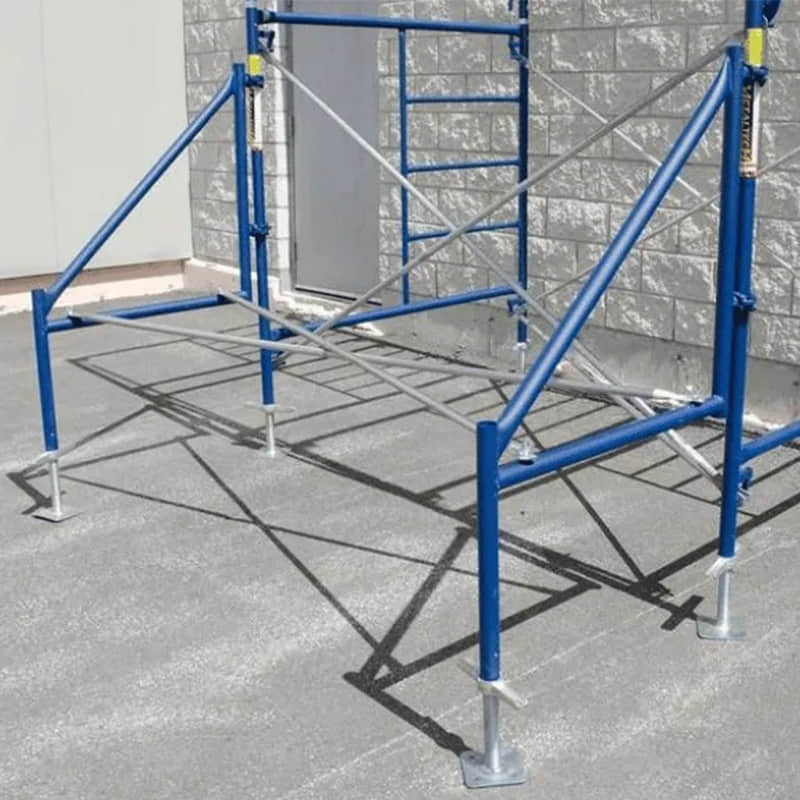
Outriggers are structural components of scaffold frames that are added to the bottom of scaffolding units to provide increased stability. Outriggers can commonly be a beam or frame that extends from the legs of the scaffold, and would also have either casters or leveling jacks on them. Outriggers create a bigger base, or lateral support, because they would decrease the center of gravity and make the scaffold less likely to tip on its footprint, especially in taller scaffolds or scaffolds exposed to lateral force.
Often, outriggers are confused with sidearms. Outriggers are added to scaffolds to provide more stability at the base, and side-arms are added at whatever working level to allow the worker to get as close to the work surface as possible, like a wall. The terms are often confused because they both communicate to provide assistance, but they perform distinctly different functions.
Why Are Outriggers So Important?
Outriggers play an important role in keeping scaffolds stable, particularly in higher risk situations. The Occupational Safety and Health Administration (OSHA) require that supported scaffolds that are more than 4 to 1 height-to-base widths be prevented from tipping with either guying, tying, bracing, or outriggers. For mobile scaffolds, a height to base width ratio of 2 to 1 or less must be used to avoid tipping.
Outriggers are helpful in these situations:
Tall and narrow scaffolds: When the scaffold’s height is high in relation to the scaffold’s base width.
Cantilevered platforms: When platforms extend beyond the scaffold's frame, uneven loads are created.
Untied scaffolds: When the scaffold does not tie into an adjacent structure.
Uneven surfaces: When the ground provides unstable and uneven surfaces and tipping chances increases.
By expanding the scaffold’s footprint: outriggers distribute weight more evenly, enhancing resistance to tipping and ensuring a safer working environment.
When Are Outriggers Required?
The need for outriggers depends on the scaffold’s configuration, type, and regulatory requirements. Key scenarios include:
Height-to-Base Ratio Exceeds 4:1: Stabilization is required by OSHA for scaffolds exceeding four times the base width. For example, a scaffold that is 5 feet wide and 20 feet high (4:1 ratio) would require outriggers or other forms of stabilization if they wanted to increase the height to 25 feet (5:1 ratio).
Specific Scaffolds: There are some narrow scaffolds, like baker scaffolds (typically 29 inches wide), that may require outriggers at lesser heights. They would be required to provide outriggers if double or triple stacked: They are often required when the platform height exceeds 6 feet or when stacking more than 3 sections (approximately 18 feet).
The scaffold is facing the wall: In large open spaces where there isn’t a wall adjacent to the scaffolding, 4 outriggers will often be required to prevent tipping in 360 degrees. If the scaffold is adjacent to the wall, the wall is a natural outrigger that occurs on one side and, therefore, the requirements will be reduced to two outriggers on the opposite side.
Even when not mandatory: using outriggers can be a proactive safety measure, particularly in windy conditions or when handling heavy loads.
Table: Outrigger Requirements for Scaffolds
Condition
Outrigger Requirement
Details
Height-to-Base Ratio > 4:1 (OSHA)
Outriggers or securing required
Example: 5' wide scaffold, platform ≥20' needs outriggers or tying.
Baker Scaffold (29" wide)
Outriggers required for double/triple stacking
Needed if platform >6' or stacking >3 sections (~18' high).
Scaffold in Open Area
4 outriggers needed
Prevents tipping in all directions.
Scaffold Near Wall
2 outriggers may suffice
Wall acts as outrigger on one side.
The "Why": The 4:1 Stability Rule
To understand outriggers, you must understand the "Base-to-Height Ratio."
OSHA (Occupational Safety and Health Administration) regulations and international safety standards generally dictate a 4:1 stability ratio for supported scaffolds.
The Rule: The height of the scaffold platform cannot exceed four times the minimum base dimension unless the scaffold is tied to a structure or widened with outriggers.
A Practical Example
Let’s say you are using a standard 5-foot by 5-foot scaffold frame.
Base Width: 5 feet.
Max Safe Height (without support): 20 feet (5ft x 4).
If you need to build the tower to 25 feet, you have two options:
Tie it in: Physically anchor the scaffold to the building wall.
Use Outriggers: Attach outriggers to increase the base width.
If you add 30-inch outriggers to both sides, your base width grows from 5 feet to roughly 10 feet. Your maximum free-standing height now potentially doubles to 40 feet (always check manufacturer specs), significantly increasing your reach without drilling into the building facade.
Types of Scaffolding Outriggers
Outriggers come in various types, each tailored to specific scaffolding needs. Understanding these options helps in selecting the right outrigger for a project:
Adjustable Outriggers: With advanced features such as emergency systems and overload sensors, these outriggers meet OSHA 1910.66 and ASME A-120 for high safety applications.
Baker Scaffolding Outriggers: Baker scaffolding outriggers are designed for baker scaffolds which typically include caster wheels to help solve the stability concerns of narrower scaffolds.
Fixed Outrigger Systems: Fixed outrigger systems are affixed permanently and are used for buildings that require long-term maintenance of stationary scaffolds.
Transportable Outrigger Systems: These lightweight outriggers are supplied with casters to make them easy to move without counterweights. They are suitable for temporary or moving outrigger setups.
Push-Thru Systems: Push-thru systems quickly connect to a fixed stand and can typically be assembled quickly along with a building to give quick access to the facade of the building.
Table: Types of Scaffolding Outriggers
Type
Description
Key Features
Best Use Case
Adjustable Outriggers
Advanced features like emergency systems and sensors
OSHA 1910.66, ASME A-120 compliant
High-safety, complex projects
Baker Scaffolding Outriggers
Designed for narrow baker scaffolds with caster wheels
Enhances mobility and stability
Interior or small-scale projects
Fixed Outrigger Systems
Permanently set for long-term use
Durable, low-maintenance
Building maintenance
Transportable Outriggers
Lightweight, mobile without counterweights
Easy to move and set up
Temporary or mobile setups
Push-Thru Systems
Quick connection to fixed stands for facade access
Fast setup, modular
Facade work, quick installations
How to Use and Install Outriggers Properly
Proper installation and use of outriggers are crucial for scaffold safety. Follow these guidelines:
Select the Right Type: Choose outriggers compatible with the scaffold and project needs.
Secure Attachment: Attach outriggers firmly to scaffold legs or frames per manufacturer instructions.
Leveling: Use jacks or leveling devices to ensure a stable base.
Bracing: For rolling scaffolds, brace outriggers with bay braces for added stability.
Load Capacity: Verify that outriggers are rated for the intended load, including workers and materials.
Regular Inspection: Check outriggers for damage or wear and replace as needed.
Training: Ensure all personnel are trained in outrigger use and scaffold safety.
Safety Considerations and Best Practices
Outriggers enhance stability but are not a substitute for comprehensive safety measures. Best practices include:
Tie-Off When Possible: Secure the scaffold to an adjacent structure for added stability.
Use Guardrails: Install guardrails and toeboards to prevent falls.
Lock Casters: For mobile scaffolds, lock casters during use to prevent movement.
Avoid Overloading: Respect the scaffold’s load capacity, even with outriggers.
Monitor Environmental Conditions: Account for wind or weather that could affect stability, using additional securing measures if needed.
Regular Maintenance: Inspect and maintain scaffolds and outriggers to ensure reliability.
Common Mistakes and Tips
Avoid these common mistakes when using outriggers:
Incorrect Installation: Failing to secure outriggers properly can lead to instability.
Overloading: Exceeding load capacity risks tipping or collapse.
Neglecting Inspections: Regular checks are essential to identify wear or damage.
Using Inappropriate Types: Mismatched outriggers reduce effectiveness.
Tips for Effective Use:
Consult Experts: Seek advice from scaffolding professionals if unsure about requirements.
Follow Standards: Ensure outriggers meet OSHA, ASME, or local regulations.
Train Personnel: Comprehensive training enhances safety and compliance.
Plan Ahead: Incorporate outriggers into project planning for seamless integration.
Source High-Quality Scaffolding from AJ Building
Site safety begins with premium materials. At AJ Building, we manufacture and supply top-tier scaffolding systems, outriggers, and accessories designed for heavy-duty B2B construction projects.
With stringent quality control and a focus on international safety standards, our scaffolding components are engineered to provide maximum stability for your workforce. Whether you need ringlock systems, cuplock scaffolding, or reliable mobile tower accessories, we have the manufacturing capacity and export expertise to meet your project demands.
Conclusion
Scaffolding outriggers are a simple yet vital component in construction safety. By understanding the 4:1 ratio rule and following proper installation guidelines, you can protect your crew from catastrophic tipping accidents. Always prioritize high-quality equipment and rigorous site inspections.
Looking for reliable, factory-direct scaffolding accessories? Contact AJ Building today to request a quote and secure the best materials for your next project!
FAQ
Can outriggers be used on uneven surfaces?
Yes, outriggers with leveling jacks can stabilize scaffolds on uneven surfaces. Proper adjustment and secure attachment are critical to ensure the scaffold remains level and safe.
Do outriggers eliminate the need for tying a scaffold to a structure?
No, outriggers enhance stability but don’t fully replace tying. Tying the scaffold to a structure provides additional security, especially for tall scaffolds or in windy conditions.
Read More
OUTRIGGER SCAFFOLD(THRUST OUT)PLATFORMS —— NYC
When Are Outriggers Required On My Baker Scaffold? —— Blogger



 en
en fr
fr es
es