 en
en fr
fr es
es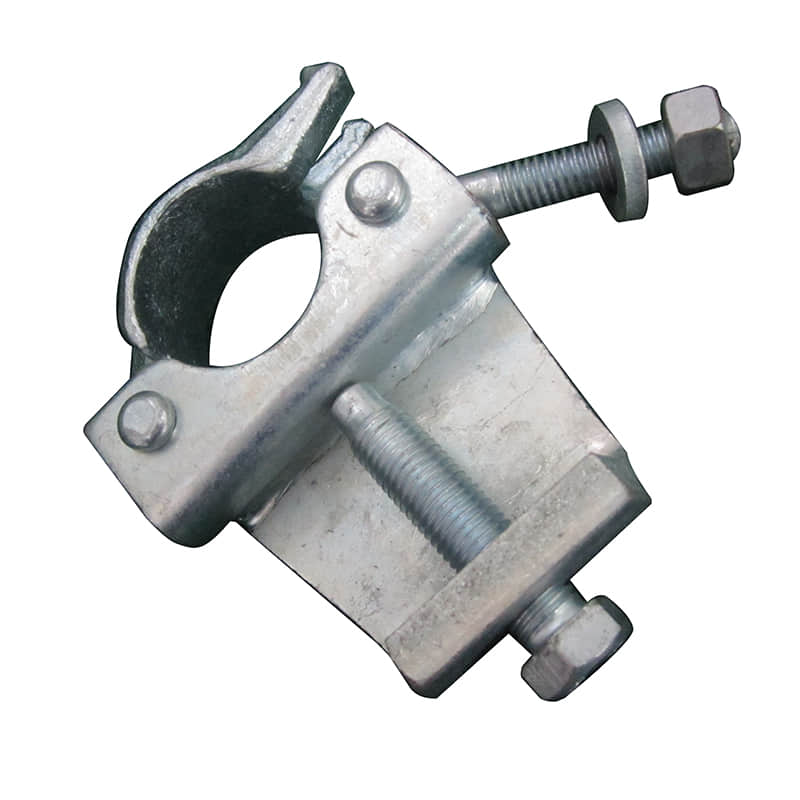
Scaffold Beam Clamps are industrial strength attachment devices that provide support for scaffolding (tubes) to steel beams (i-beams/h-beams) without having to weld or drill into the steel structure. The Scaffold Beam Clamps provide a high-strength and non-destructive means of attaching scaffolding to steel beams, providing an adequate connection in order to construct suspended or cantilevered platforms in complex locations, such as bridges, oil rigs, and high-rise steel structures that cannot be supported from the ground.
The Scaffold Beam Clamps (Girder Couplers) have been developed to be the solution to the challenging problem of attaching scaffolding tubes to I-Beams and/or H-Beams (structural steel) without the need for welding or drilling them together. Using a precision-engineered, drop-forged body, the clamps remove the possibility of slippage or instability that can occur with a cast-iron clamp. The clamps also offer an incredibly stable base in some of the most extreme engineering environments, whether used in high-rise cantilevered scaffolding or offshore oil rig maintenance.
Feature
We prioritize structural integrity and material traceability to ensure your project meets international safety audits.
|
Feature |
Technical Specification |
Compliance Standard |
|
Manufacturing |
Drop Forged (High-tensile carbon steel) |
BS1139 / EN74-1 |
|
Surface Treatment |
Hot Dipped Galvanized (HDG) > 85μm |
ISO 1461 |
|
Safe Working Load |
30kN (Slip Resistant) |
AS/NZS 1576 |
|
Compatibility |
Universal fit for flange thicknesses up to 45mm |
Global I/H Beam Standards |
|
Tightening Torque |
54Nm Recommended |
Grade 8.8 Bolt Strength |
Why Choose Forged Clamps
In heavy-duty construction, the difference between "standard" and "enhanced" components is the margin of safety.
- Ductility vs. Brittleness: While most cast iron clamps snap when they are made to resist sudden impacts, our Drop Forged Steel clamps have superior ductility. They will deform rather than fracture when they are overloaded, therefore providing a crucial window of safety for personnel on site.
- Anti-Slip Geometry: Our clamps have a hardened serrated jaw design, which increases the friction coefficient between the clamp and the steel flange by 35% when compared to similar couplers with smooth surfaces. This result provides stability against dynamic wind loads and vibration.
- Corrosion Longevity: Whereas ordinary zinc-plated clamps are red rusty within months when they are exposed to humidity near the ocean, our 85 μm HDG coating allows for over 10 years of service without needing to be serviced or repaired, and this reduces the Total Cost of Ownership (TCO).
Engineering Applications
- Marine and Offshore: A scaffold with maximum corrosion resistance is needed to be used on oil rigs and shipyards.
- Suspended Scaffolding: The system must ensure that its components are safely secured to the structural steel of bridges and high-rise buildings.
- Industrial Maintenance: Quickly put up scaffolding on internal beams for repair jobs on overhead cranes or piping.
FAQ
What is the difference between a fixed and swivel beam clamp?
- Fixed beam clamps are designed to lock the scaffold tube at a 90-degree angle to the steel beam, providing maximum structural rigidity. Swivel beam clamps allow for 360-degree rotation, offering flexibility for diagonal bracing or complex geometry where the tube needs to meet the beam at an off-angle.
Are these beam clamps compatible with both I-beams and H-beams?
- Yes. Our universal girder couplers are designed with a wide-mouth jaw and a high-tensile T-bolt that accommodates a broad range of flange thicknesses (typically up to 45mm). This versatility ensures they can be used across various structural steel profiles without requiring specialized hardware.
Do you provide Material Test Certificates (MTC) for these clamps?
- Every batch of our scaffold beam clamps is issued with an EN 10204 3.1 Material Traceability Certificate. This includes chemical composition analysis, tensile strength testing, and galvanization thickness verification to ensure full compliance with Tier-1 project requirements.
Get a Technical Consultation
Looking for load-bearing calculations for your specific project?