The Ultimate DIY Guide to Scaffold Planks: Build Safely & Creatively
May 20, 2025
Scaffold planks (also called scaffold boards ) are essential for construction, home renovations, and even creative DIY projects. Whether you're building a temporary work scaffolding platform or repurposing old scaffold planks into furniture, this guide will provide you study a lot of knowledge about DIY scaffold plank projects.
What Are Scaffold Planks?
Scaffold planks are flat boards made from either wood, metal, or composite materials, designed as working platforms on scaffolding. They are meant to support workers and materials by providing a stable, leveled surface when working on projects that require a height for construction, repair, or maintenance.
Types of Scaffold Planks
Wood Scaffold Planks
-Traditionally made from solid hardwood (e.g., spruce, pine, or fir).
-Must meet a standard for strength and durability (e.g. OSHA or EN 12811).
-Slowly becoming obsolete due to the hazards of splintering, warping, and rotting.
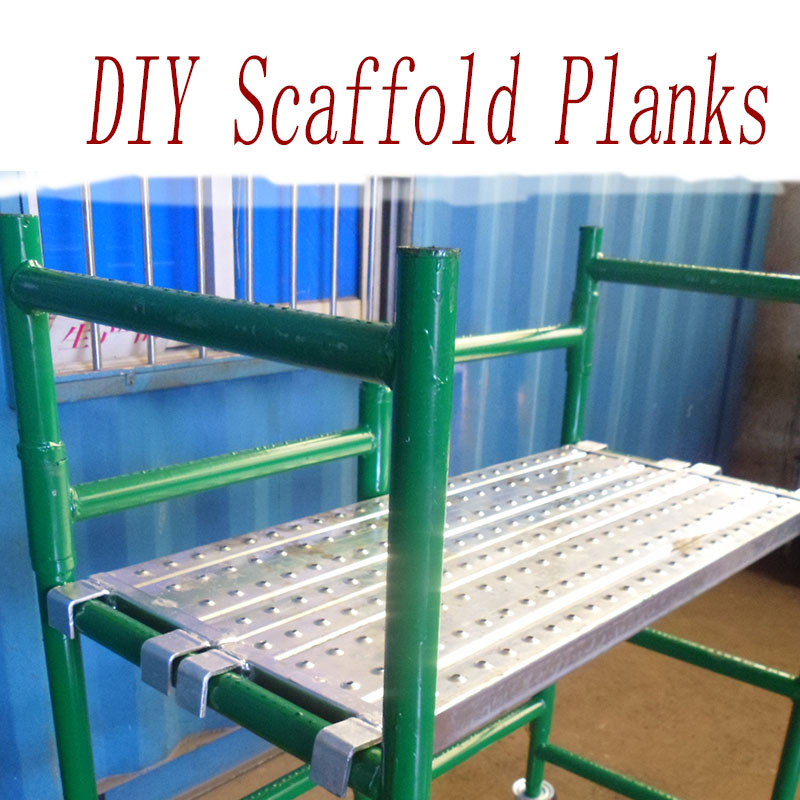
Steel or Aluminum Planks
-Lightweight, durable, and non-combustible.
-Often supplied with system scaffolding (e.g., ringlock, cuplock).
-Non-porous and resistant to moisture, insects, and wear.
Composite Scaffold Planks (Fiberglass or Plastic)
-Good for electrical projects since composite materials are naturally non-conductive.
-Resistant to chemicals, UV rays, and extreme weather conditions.
-Lighter than steel, but more expensive.
Primary Safety Standards
-OSHA (USA): Scaffold planks must support at least four times their intended load.
-EN 12811 (European Union): Defines limitations on strength, deflection, slip resistance, etc.
-ANSI/ASSE A10.8: Scaffold plank materials, inspection and load capacity definitions.
Choosing the Right Scaffold Planks for DIY Projects
Selecting the right scaffold planks will guarantee safety, stability, and productivity when completing a construction project.
1. Identify all your needs
Project Type: Light-duty (painting, cleaning your gutters) vs. heavy-duty (construction or masonry work).
Height & Span: How high will you be working? Will you need long planks to reach a surveyed area?
Frequency of Use: Will this be a one-time job, or would you want to reuse scaffolding planks for other projects?
2. Types of Scaffold Planks for the DIY Person
Wooden Planks (Cost-effective)
They are inexpensive and found everywhere (hardwood like spruce, pine). They are lightweight and can be cut to size easily for planning, and they can warp, crack, or rot. Be sure to check your planks regularly for splinters and structural integrity.
Aluminum or Steel Planks (Long-term Use)
They are strong, durable, and can endure the elements. They will not bend or splinter like wood. However, they do cost more, are heavier than wood (but lighter than steel), and are suitable for people who frequently do DIY or heavier weight work (i.e., roofing, siding work).
Composite/Fiberglass Planks (Specialized Work)
Composite /fiberglass boards are functioning as electrical work materials. They are resistant to chemicals, sources of moisture, and UV rays. However, they are typically expensive. See pricing and specifications because, depending on your need, they may be heavier than wood and lighter than steel. They are usually acceptable when you do work in close areas under power lines or severe weather.
Safety Tips for Working with Scaffold Planks
Insist on damage checks before use.
Remember Load Capacity – Ensure planks can support your weight + tools/materials (OSHA suggests 4 times the planned load).
Beware of Overhangs – Planks need to overhang at least 6 inches past your supports, but not overly.
Check Before Use – Look for cracks, bending, and rot (sounds odd, but especially with wood).
Check whatever is Supporting The Plank Is Good – Never use unstable objects (like chairs or tables) as scaffold bases.
Secure The Plank – This means you have to tie it down or use scaffold hooks or something to prevent it from shifting.
Secure the proper way with clamps/brackets if you are constructing a temporary platform.
Always wear gloves, & safety goggles when cutting or sanding.
Creative DIY Scaffold Plank Projects
1. Scaffold board shelving
Materials - 1 or 2 Scaffold boards, brackets, screws
Process
- Sand and stain scaffold boards.
- Fix brackets to the wall.
- Fix the planks to the brackets to create a rustic shelf.
2. Scaffold plank coffee table
Materials - 4 scaffold boards, hairpin legs, wood glue
Process
- Glue the boards together in pairs in a side-by-side fashion.
- Sand to smooth and apply varnish.
- Attach the metal legs for an industrial style.
3. Garden decking from scaffold boards
Materials - A number of scaffold planks, joists, screws.
Process
- Layjoists as the base.
- Screw down planks on top of planks leaving small gaps for drainage.
- Treat with an outdoor wood preservative.
4. Scaffold plank workbench
Materials - 2 or 3 scaffold planks, 2 or more sawhorses or a metal frame.
Process
- If using sawhorses, fix the scaffold boards across the sawhorses to create a temporary workbench.
- Attach a vice or hooks to hang tools.
Maintaining & Treating Scaffold Planks
No matter what scaffold planks you use: wooden, metal, or composite, keeping them well-maintained is essential to ensure safety, longevity, and performance. Here are some ways to maintain your scaffold planks.
1. Wooden scaffold planks
Considerations for maintenance
Regular inspections - look for:
Cracks, splits, or warping
Rot, mold, or damage from insects
Loose knots or splinters
Cleaning
Sweep dirt and debris.
Hand wash with mild soap + water (do not use a pressure washer, it may damage wood).
Drying
Store them in a dry, ventilated area, it is essential for preventing moisture.
Treatment & Protection
� Oiling/Sealing (to prolong the life of wood)
Once a year apply linseed oil or wood preservative
Do not paint the scaffold planks. Paint can disguise structural damage.
� Fungicide and insect repellent
Use borate solutions to protect them from rot and termites.
� Edge protection
Use metal straps to reinforce the ends to avoid splitting.
⚠ When do wooden planks need to be retired?
-When cracks run deeper than ¼ inch.
-When bending or sagging occurs while under a light load.
2. Aluminum/Steel Scaffold Planks
Maintenance Suggestions
Inspect for damage – Look for:
-Dents, bends and/or corrosion
-Loose rivets and/or welds
Cleaning
-Wipe with a damp cloth.
-Use a wire brush + rust converter to remove rust.
Lubrication
-Use silicone spray on moving parts (if they are adjustable).
Preventing rust
-Galvanized or Powder-coated planks - Best choice for prolonged usage.
-Touch-up Paint - Use rust-resistant enamel on scratches.
⚠ When to retire metal planks?
Corrosion affects structural integrity.
If a bend creates a concave or convex profile, that affects flatness (risk of hazard).
3. Composite/Fiberglass Planks
Maintenance HintsCleaning
Wash with soap and water + soft brush
DO NOT USE HARSH CHEMICALS (may degrade resin)
Inspection
Check delamination, cracks, and UV damage.
UV Protection
UV-Retardant Coatings - helps extend the life of your boards in sunny climates.
When should composite planks be retired?
-If deep cracks or splits develop.
-If flexibility begins to increase (this is a sign that the material may be fatigued).
General Storage Tips
-Store Flat - warping (wood) or bending (metal) can occur.
-Store off the Ground - moisture/rust can develop.
-Cover - use tarps for outdoor storage.
Safety Reminders
-Always Do Not Use Damaged Planks - Even very small cracks may fail when loaded.
-Always follow the manufacturer's Instructions - weight limitations and usage conditions.
-Label Your Planks - Keep notes on inspection dates, repairs, etc.
Conclution
Scaffold planks are incredibly versatile for DIY scaffolding ideas. Whether you're upcycling old scaffold boards or building a sturdy work platform, always prioritize safety and proper treatment.
Do you want to buy scaffolding steps for your project, you can contact AJ Building. We will provide you with quality quotes and solutions.
FAQ
Which size should I select for my scaffold plank?
Standard sizes vary, but standard sizes include:
- Length: 6ft, 8ft, 10ft, or 12ft (other lengths considered custom).
- Width: 9.5" to 12" (note to scaffold plank users; wider planks provide more stability).
- Thickness: 1.5" to 2" (note to scaffold plank users; thicker planks support heavier loads).
What is the load capacity for a scaffold plank?
Load capacity will differ based on material type and thickness:
- Wood Types: Commonly 150 - 250 lbs per square foot.
- LVL/Engineered Wood: Up to 300+ lbs per square foot.
- Aluminum: Depends on design, but usually provides a high load capacity.
We recommend always checking ratings provided by manufacturers and safety standards (OSHA, EN 12811).
Read More
Best way to DIY my own scaffold work plank instead of dropping $200 on this? —— Reddit .r/Tools
Planking for scaffolding -lOSH forums —— lOSH forums



 en
en fr
fr es
es