What is Supported Scaffolding? Types, Pros, Cons, and Uses
Dec 24, 2025Safety and efficiency when working from heights are critical aspects of the construction industry. Access can be achieved through a variety of methods, including aerial lifts, suspended platforms, etc., but the traditional way of working platform, known as a supported scaffold, has remained the most basic and globally used method of access for contractors across the world.
If you're in the position of a construction manager, scaffold rental company, or procurement officer within an industry, learning how supported scaffolding functions, its advantages, and what it cannot do provides a foundation to plan your projects properly; With this guide we will provide you with all the information necessary to choose the correct equipment when you decide to purchase supported scaffolding for the next project that you work on.
Supported scaffolding is the category of scaffolding that supports one or more platforms using rigid load-bearing members (poles, legs, frames, uprights, posts, outriggers, etc.) to support the platform and all materials, tools, and workers performing on top of that platform.
In contrast to suspended scaffolding, which is hung from an overhead support post (as in window-washing scaffolds), supported scaffolding is placed on solid ground and provides all of the necessary weight-bearing support to safely transfer the combined weight of workers, tools,s and materials to the ground.
In addition, it is the accepted industry standard for structural construction, heavy masonry projects, and many long-term maintenance projects in which the types of loads being placed on the scaffold will require high levels of stability and load-bearing.
Supported scaffolding is not a "one-size-fits-all" solution. It comes in various configurations designed to meet specific architectural challenges.
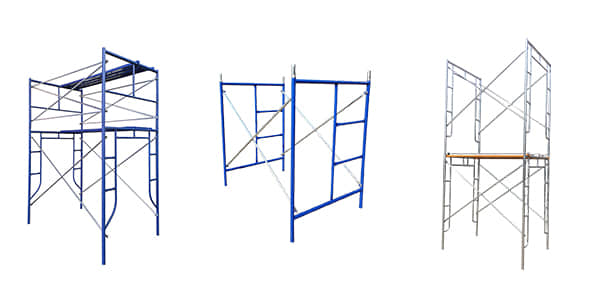
Often referred to simply as "frame scaffold," this is the most common type seen on residential and light commercial sites. It consists of pre-fabricated metal frames connected by cross braces.
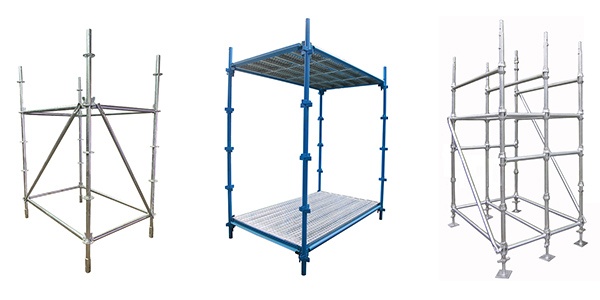
System scaffolding, such as Ringlock, Cuplock, or Kwikstage, uses vertical posts and horizontal ledgers that connect at fixed node points.

This traditional method uses steel tubes and couplers. There are no pre-set locking points, allowing for infinite adjustability.
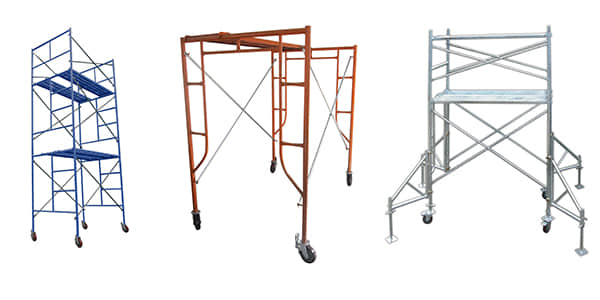
These are freestanding supported scaffolds mounted on castors (wheels).
The reason why engineers and site managers continue to utilize supported scaffolding instead of newer technologies is simple: Supported scaffolding provides an incredibly stable, safe platform with the most significant type of load-bearing capacity.
Supported scaffolding consists of a grounded system where everything is secure—that is, there is no sway, and everything is completely secured. This stability gives workers the necessary balance to perform tasks that require great precision and accuracy, such as bricklaying and welding, which is critical to producing quality work.
When it comes to aerial lifts, weight limits will be set (in most cases, only two workers and their tools can fit on them). Supported scaffolds—specifically those classified as heavy-duty system scaffolding—are built to withstand far more weight than aerial lifts. As such, they allow workers to store pallets of bricks, mortar, steel beams, and multiple crew members on a single scaffold system at the same time.
Supported scaffolding allows for easy movement throughout the working surfaces of a building. This type of scaffolding supports a continuous working platform along the length of a building, allowing workers to walk along the length of the building without having to stop to adjust equipment, greatly improving productivity.
For rental companies, supported scaffolding, mainly supported by hot-dipped galvanized steel, has very high Return on Investment (ROI) values. Supported scaffolding is weather-resistant, remains usable for many years, and requires little maintenance.
To make an informed decision, one must also consider the limitations.
Supported scaffolding needs a stable foundation in order to be effective. A stable foundation consists of a level area with sufficient support to provide stability while it sits on top of the ground. So, where the surface is not even or if the soil is weak, scaffoldings are built using mudsills and base plates, which will help to minimize the risk of the supported scaffolding either sinking or tipping over.
When a supported scaffolding is being built from the ground up, the bottom of the scaffolding has physical space taken up. In dense, crowded cities where there is not enough room for scaffolding to be located on the sidewalk or in front of a building, special permits and pedestrian safety tunnels should be obtained.
Unlike a boom lift, which can be operated and used immediately upon being delivered to its "job site, supported scaffolding requires that a qualified person construct it. Therefore, erecting supported scaffolding and disassembling it after the project has ended requires more skilled labor, which can increase the initial labor costs.
The versatility of supported scaffolding makes it ubiquitous across several sectors.
Why Source Supported Scaffolding from AJ Scaffolding? Whether your project requires the rapid deployment of Frame Scaffolding or the industrial-grade strength of Ringlock systems, AJ Building Material Co., Ltd. is your trusted manufacturing partner.
We engineer our supported scaffolding systems using premium Q235 and Q345 steel, featuring hot-dipped galvanized finishes for ultimate rust resistance and longevity. As a direct-to-buyer manufacturer with extensive export experience, we guarantee that every base plate, frame, and ledger meets stringent international safety standards while keeping your procurement costs highly competitive.
Ready to elevate your next project safely and efficiently?
[Contact AJ Building today for a customized quote and expert equipment consultation!]
What is the maximum height for supported scaffolding?
How often must supported scaffolding be inspected?
Can I mix scaffolding components from different manufacturers?
Email : aj-steven@dghualifeng.com.cn


Friendly Links :
Kitchen Cabinet© 2026 Guangzhou AJ Building Material Co.,Ltd All Rights Reserved


 en
en fr
fr es
es