• Why is There So Much Scaffolding in New York? The Truth Behind the Urban Jungle
    Why is There So Much Scaffolding in New York? The Truth Behind the Urban Jungle Sep 06, 2025
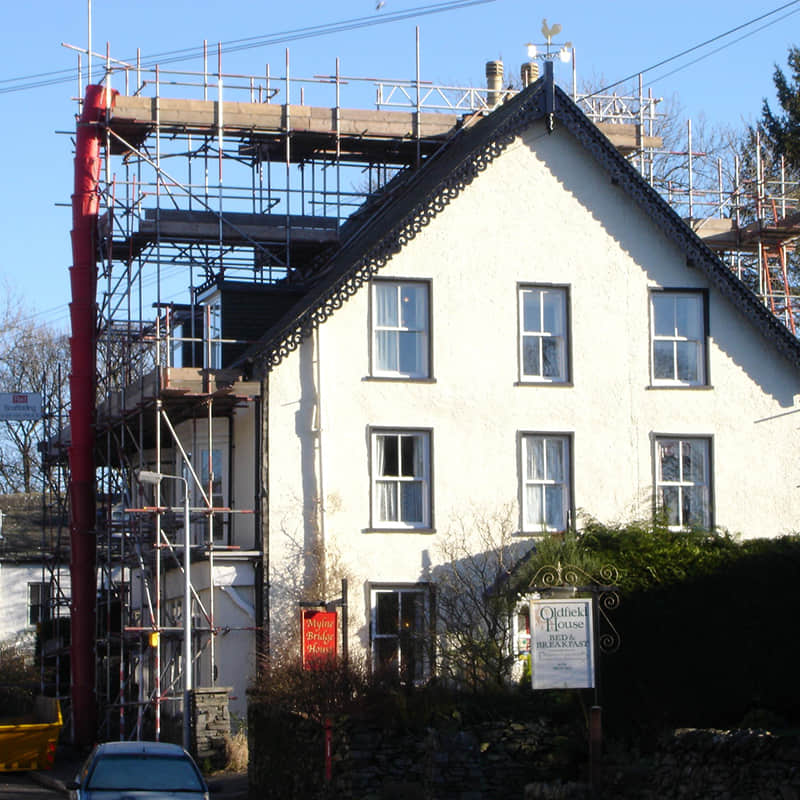
    New York City's skyline is one of the most recognizable in the world, a striking vertical landscape of glass, steel, and historic masonry. However, for many of the New Yorkers who live and work in and around it, the view from the street often seems defined by something else - its ever-evolving, seemingly infinite network of sidewalk sheds and scaffolds - a veritable multi-layered tapestry of temporary (sometimes painfully permanent) structures bedecking the street level of Manhattan and the outer boroughs, as much a part of the urban landscape as yellow cabs or hotdog vendors. But what does it all mean? The reasons can be complex, as there are both historical safety frameworks, shifts in construction laws, and economic realities - not to mention the simple fact that a city with over one million buildings is constantly changing, and often under repair. For anyone engaged in the sectors of architecture, engineering, construction, or materials, this phenomenon is critical to understanding.       The Primary Driver: NYC's Local Law 11     The one principal cause of the city’s "scaffolding jungle" is legislation called Local Law 11, or properly, the Façade Inspection & Safety Program (FISP). It is decreed in law because of an incident. A student was killed in 1979 by falling masonry that broke away from the facade of a building. The legislation was enacted to develop a plan that would provide a mechanism for inspecting the facades of buildings to avoid the same tragic events from happening again. Local Law 11 mandates that every building over six stories in New York City has its exterior walls and appurtenances (balconies, fire escapes, etc) inspected by a licensed architect or licensed engineer every five years. The inspector files a report with the Department of Buildings (DOB) and assigns the building's facade one of three designations:   Safe: There are no issues, and the facade is in good condition. Safe w/Repair & Maintenance Program (SWARMP): Issues exist but pose no immediate danger to the user. The issues must be repaired prior to the next inspection cycle. Unsafe: The facade is a danger to public safety and in need of immediate repair. When a building is deemed "Unsafe," the owner legally has to install a sidewalk shed or scaffolding to protect pedestrians in the immediate area. The sidewalk shed or scaffolding will remain in place until the hazardous condition(s) are repaired, which, for various reasons, can take years.     More Than Just Facades: Other Key Reasons for Scaffolding   While Local Law 11 is the most significant factor, several other laws and realities contribute to the omnipresent scaffolding: The "Scaffold Law" (Labor Law Section 240) Separate from Local Law 11, New York State has a strict "Scaffold Law" that has been on the books since the 19th century. This law holds building owners and contractors fully liable for worker injuries related to falls from heights. It places the burden of safety entirely on the employer, regardless of any negligence by the worker. This strict liability encourages a culture of extreme caution, with contractors and building owners investing heavily in robust, often over-engineered, scaffolding systems and safety protocols to mitigate risk and avoid costly lawsuits.   Constant Construction and Renovation New York is never done. It is a city of perpetual renewal. In addition to facade repairs, thousands of construction projects, from new skyscrapers to complete gut renovations of historic brownstones, all require scaffolding. With so much construction happening, at any moment in time, a large portion of the city is part of an active construction project.   Economic Conditions and Project Delays Cost is a primary reason that scaffolding remains up for years, while the cost of leaving a sidewalk shed up (for a building owner) is often less than the millions of dollars that can be expended for a complex facade restoration on older, landmarked properties. Delays from permits, complications in getting financing, and other bureaucratic red tape involved in historical preservation can perpetuate the delay of a project, and sidewalk sheds and scaffolding become an indefinite temporary structure of the streetscape.       Types of Scaffolding You See in NYC   The "scaffolding" you see isn't a single type. Different structures serve different purposes: Supported Scaffolds (Sidewalk Sheds): This is the type with which you are most familiar. These are the structures with roofs that span the sidewalk to protect pedestrians from debris falling from above. Suspended Scaffolds (Swing Stages): This type hangs from the roof of a building. They are most often used for facade cleaning, facade painting, and window cleaning on high-rise buildings. Cantilever Scaffolds: This type is used when you are unable to provide ground support for the scaffold. The scaffold attaches directly to the building structure and is projected outward.       The Impact on the City   While scaffolding is an integral part of public safety, it is not without its detractors. Residents and business owners decry the visual blight, loss of sunshine, and dark, uninviting corridors, all of which can detract from their local businesses. A recent study from the Mayor's office and Mastercard indicated that businesses with a scaffold experienced a dramatic reduction in weekly transactions and revenue. Nonetheless, the City is working to address scaffolding. New reforms are designed to encourage building owners to expedite their repairs, and the City is working to create new designs for scaffolding that may be less of a nuisance. However, the hard truth is that as long as New York continues to build, age, and take public safety seriously, their streets will remain covered by these critical structures.       A Necessary Eyesore for a City in Flux   The ubiquity of scaffolding in New York is not a sign of neglect, but a testament to a city that takes public safety seriously. It's a physical representation of the city's complex legislative landscape and a visual marker of its endless evolution. For building owners, contractors, and suppliers, it represents a critical market driven by strict compliance and constant demand.       FAQ   How long does scaffolding typically stay up? The duration can vary widely. While scaffolding is intended to be temporary, it can sometimes remain in place for months or even years. This is often due to project delays caused by complex repairs, permit issues, landmark approval processes, or economic factors.     Is all scaffolding in NYC related to Local Law 11? No. While Local Law 11 is a major driver, scaffolding is also required for new construction, extensive renovations, and other maintenance projects. Additionally, New York's strict "Scaffold Law" (Labor Law Section 240) places significant liability on contractors for worker safety, which further encourages the use of rigorous, code-compliant scaffolding systems.     What is the difference between a sidewalk shed and a scaffold? A sidewalk shed is a type of supported scaffold with a protective roof built over a sidewalk. Its main purpose is to shield pedestrians from falling debris from the building above. A scaffold is a broader term for any temporary structure used to support workers and materials during construction or repair work. Sidewalk sheds are a specific type of scaffold.

  • Ringlock vs. Tube and Clamp Scaffolding: Which Is the Best Choice for Your Project?
    Ringlock vs. Tube and Clamp Scaffolding: Which Is the Best Choice for Your Project? Feb 06, 2026
    The selection process for scaffolding systems used in worldwide construction and infrastructure development requires more than logistics because it needs fundamental strategic choices. The selection process creates effects on labor expenses, extends construction duration, and impacts workplace security and business financial performance. The market operates under two main systems, which include modern Ringlock (Modular) Scaffolding and traditional Tube and Clamp (Coupler) Scaffolding. The two systems maintain the same purpose of providing elevated access, yet they use different engineering methods and operate with different performance requirements. The guide performs an extensive evaluation to assist you in selecting between two systems that match your project needs and budget constraints.     1. Understanding the Fundamentals   What is Ringlock Scaffolding?   Ringlock is a sophisticated modular scaffolding system. The main characteristic of this system includes a central "rosette" connector, which enables users to link eight different components (ledgers, braces, and transoms) through one wedge pin hammer strike. The system operates at its highest capacity while allowing users to construct it at maximum speed.   What is Tube and Clamp Scaffolding?   Often referred to as "traditional" scaffolding, Tube and Clamp consists of galvanized steel pipes joined together by various types of couplers (right-angle, swivel, or sleeve). The system provides unlimited adjustment capabilities because users can position the clamps anywhere on the pipe.       2. Speed and Labor Efficiency: The Time-Saving Factor   Time functions as a financial resource that engineers need to work with during their present-day projects. The two systems differ most significantly in their ability to construct and deconstruct facilities at different rates. Ringlock Scaffolding: The rosettes in this system provide pre-determined connection points, which eliminate the requirement for manual joint measurement and leveling operations. A team with advanced skills enables Ringlock system installation at speeds that cut down work time by 30% to 50% relative to conventional construction techniques. Tube and Clamp: This system is labor-intensive. A person needs to hand-place the coupler before using a wrench to secure it for connection. The process is slow and requires a higher level of specialized skill to ensure the structure is perfectly plumb and level.     3. Structural Integrity and Load Capacity   The process of handling heavy-duty masonry work, industrial maintenance, and large-scale shoring operations requires absolute reliability in load-bearing capacity. Engineering Precision: Ringlock components are manufactured to strict tolerances. The fixed geometry of the wedge-lock mechanism ensures that the load is distributed evenly across the vertical standards. The material works best for demanding uses that require maximum strength because it provides excellent structural support. The Human Factor: The strength of a Tube and Clamp system depends heavily on the torque applied to the couplers by the individual worker. Heavy loads on an under-tightened bolt will cause the friction-based joint to lose its grip. Technical Note: Ringlock systems operate at higher load capacities (kN/m²) than standard Tube and Clamp systems, which makes them the best option for complicated industrial settings, including refineries and power plants.       4. Versatility and Flexibility   Construction sites exist as irregular shapes instead of traditional rectangular forms. The project needs to be adaptable because it faces challenges from its piping system, its curved building design, and its irregular ground surface. The Strength of Tube and Clamp: This is where the traditional system shines. The clamps function as versatile tools that enable users to position them at any point along a pipe, thus creating customized solutions for irregularly shaped objects, confined areas, and historic buildings with unique architectural features. The Ringlock Solution: The Ringlock system provides users with modular functionality through its rosettes, which enable 45-degree and 90-degree attachment points for enhanced versatility. However, it still operates within fixed lengths (0.5m, 1.0m, 2.0m, etc.). The system requires "tube and clamp" hybrid sections for occasional use to overcome particular obstacles that block its route.       5. Comparative Analysis Table   Feature Ringlock Scaffolding Tube and Clamp Scaffolding Assembly Speed Extremely Fast (Wedge-lock) Slow (Manual Nut/Bolt) Skill Level Required Moderate (System-based) High (Manual Leveling/Plumbing) Durability High (Hot-dip Galvanized) High (But Couplers are easily lost) Component Count Fewer (Integrated parts) High (Loose clamps/bolts) Flexibility High (8 points per rosette) Infinite (Anywhere on the pipe) Safety High (Fixed locking points) Variable (Dependent on worker skill)       6. Long-Term ROI: Cost vs. Investment   Organizations need to pick their most profitable option during procurement because they should avoid selecting the cheapest option. The initial price of Tube and Clamp systems remains lower than other options. The raw materials (steel pipes and cast iron clamps) are less expensive than the precision-engineered rosettes of the Ringlock system. The initial expense of Ringlock equipment leads to financial benefits because it decreases both workforce costs and delivery expenses, which result from executing multiple construction projects. The modular design of scaffolding parts enables better stacking, which results in reduced truck requirements for transporting the same quantity of scaffolding materials. The site experiences regular losses of small couplers and bolts, which belong to Tube and Clamp systems, because these items disappear during construction operations. Ringlock components are larger and harder to lose.       7. Safety and Compliance   A well-respected construction organization operates through safety principles, which serve as its organizational foundation. Reliability: The Ringlock wedge-lock mechanism operates as a fail-safe system. Once the wedge is hammered in, the connection is rigid. The system reduces human error because it eliminates the requirement to adjust individual clamps out of the thousands needed. Standardization: Modern modular systems follow international standards, which include EN 12810/12811 and OSHA requirements for their design. The system operates with predictable patterns, which enables safety inspectors to confirm the construction quality of the build.     Conclusion   The selection between Ringlock, Tube, and Clamp systems depends on the exact requirements of your current project. Choose Ringlock if: Your organization handles big commercial construction projects, industrial maintenance work, and infrastructure development that require both fast project completion and high labor expenses. The efficiency and safety gains will provide a superior Return on Investment (ROI). Choose Tube and Clamp if: You are working on highly specialized, small-scale renovation projects with irregular geometries, or if you are in a region where labor costs are exceptionally low and the flexibility of "any-point" connection is mandatory. The current development of the worldwide construction industry demonstrates its adoption of modular construction methods throughout its operations. Ringlock serves as an advanced scaffolding solution that enables businesses to expand their operations while keeping their facilities protected from potential dangers.   Ready to Optimize Your Next Build? Your business partner selection becomes essential when you need to boost your inventory or when you require specific technical expertise for your upcoming projects. Our company provides scaffolding solutions of the highest quality, which follow engineering standards through its certified service operations. Our technical team stands ready to create a personalized quote and perform cost evaluation services for your upcoming work initiative.     FAQ   Is Ringlock scaffolding compatible with Tube and Clamp components? Yes, they can be used together. Right-Angle Couplers and Swivel Clamps function as standard connectors that contractors use to connect traditional tubes with Ringlock standards for creating particular bracing arrangements and handling atypical architectural requirements. The load-bearing calculations need to consider the separate operational limits of these two systems.   The selection between these two systems depends on the weather conditions are present. In extreme weather conditions, Ringlock is often preferred. Its wedge-lock mechanism is less affected by ice, mud, or debris compared to the threaded bolts of traditional clamps, which can seize or become difficult to tighten/loosen in harsh environments. The fast speed of Ringlock enables construction teams to build the framework at a quicker pace which helps them protect the structure before severe weather conditions arrive.
Leave a Message
If you are interested in our products and want to know more details, please leave a message here, we will reply you as soon as we can.
Submit

Need Help? Chat with us

Leave a Message
If you are interested in our products and want to know more details, please leave a message here, we will reply you as soon as we can.
Submit

Our hours

Mon 11/21 - Wed 11/23: 9 AM - 8 PM
Thu 11/24: closed - Happy Thanksgiving!
Fri 11/25: 8 AM - 10 PM
Sat 11/26 - Sun 11/27: 10 AM - 9 PM
(all hours are Eastern Time)

Home

Products

contact