• What Are the Scaffolding Bracing Requirements?
    What Are the Scaffolding Bracing Requirements? Feb 24, 2025
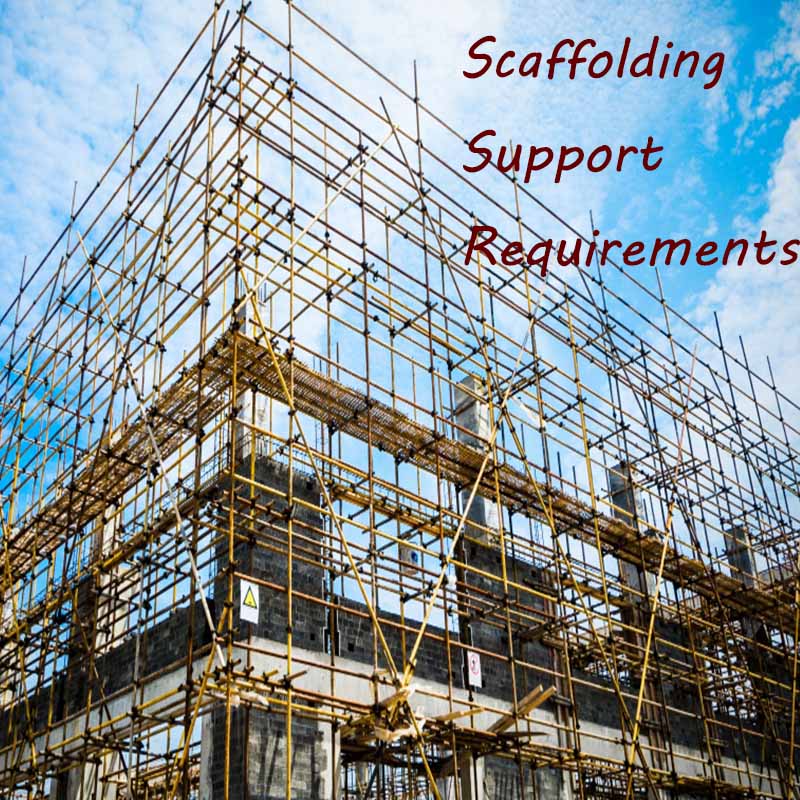
    Scaffolding is an essential part of construction projects; that is, an access platform that provides employees with a safe and fairly stable working platform for a variety of aerial operations. The stability of scaffolding affects the final safety of the scaffolds.  But "scaffolding bracing requirements" are often misunderstood. They are not just about adding a few diagonal tubes; they are a complex system engineered to counteract specific forces and ensure the entire structure acts as a single, rigid unit. This article describes the functions and requirements of scaffold support that keep your scaffolding in an optimum and safe working position.     What is Scaffolding Bracing     Before diving into the requirements, we must establish why bracing is the backbone of scaffold safety.   Defining Bracing: The Skeleton of Your Scaffold   In simple terms, scaffolding bracing is a system of tubes, clamps, and other components designed to prevent lateral (side-to-side) movement and buckling. A scaffold's vertical components (standards or legs) are incredibly strong under direct compression (vertical load). However, they are highly vulnerable to buckling or swaying when subjected to horizontal forces like wind, the movement of workers, or the transfer of materials. Bracing transforms a collection of individual poles and platforms into a rigid, stable structure by creating rigid triangles. This triangulation is the key to structural integrity.   The Critical Role of Bracing in Structural Integrity   A properly braced scaffold effectively: Prevents Sway and Lateral Movement: This is the most obvious function. Bracing locks the structure in place, stopping it from swaying in the wind or shifting as workers move. Distributes Loads: Bracing helps transfer horizontal loads (like wind) and uneven vertical loads throughout the entire structure and, ideally, down to the foundation. Keeps Standards Plumb: It ensures the vertical standards remain perfectly upright, allowing them to carry their maximum intended load without bending or buckling. Ensures OSHA Compliance: Failure to brace correctly is one of the most frequently cited OSHA violations, resulting in significant fines and legal exposure.     The Core Types of Scaffolding Bracing Explained     Bracing isn't a one-size-fits-all solution. Different types of bracing serve distinct purposes. A stable scaffold often requires a combination of them.   Cross Bracing (X-Bracing)   This is the most recognizable form of bracing, creating an 'X' shape within a bay (the space between four standards). Function: Cross braces are highly effective at preventing "racking" or "shearing" within that single bay. They provide exceptional rigidity to the scaffold's face and are a fundamental component of most supported scaffold systems (e.g., frame scaffolds).   Longitudinal (Façade) Bracing   This type of bracing runs diagonally along the length of the scaffold (parallel to the building's face). Function: Longitudinal bracing is essential for long scaffolding runs. It prevents the entire structure from swaying or racking lengthwise. It often runs in a repeating "zigzag" pattern up and across multiple bays, ensuring the whole façade is tied together.   Transverse (Sectional) Bracing   This bracing runs perpendicular to the building's face, connecting the inner and outer standards. Function: Transverse bracing stops the scaffold from swaying toward or away from the building. On tube and clamp scaffolds, this is often achieved with diagonal tubes. On frame scaffolds, the 'X' braces of the frame itself often serve this purpose.   Plan Bracing   Plan bracing is installed horizontally, creating a rigid "floor" at specific lift levels. Function: While less common for standard façade access, plan bracing is critical for freestanding scaffolds, mobile towers, or complex structures. It prevents the scaffold's legs from twisting or "scissoring" out of alignment.     Key Requirements for Scaffold Support      Understanding the types is good; knowing the rules is critical. While you must always follow the specific manufacturer's erection manual, the following requirements (based on OSHA 29 CFR 1926.451) are universal.   The Foundation: Base and Plumb   Before a single brace is installed, stability starts at the ground. Base: The scaffold must be set on solid, level ground. Use base plates and mud sills (planks) to distribute the load and prevent standards from sinking. Plumb and Level: The scaffold must be perfectly plumb (vertical) and level (horizontal) from the very first lift. Use a spirit level on every component. Bracing cannot fix an un-plumb scaffold; it can only keep a plumb scaffold from becoming un-plumb.   General OSHA Bracing Guidelines   OSHA is clear: supported scaffolds must be braced to prevent sway and displacement. This is achieved by using a combination of cross, longitudinal, and/or diagonal braces. These braces must be installed at each end of the scaffold and at horizontal intervals (typically every 30 feet) and vertical intervals (typically every 20-26 feet), as specified by the manufacturer. The most important rule is that bracing must be installed as the scaffold is erected. You cannot build a 40-foot scaffold and then decide to add bracing. It must be integrated into the structure from the ground up.   The Critical 4-to-1 Height-to-Base Ratio   This is one of the most important rules in scaffolding safety: If the height of a freestanding scaffold is more than four (4) times its minimum base width, it MUST be restrained from tipping. Example: If your scaffold's narrowest base dimension is 5 feet, it becomes unstable and requires restraint once it exceeds 20 feet in height (5 x 4 = 20). "Restrained" means it must be secured to the building using ties or stabilized using guy wires or outriggers.   The Difference: Bracing vs. Tying   Project managers often confuse bracing and tying. Bracing provides internal rigidity to the scaffold itself. Tying provides external stability by anchoring the scaffold to the adjacent, permanent structure. Your scaffold needs both. Bracing makes the scaffold act as one solid unit; ties stop that unit from falling over. Ties (such as reveal ties, through ties, or box ties) must be installed according to the manufacturer's specifications, often at intervals required by the 4-to-1 rule.       Common Mistakes and How to Avoid Them   �� Overloading scaffolds: always check the weight limits on the scaffolding being used.   �� Wrong base setup: install base plates and use leveling tools to ensure stability.   �� No support: put in place diagonal bracing to prevent the scaffold from swaying.   �� Absence of guardrails: install handrails to guard against falls.   �� Skipping inspections: undertake regular safety inspections before and after each shift.     Regulations and Compliance for Bracing of Scaffolding Compliance with regulations in compliance with scaffolding reduces liability risks while ensuring safety. Key scaffolding safety standards: ✔️OSHA(US): 29 CFR 1926.451 states that a scaffold must support a minimum of four times the maximum expected load. ✔️EN 12811(Europe): performance and safety requirements for scaffolding. ✔️BS 5975(UK): gives directions on temporary works and scaffolding stability. ✔️AS-NZS 1576(Australia and New Zealand): sets safety standards to be followed for scaffolding systems. NOTE: Always check local regulations before the erection of the scaffold; this can save you both time and financial losses.     Conclusion   These scaffolding aids are needed for the safety of workers and the smooth running of projects for reason of compliance with regulations. These best practices will ensure that scaffolding is kept stable and safe, bearing heavy loads.   AJ Building offers commercial scaffolding, tailored designs with heavy-load capacity, and safety-compliance solutions. If you're looking for quality solutions in scaffolding, give us a call now so you can get your free quote and get your construction site running safely and properly!     FAQ   What are the Essential Scaffolding Support Requirements? Scaffolding should have a stable foundation, proper bracing, a load-bearing capacity, planked platforms, guardrails, and adequacy to be regularly inspected. Furthermore, the scaffolding must conform to OSHA, EN, and local safety standards.   How Much Weight Should Scaffolding be Able to Bear? It must be able to support four times the intended load-that of the workers, tools, and materials, going by the OSHA standards. Check the manufacturer's specifications on load ratings at any time.   What Type of Base is Required for Scaffolding? The scaffolding should have firm, level surface mud sills, and base plates to support it adequately. Adjustable screw jacks help in leveling scaffolding on rough ground.   How Should Scaffolding be Braced for Stability? Scaffolding should have diagonal, horizontal, and cross-bracing in place to avoid any movement or collapse. In tall structures, scaffolding should be tied at regular intervals to the building.       More Information   Scaffolds —Health and Safety Executive Scaffolding —Princeton EHS —Princeton University      
  • A Comprehensive Guide to Scaffolding Pipe Weight
    A Comprehensive Guide to Scaffolding Pipe Weight Feb 20, 2025
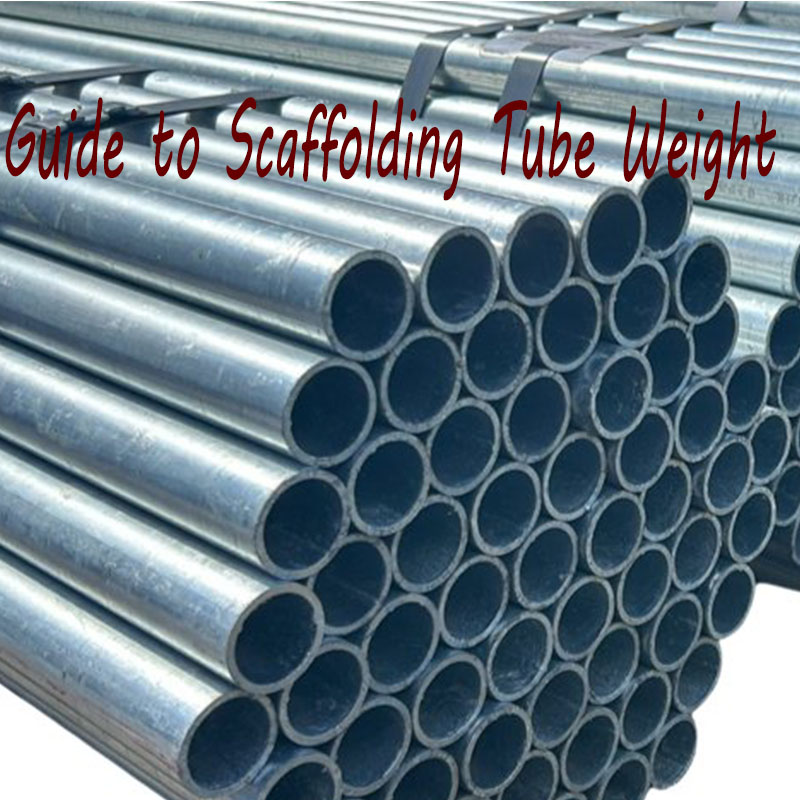
    Scaffolding is the backbone of almost every construction project, providing a safe and stable platform for workers. But beyond its structural purpose, understanding the weight of scaffolding pipes is a critical factor for everything from project budgeting to logistics and safety. This comprehensive guide will demystify the topic of scaffolding pipe weight. We’ll cover why it matters, how to calculate it, and provide a detailed breakdown of different pipe types. Whether you're a project manager, a logistics coordinator, or a purchasing agent, this information is essential for your work.     Scaffolding Tube Weight   The overall safety, usability, and performance of scaffolding systems are dependent on the methods of weighting the scaffold tubes. The weight of a scaffolding tube is determined by its material, size, thickness, and length, such that a trade-off between strength and stability is in order while selecting an option for the fabrication of steel scaffolding tubes to meet all requirements.   Typical Weights of Common Scaffolding Tubes   Material Diameter (mm) Wall Thickness (mm) Weight per Meter (kg) Weight of a 20-foot  Steel 48.3 3.2 4.1 24.6 Galvanized Steel  48.3 3.2 4.2 (slightly heavier) 25.2 Aluminum 48.3 4.0 1.8 10.8   These standard weights are approximate and may vary slightly due to manufacturing tolerances and coatings such as galvanizing.     Common Materials and How They Affect Weight   1. Scaffolding Tubes Made from Steel: These are generally around 39 to 41 pounds per 20-foot tube. The features and uses consist of high tensile strength, thus they are being utilized mostly for heavy-duty applications. 2. Galvanized Steel Tubes: A little heavier compared to normal steel because of the galvanized covering. The advantages are better resistance to rust and better endurance. 3. Aluminum Tubes: General weight is about 18 to 20 pounds per 20-foot tube. The advantages include lightness and resistance, and they are ideal for projects that require easy movement.     Why is Scaffolding Tube Weight So Important?     Scaffolding tube weights play a critical role in determining the appropriate system for safety, performance, and cost-effectiveness.   Logistics and Transportation: Heavy materials require more robust transport vehicles, which can increase fuel costs and require more trips. Knowing the total weight of your scaffolding allows you to plan transportation efficiently, avoiding costly overloads and delays. Cost Management: Material weight is often directly tied to cost. For steel pipes, weight is a primary factor in pricing. Accurately calculating the weight of your required materials helps you create a precise budget and avoid unexpected expenses. Load Bearing and Safety: While a scaffold's load-bearing capacity is determined by many factors, the self-weight of the structure is the first and most fundamental load it must support. Incorrectly estimating this weight can compromise the entire scaffold's stability and safety. Labor Efficiency: Heavier pipes are more difficult to handle and transport on-site, potentially slowing down erection and dismantling times. Understanding the weight can help you allocate the right amount of labor and equipment for the job.       Standard Scaffolding Pipe Specifications and Weight     Scaffolding pipes are typically made from galvanized steel, adhering to international standards for quality and safety. The most common standard is EN39 (European Standard). A standard 48.3mm (1.9 inch) OD (Outside Diameter) galvanized steel pipe is the industry norm. Its weight per linear meter is a fundamental benchmark. Standard Dimensions: Outside Diameter (OD): 48.3mm Wall Thickness: 3.2mm or 4.0mm Length: Commonly 6.0 meters (or customizable) Standard Weight: 3.2mm Wall Thickness: Approximately 3.56 kg per meter. 4.0mm Wall Thickness: Approximately 4.37 kg per meter. These figures are crucial for quick calculations and estimations. A 6-meter pipe with a 3.2mm wall thickness would therefore weigh roughly 21.36 kg (6m * 3.56 kg/m).       How to Calculate Scaffolding Pipe Weight   While knowing standard weights is useful, a more precise calculation is needed for non-standard sizes or for detailed project planning. The weight of any pipe can be calculated using a simple formula: Weight (kg) = Density × Volume Where: Density: The density of steel is approximately 7850 kg/m³. Volume: The volume of the pipe is the volume of the outer cylinder minus the volume of the inner cylinder. The formula can be simplified for ease of use: Weight (kg/m) = 0.02466 × [Wall Thickness (mm) × (Outside Diameter (mm) - Wall Thickness (mm))] Let's test this formula with the standard 48.3mm OD pipe with a 3.2mm wall thickness: Weight = 0.02466 × [3.2 × (48.3 - 3.2)] Weight = 0.02466 × [3.2 × 45.1] Weight = 0.02466 × 144.32 Weight ≈ 3.56 kg/m This formula is a powerful tool for calculating the weight of any steel pipe, regardless of its dimensions.     Custom Scaffolding Pipes Weight Solutions for Sale     Among the premier scaffolding makers, AJ Building provides: Custom Sizes: Custom-made tubes available in any length or diameter of your preference. Material Options: Choose from steel, aluminum, and galvanized steel for an optimal balance of weight and performance. Custom Shapes: Specialized tubes for uniquely designed scaffolding.       Practical Applications and Cost Implications     Understanding pipe weight allows you to make informed decisions that directly affect your project's profitability. Selecting the Right Material: For a high-rise building with heavy loads, steel is the clear choice. For a quick, low-load project like a concert stage, the lightweight nature of aluminum could save significantly on labor and transport costs. Optimizing Logistics: Knowing the exact total weight of your scaffolding allows you to book the correct number and type of trucks, ensuring you don't overpay for transport or face delays due to logistical errors. Invoicing and Inventory: For scaffolding rental companies, accurate weight data is crucial for inventory management and customer invoicing. It ensures that materials are accounted for and billed correctly.     Conclusion   Knowledge of scaffolding tube weight is essential to safety and project pragmatism. Depending on whether you want lightweight and moveable or heavy and massively stable tubes, any information is useful as long as it is to your advantage.   AJ Building will tailor-made scaffolding tubing to fit your project specifications in every detail. Contact us immediately if you have any such needs.     FAQ What is the standard weight of a scaffolding tube? The weight of a scaffolding tube depends on its material, length, and wall thickness. For galvanized steel tubes:   48.3mm (1.9-inch) OD, 3.2mm thickness: ~3.56 kg per meter   48.3mm OD, 4.0mm thickness: ~4.42 kg per meter   Other sizes: Custom specifications may have different weights.     How do I calculate the total weight of scaffolding tubes for my project?   To calculate the total weight:   Weight per meter (kg) × Tube length (m) × Number of tubes = Total weight (kg)   For example, if using 3.2mm thick tubes with 6 meters in length and 50 pieces, the total weight would be:   3.56 kg/m × 6 m × 50 = 1,068 kg     More Information   How to calculate scaffolding quantity-Quora Weight of scaffolding BRAND NEW --Scaffolders Forum    
  • The Ultimate Guide to Formwork Inspection
    The Ultimate Guide to Formwork Inspection Feb 20, 2025
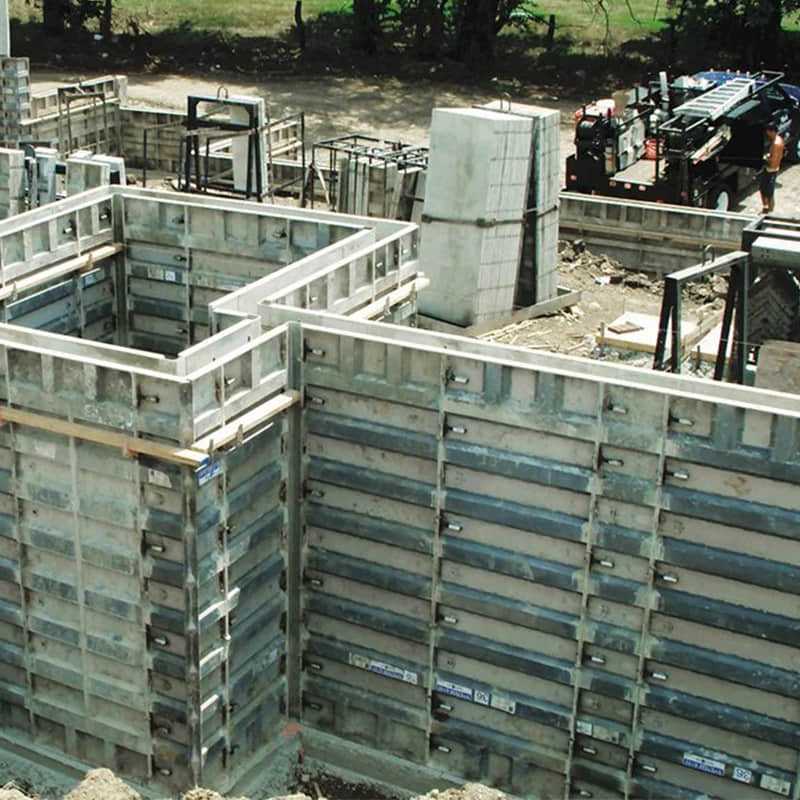
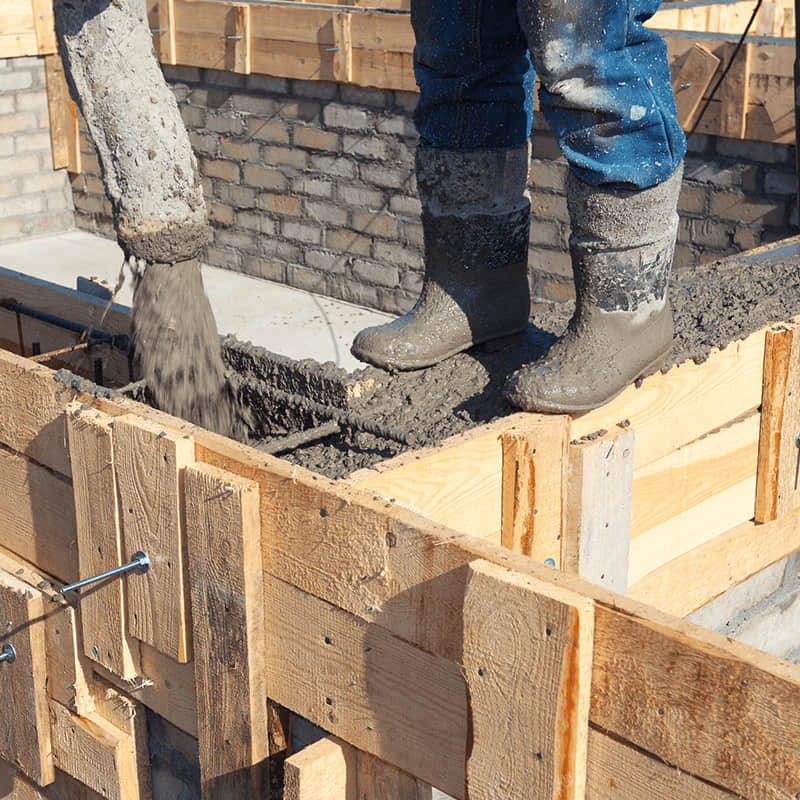
    Introduction     This manual commonly saves the contractors, engineers, or managers the time, money, and trouble of a subsequent lawsuit. A detailed exploration of what formwork is, why it is of great importance to it, and the ways of doing it will unfold in this guide, such as looking for rust, corrosion, distortion, and wear.         What is Formwork Inspection?     It is the monitoring and investigation of reusable or permanent molds utilized for holding wet cement until it is solidified under control. Such molds are called formwork and are sturdy enough to hold the required shapes with integrity. Different stages of inspection follow each one of the projects. The purpose of these inspections is to ensure that the template complies with design specifications and safety standards during use.   The need of inspection for formwork is as follows:   1. It assures the structural integrity: not giving a proper inspection to the formwork may lead to a structural failure and terrible consequences. Inspections ensure that the concrete can withstand pressure due to wetness along with additional load factors. 2. Congruence with codes: construction activities are ordinarily bound to building regulations-national or international standards. 3. Cost-effectiveness: The sooner you discover project errors and incorrect implementations, the more costs you can save. 4. Safety: Poor work is an origin of accidents, injuries, and death. Regular inspections help identify hazards and eliminate them, making the workplace safer.         Key Aspects of Formwork Inspection       1. Design and Planning: The formwork, before the commencement of any construction, shall be designed and revised to adequately check suitably ensuring load-bearing capability, conformity to specified quality standards, and support to architect's drawings.   2. Quality of Materials: Poor materials may fail up to a considerable extent; therefore, formwork materials should be tested for defects and meet pre-approved material standards-whether timber, steel, or aluminum.   3. Assembly and Installation: Inspections are to be carried out to assess the formwork alignment, bracing, support systems, and how they were constructed.   4.Pouring the Concretes: Very close supervision of any movement or failure of the form during the actual pouring must take place. Even though these two should be absolutely confirmed, please also make sure that the concrete spread is indeed well down in confirmation that the form can take the load it must take at that moment.   5.Inspection after Pouring: It is very important that the formwork be inspected for damage or deformation as soon as the concrete has set. This becomes a matter of great importance if the formwork is to be re-used at a later date.         Best Practices for Formwork Inspection     1. Regular Inspections Continuous inspections shall be done from design all the way through to the pour stage to flag any potential problems ahead of time and ensure compliance with safety requirements by its proper carry-through.   2. Embracing Technology Technologies that incorporate drones, 3D scanning, digital checklists, and the like enhance both the accuracy and efficiency of the inspections.   3. Training and Certification Qualified training of inspectors need to be emphasized, hence producing quality inspections and encouraging them to be up-to-date with current standards and techniques.   4. Documentation Accurate specification of all inspections must keep precise records, including photographs, checklists, and reports. Documentation is the process of recording the state of the formwork and its conformance to the established parameters.   5. Collaboration Create a cooperative atmosphere among all stakeholders including the architect, engineer, contractor, and inspector. Such communication keeps everyone on the same page and looking for possible solutions as early as possible.         Common Problems Observed in the Inspection of Formwork       1. Misalignment The adequate set-up and raising of the forming surface will be influenced by any misalignment of the erected formwork that might pose a threat to the entire structure.   2. Poor Bracing  Inadequate bracing may allow the formwork to slide or totally collapse during the concrete pouring.   3. Material Defects Certain material defects may reduce the strength of formworks, thereby causing collapse during loaded conditions.   4. Overloading Overloading of the forms beyond their loading capacity would put them to a risk of structural failure.   5. Poor Workmanship The poor assembly or installation of the formwork leads to a wide range of problems, such as a defect along with no provision for alignment, etc.         Specific Checks During Formwork Inspection       1. Examining for Excessive Rust and Corrosion The metal formwork is to be checked for signs of excessive rust and corrosion. These manifestations may weaken the structural integrity of the formwork and lead to failures. Proper cleaning and protective strategies must be employed to alleviate these issues.   2. Distortion and Bending Inspection Signs of distortion or bending in the formwork must be looked for. Distortion or bending may, however, be due to poor handling or excessive loading, which can have a very adverse impact on the shape and strength of the final structure.   3. Removal of Concrete Residue Remove any concrete residue from formwork that originated from previous usages. Such residues will affect the finish and cause the newly cast concrete to have an uneven surface.    4. Check for Wear and Other Damage After Long Storage Inspect the formwork for signs of wear and other damage after long-term storage. Long storage will cause premature wear, which may eventually hamper the operability of your formwork.   5. Get an Assessment for Additional Lubrication Consider whether the formwork might require additional lubrication. Properly lubricated formwork shall make the process of removal easy and prevent damage to the concrete surface.         Conclusion   Formwork is the most essential component of a construction project, ensuring the safety, quality, and durability of the structure. If proper techniques and inspections are implemented, it is possible to reduce hazards, compliance, and costs.          FAQS   Why is lubrication important for formwork? Lubrication ensures easy removal of formwork and prevents damage to the concrete surface. It also extends the lifespan of reusable formwork systems.   How can I prevent wear and damage from long-term storage? Store formwork in a dry, covered area and ensure it is properly supported to prevent warping or cracking. Regular inspections before reuse are also crucial.       More Information   Formwork Pictures, lmages and Stock Photos----iStock What is the lmportance of Formwork in the Concrete----Linkedln
  • Formwork Safety: Risks, Prevention, and Best Practices
    Formwork Safety: Risks, Prevention, and Best Practices Feb 19, 2025
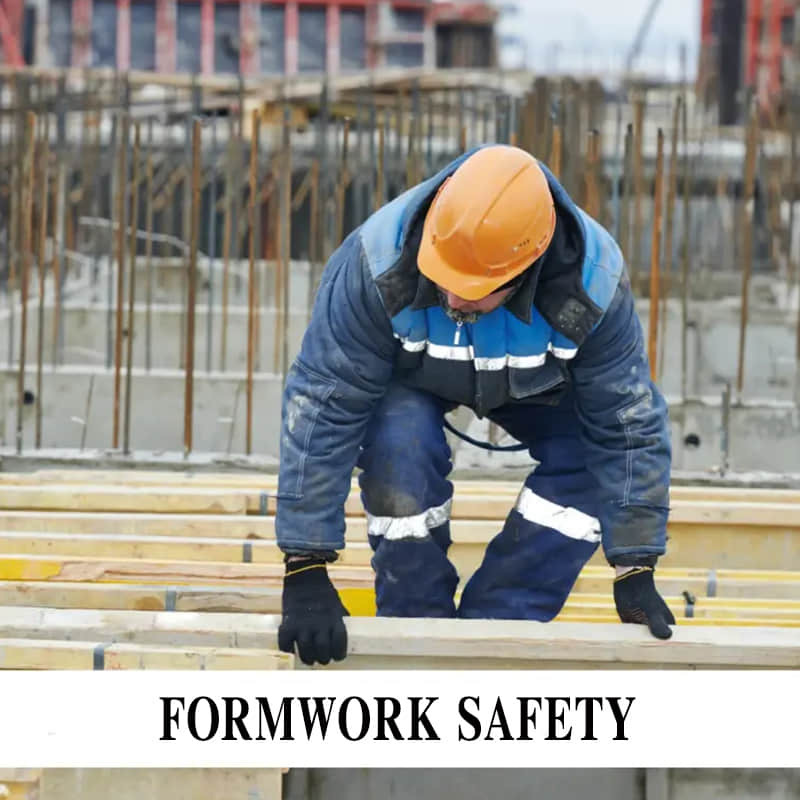
    Formwork is a critical component of construction; they serve the essential purpose of supporting concrete structures until they gain sufficient strength. Numerous hazards related to formwork have considerable implications regarding the level of risk constituted to workers and projects when not managed properly. In this blog post, we will discuss the various forms of hazards involved with formwork construction, reiterate the modalities that can be employed to mitigate the hazards, and zero in on the legalities involved. By following these methods, you could create a safer, better construction site.         Common Hazards in Formwork Construction     Structural Instability In the catastrophe of formwork failing or collapsing, considers one of the most dangerous incidences on the construction site. These could be:. Overloading: Some action or condition increases loads on a formwork system above its limit. Inadequate Bracing: Sudden failure occurs in the presence of weak or poorly installed braces. Poor Assembly: Misalignment, poorly secured fastenings, or poor installation may increase the potential for instability. Early Removal: Premature detaching before the concrete takes adequate strength can cause weakness or worse. All parts shall be fixed together properly and proper load distribution calculated before concrete is placed in order to avoid structural failure.     Falling Materials Loose panels, tools, or debris falling from elevating formwork can result in great hazards to the worker below. The reasons for this are: Unsecured parts-Such as panels, clamps, or connectors that are loosely fastened. Vibration-Objects will start shaking due to machine operations or concrete pouring. Lack of a barrier-protective devices are basically insufficient to prevent the falling materials from getting to the workers at the lower levels. The installation of safety nets, toe boards, and proper tying of materials will greatly reduce the risks posed by falling hazards.     Manual Material Handling Injuries When heavy concrete forms are handled without the proper type of equipment or the necessary techniques, there can be:   Muscle strains resulting from lifting heavy panels;   Injuries occurring to the lower back, usually from poor posture or additional effort;   Crush injuries suffered as a result of an assembly or adjustment being made to formwork while the load was on it. The use of mechanical lifting aids, proper training on lifting techniques, and ergonomic work practices can minimize manual handling risks.   Load Failures Formwork that cannot withstand fresh concrete pressure may buckle or collapse across. It occurs due to: Concrete pressure underestimated: Wet concrete applies vast lateral force; thus, a strong support is required. Material fatigue: Over time, reused formwork parts can lose strength. Environmental stresses: Wind and temperature modes can adversely affect material strength. Making proper calculations for the applied loads and application of good-quality materials are ways to avoid structural failures.         Best Practices for Formwork Safety     Training and Supervision Supervised training is a must for workers working with formwork systems. Special attention should be on the following: Installation procedures - correct methods of assembly. Hazard awareness - different conditions under which hazards apply. Emergency response - respect for procedures to be followed for any type of structural failure. Supervisors must ensure that workers follow safety procedures, along with experienced personnel overseeing critical formwork operations.   Regular Inspections Frequent inspections often help pinpoint weak spots that haven't become hazards yet. Inspection should cover: Structural integrity-checking for cracks, misalignments, or loose fastenings. Load-bearing capability-assuring placement of loading is within fragile limits. Environmental impact-monitoring conditions of weather and climate that will affect the formwork's stance. The inspections should occur before, during, and after concrete pouring.   Material Quality and Maintenance Durability and strength of the components of formwork have a direct linkage to safety. Best practices involve the following:   Use certified materials that meet industry standards. Inspect reuse components for degradation or damage. They should be stored right so that they would not warp or weaken due to moisture exposure. Higher grades of materials can minimize failure factors during concrete pouring.     Prop and Bracing Best support systems contribute to avoiding collapse. Important considerations to keep in mind are: Spacing and alignment – Ensuring even weight distribution. Secure fastenings – Using strong connectors to prevent movement. Adjustments during pouring – Monitoring shifting loads to prevent instability. Using adjustable supports allows for real-time load management and enhanced stability.       Worker Safety Measures     Protective Equipment PPE are meant to reduce injuries. The mandatory equipment includes: Hard hats-protect from falling debris. Safety gloves-used to prevent cuts and abrasions. Steel-toe boots-these are to protect the feet from the heavy loads. Fall arrest systems – Securing workers at heights. Use of proper PPE equipment shall always be emphasised on site.     Safe Work Procedures Strict safety protocols reduce on-site accidents. Key practices include: Following manufacturer guidelines for formwork assembly and removal. Avoiding overloading platforms and scaffolding. Keeping the site organized to minimize trip hazards. Regular safety briefings help reinforce these procedures.   Team Coordination Clear communication between workers and supervisors ensures smooth operations. Best practices: Pre-task meetings – Discussing safety concerns before work begins. Signaling systems – Using hand signals or radios for clear instructions. Emergency planning – Establishing procedures for responding to structural failures. Effective coordination enhances overall site safety.       Environmental Considerations   Weather-Related Risks Environmental conditions can compromise formwork stability. Factors to consider: Wind loads – Strong winds may cause displacement. Rain and humidity – Excess moisture weakens materials and makes surfaces slippery. Temperature changes – Extreme cold or heat affects concrete setting and material strength. Work schedules should be adjusted based on weather forecasts to minimize risks.   Sustainable Formwork Practices Eco-friendly alternatives improve efficiency and reduce waste. Strategies include: Reusable plastic formwork – Durable and cost-effective. Optimized material usage – Reducing excess waste. Recycling old formwork components – Minimizing environmental impact. Sustainable solutions contribute to safer and more efficient construction practices.       Regulatory Compliance   Safety Standards Organizations like OSHA establish guidelines for formwork safety. Key requirements include: Proper load calculations to prevent overloading. Secure bracing and shoring to support structural stability. Worker protection measures such as fall prevention systems. Following these regulations ensures compliance and prevents legal liabilities.   Local Construction Codes Each region has specific building regulations regarding formwork. Adherence to these codes ensures: Structural integrity for long-term stability. Legal compliance to avoid fines or work stoppages. Worker safety through standardized best practices. Understanding local requirements is crucial for project success.         Cost-Effective Safety Investments   Long-Term Benefits of Safety Prioritizing safety reduces financial risks by preventing: Accident-related expenses such as medical costs and legal fines. Project delays due to equipment failure or regulatory violations. Material wastage from formwork collapse or rework. Investing in high-quality safety measures results in cost savings over time.   Reducing Risk Through Planning Proactive risk management lowers the likelihood of accidents. Best practices include: Thorough project planning to identify potential hazards. Using certified materials to ensure durability. Continuous monitoring to detect early warning signs of failure. Strategic planning enhances both safety and operational efficiency.         Conclusion   Formwork safety is a critical aspect of concrete construction. By recognizing hazards, enforcing best practices, and complying with regulations, construction teams can create a safer work environment. Investing in quality materials, proper training, and well-planned procedures not only protects workers but also enhances project efficiency and cost-effectiveness. A strong commitment to safety ensures the long-term success of any construction project.       FAQS     What are the common causes of formwork collapses? Common causes include inadequate design, improper installation, overloading, and poor-quality materials.   What PPE is required for formwork activities? Essential PPE includes helmets, gloves, safety harnesses, and non-slip footwear.       Related Information   Code of Practice: Formwork----SafeWork Formwork----Wikipedia
  • How to Maintain and Care for Your Formwork Equipment: A Comprehensive Guide
    How to Maintain and Care for Your Formwork Equipment: A Comprehensive Guide Feb 18, 2025
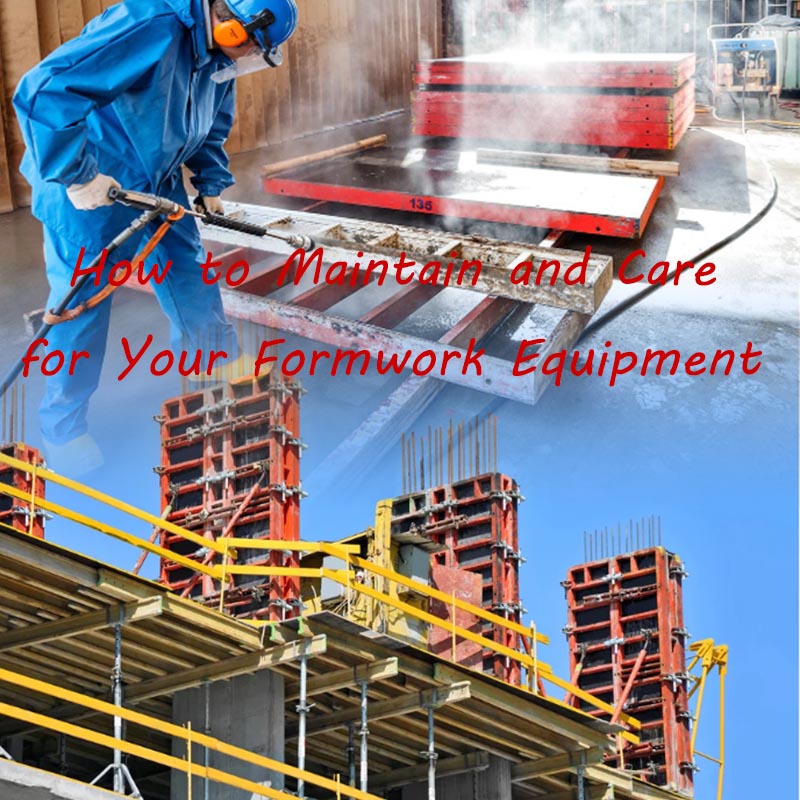
    Formwork plays a critical role in the building industry. It supports the concrete while being poured, preventing it from collapsing. Any formwork appropriately maintained will last long. In the following lines, we shall speak about the do's and don'ts for the adequate handling and maintenance of your formwork equipment to keep it in good working condition and to minimize downtime and maximize safety on the construction site.       Clean Regularly and Dispose of Residue Properly     Formwork equipment can become heavily charged with concrete, release agents, and other construction residues. Very often it is impossible to remove and causes damage over time. Hence regular cleaning will see to it that the formwork is free from rubbish that may cause misalignment or surface damage.   Cleaning Tips:   Keep the Cleanup Wet: Clean the formwork directly after use, preferably before the concrete is permitted to harden. Mild Non-abrasive Cleaner: If you want to release any concrete residue, use ordinary; mild non-abrasive detergent. Avoid harsh chemicals or abrasive cleaning, as this can scratch and damage the formwork. Use of High-pressure Cleaners During Stubborn Resistance: You might employ a pressure washer for bigger areas and more persistent residues, but do it from a safe distance. Release Agent: A Release agent needs to be applied to the formwork to avoid the sticking of concrete. This will assist in reducing cleaning time and avoid any dirt collection.       Check for Damage Regularly     If there's any sign of deterioration, regular assessments must be done - in several cases, early inspections should be able to save you from very costly demolitions. Formwork, more so wooden or metal, is susceptible to cracks and dents, rust, and any different kinds of damage. Regular checks will help ascertain that your equipment is safe and fit for use.   Tips:   Check for Cracks and Other Damages: For wooden formwork, check for chipping, warping, or cracking. For metal work, check for possible rust or corrosion. Such defects allow any free movement that weakens the formwork's ability to affect the final quality of the concrete structure. Look for Missing Components: All bolts, clamps, and other fastening elements must be in place. Missing or poorly tightened components could lead to structural instability. Check Joints and Connections: Ensure that joints between different components are held in tight. Loose joints could yield shifting or structural failure during the time of pouring the concrete.       Proper Storage to Extend Shelf Life     Proper storage of formwork equipment is as important as maintenance during use. Failure to store formwork properly will cause bending and rusting or damage, which diminishes the quality and performance of the formwork.   You can take special levels of care in storing them to use in one piece. Here are a few tips:   Dry and clean: Store this formwork gear in a place dry and clean, avoiding those areas where high humidity will cause a rise in wood and rust of the metals. Store all wood or steel above ground to avoid taking on moisture. Cover with a Tarp: When storing outdoors, use a protective covering to keep your formwork from getting damaged by wind and rain. Waterproof tarps or special formwork covers can keep those raindrops as well as snow and any other elements from damaging your equipment.       Repair and Maintenance of Steel and Aluminum Formwork     Although steel and aluminum formwork can withstand the harsh conditions of site work, they still require regular maintenance. Rusting, dents, and scratches could affect their structural integrity and reduce their efficiency on subsequent projects.   Repair Suggestions:   Preventing Rusting: Ensure dedicated inspection of steel formwork for rust spots. If a patch of rust is found, sand it away with a wire brush and apply an anti-rust primer for additional protection. Fixing Bent Steel: If the steel formwork has become bent, it should be either reunited or replaced. There might be other forms which, if bent, may disturb the pouring and lend it a poor finish. Maintaining Aluminum: Aluminum forms are generally not subject to rust, but maintain vigilance to ensure that denting or cracking are not so excessive as to create a loss in strength. Use no other abrasive means that might scratch or weaken the surface.       Handle Carefully During Transportation   Bad handling of formwork equipment during transportation can cause damage. Irrespective of the movement of the form from one workplace to another or its storage during the interval of use, improper handling can lead to serious damage, including dents, cracks, or warping.   Transportation Guidelines:     Pack Securely: When transporting forms, make sure they are securely strapped so that they do not shift, scratch, or bend.    Use Care: For lifting heavy or giant forms, utilize cranes, forklifts, or trolleys. Ensure that the load is balanced; one side must not take excess weight. Protect Exposed Areas: When transporting metal forms, provide padding or protection for edges and surfaces to prevent scratching or denting during transport.       Reapply Release Agents Regularly     Release agents facilitate the removal of formwork and concrete systems by reducing concrete adhesion to the formwork, thus reducing cleaning time and protecting the formwork surface.   Tips: Reapply After Each Use: Before using the formwork each time, apply a release agent to prevent the buildup of concrete residue. Use the Right Release: Select the right type of release agent for the type of formwork material, as different release agents are formulated for wood, steel, or aluminum. Choose Eco-friendly Options: You may want to use a biodegradable release agent for minimal environmental impact and effective results.       Professional Service for Complex Repairs   Minor repairs may take place on-site, but when it comes to more serious issues, such as structural damages of steel or aluminum formworks, one might want to contact professionals. Also, if any serious damage occurs and calls for more than just some ordinary tools, you should always seek professional help.   Professional Repair Tips:   Consult an Expert: Talk to your formwork supplier or to service providers for assessment of serious damages and to get recommendations for repair. Service Contracts: Try to set up a regular service agreement with the supplier, which would maintain your equipment in tiptop shape.       Conclusion   The proper maintenance and servicing processes demand appropriate handling of the formwork equipment, starting from a plain sweep to ensure higher chances of success. Cleaning, damage inspection, storage, and timely repairs form the basis of extending formulations' life, comfort of less critical repairs, as well as maintaining safety and efficiency at job sites.    If you are looking for high-quality formwork equipment for your next project, AJ Building offers durable, reliable formwork solutions along with professional maintenance and service.      FAQ   Why is it important to regularly maintain formwork equipment? Regular maintenance can extend the service life, reduce maintenance costs, and ensure construction safety. Proper maintenance can also improve the efficiency of the formwork system and improve the quality of construction.   How to clean formwork equipment? Wooden formwork: Use a scraper or brush to remove concrete residues and avoid excessive scratching of the surface. Steel formwork: Use a high-pressure water gun or chemical cleaner to remove attachments and apply anti-rust oil regularly. Aluminum formwork: Wipe with a soft cloth and apply a protective layer to prevent oxidation and corrosion.   How to prevent formwork equipment from rusting? Before storage, remove all moisture and concrete residues. Apply anti-rust oil or protective coating to metal parts. Ensure that the storage environment is dry and well ventilated.     Read More   Concrete Formwork Accessories -Concrete Formwork Accessories How Do l Maintain Engineered Concrete Formwork? -Eiffel Trading    
  • Types of Tubular Scaffolding - A Comprehensive Guide
    Types of Tubular Scaffolding - A Comprehensive Guide Feb 18, 2025
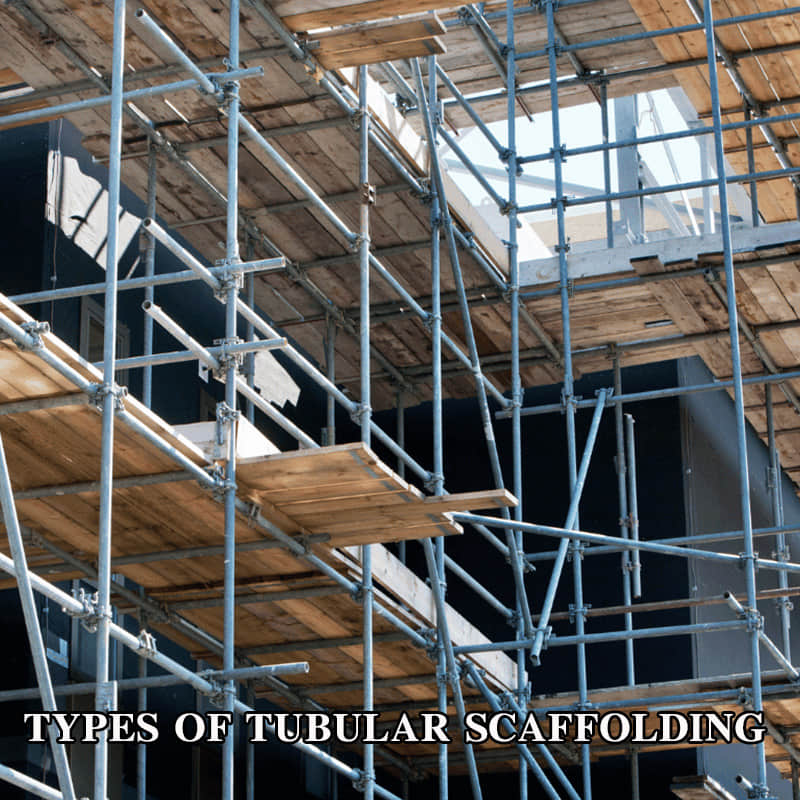
    Scaffolding can be considered an irreplaceable building industry cornerstone that provides a safe, solid platform for workers to perform necessary tasks at great heights. Among the numerous types of scaffolding available, however, tubular scaffolding is extremely versatile, strong, and durable. We will discuss different types of tubular scaffolding, its advantages, safety considerations, common uses, and many such factors while choosing the accurate scaffolding collection for the project. By the end of this article, you are expected to have a solid understanding of tubular scaffolding and how to select the right scaffold type as per your needs.     Understanding Tubular Scaffolding   The term tubular scaffolding primarily refers to the classic Tube and Coupler (or Tube and Fittings) Scaffolding system. Unlike prefabricated modular systems (like system scaffolding), the tubular system is built from individual components: Standards: These are vertical tubes that transmit load to the ground. 2. Ledgers: These are the horizontal members that connect standards and provide support to the structure. Braces: These are inclined tubes providing additional stability to the structure. Base Plates: These are plates at the base of standards that help distribute the load. Couplers: These are tubes employed to connect adjacent tubes.     Benefits Offered By Tubular Scaffolding:  High Load-Bearing Capacity: Steel tubes provide very good strength, so they can be used in heavy-duty applications. Durability: Being made of steel, tubular scaffolding can withstand all weather conditions. Versatility: Tubular scaffolding is adaptable to different structures and heights. Re-usability: The components are reusable on multiple projects, thus making them cost-effective. It is safe: When assembled correctly, it can serve as a very safe working platform.         Types of Tubular Scaffolding   There are different types of tubular scaffolding that serve different purposes. The most common types include:   Tube and Clamp Scaffolding Structure- It consists of steel tubes connected by the use of clamps.   Advantages: Flexible and adaptable: Complex shapes can be constructed with it. Adapted to oval and irregular shapes and angles. Disadvantages: A time-consuming process of assembly and disassembly; It is, however, appropriate for craftsmen or highly skilled workers.  Applications:  It is best suited for working on irregular structures, mostly in maintenance work and those with non-standard architectural design work.   Frame Scaffolding Structure: Prefabricated frames held together with cross braces.   Advantages:  Very easy and rapid to assemble.  Light and, importantly, portable. Disadvantages: Less flexible compared to tube and clamp scaffolding. Limited to simple structures and low-rise buildings. Applications: Suitable for simple structures, residential construction, and low-rise buildings.   System Scaffolding Structure: Uses standardized components like vertical standards, horizontal ledgers, and diagonal braces.   Advantages: Fast assembly and high load capacity. Modular design allows for easy customization. Disadvantages: The modus operandi constitutes a higher initial cost compared to other varieties. It requires specialized components. Applications: A great use in large construction projects, skyscrapers, and industrial settings.         Safety Considerations for Tubular Scaffolding   Ensuring safety when using tubular scaffolding is paramount. Here are some key safety considerations:   Inspection of Scaffolding Pre-Use Inspection: Inspect all components for cracks, rust, or bent tubes that may affect the performance of the scaffolding, as this will be regarded as damaged or defective. Regular Inspections: Periodic inspections to maintain safety should be done, especially after extreme weather conditions.   Maintenance and Inspection Routine Maintenance: As far as possible, regular greasing and cleaning of components to prevent rust and corrosion. Store Scaffolding in a dry covered area. Immediate Repairs: Replace or repair any damaged or defective parts immediately; do not use compromised components.   Worker Training and Safety Guidelines Comprehensive Training: Ensure that every worker receives training in applicable scaffold erection, use, and fledgling safety procedures. This training involves comprehending the load limits and proper assembly techniques. Safety Guidelines: Make sure that safety guidelines are included and adhered to by everyone. This has great deal to do with the proper use of PPE and adherence to assembly instructions.   Fall Protection Guardrails and Toeboards: Install guardrails and toeboards above the scaffold to prevent falls. Ensure that they are well anchored and conform to safety standards. Personal Protective Equipment (PPE): Ensure that workers are wearing harnesses, gloves, and helmets. PPE should be checked regularly on account of wear and tear.         Most Common Applications Of Tubular Scaffolding   Tubular scaffolding is widely used in various applications, including: Building Construction: which assists in the construction and repair of residential and commercial buildings. Bridge Maintenance: which is employed in bridge maintenance and repairs, including painting and structural repairs. Shipbuilding: during the construction and repair of ships, for hard-to-reach access. Event Stages: For setting up stages and platforms for events, concerts, and exhibitions. Industrial Maintenance: For maintenance work in factories, power plants, and refineries.         Factors to Consider When Choosing Tubular Scaffolding   Selecting the right tubular scaffolding involves considering several factors:   Project Height and Complexity Height: Higher projects may require more robust scaffolding systems with additional bracing and support. Complexity: Complex structures may need more flexible scaffolding, like tube and clamp systems.   Load Requirements Weight: Scaffolding must support the weight of workers, materials, and equipment. Then, establish the total load and select the scaffolding with a matching load capacity.   Terrain and Work Area Conditions Ground Conditions: Uneven or soft ground may require additional support, such as base plates or adjustable legs. Space Constraints: Limited space may necessitate specific scaffolding configurations, such as narrow frames or cantilevered platforms.   Scaffolding Suppliers and Safety Standards Reliable Suppliers: Suppliers with good reputations and customer reviews should be selected. Compliance: Ensure the scaffold complies with the relevant safety standards, such as OSHA or EN standards.   Budget and Schedule Considerations Cost: Compare the price with prospective return benefits; for a minimal channel period, scaffolding may be rented out. Time: The time it will take to erect and dismantle needs to be considered. Time spent if system scaffolding is used should be less, as compared to tube and clamp scaffolding.         Conclusion Tubular scaffolding is, indeed, a multi-purpose and essential tool that offers many more advantages, such as strength, durability, and flexible use. All the different paths into tubular scaffolding, their uses, and safety considerations can all help you to make informed decisions about who, what, and how to work on your project in a safe manner. Make sure you consult with professionals to have the right scaffolding system that caters to your very needs. Whether for small residential works or large industrial sites, tubular scaffolding offers them the reliability and adaptability needed for safe and successful completion of their projects. Remember, when you make the right investment in a good scaffolding system, you could increase productivity and keep your workers safe.     FAQ   Can tubular scaffolding be used for residential projects? Yes, tubular scaffolding is suitable for residential projects, especially frame scaffolding, which is easy to assemble and ideal for low-rise buildings like homes.   Can tubular scaffolding be rented? Yes, tubular scaffolding can be rented for short-term projects. Renting is a cost-effective option if you don’t need scaffolding for long-term use.       Read More   Rama Steel Tubes Share Price Today - Stocks----GROWW Your One-Stop Solution for Industrial Needs!----INSTAGRAM  
  • What Is The Most Common Type Of Suspended Scaffold
    What Is The Most Common Type Of Suspended Scaffold Jan 14, 2025
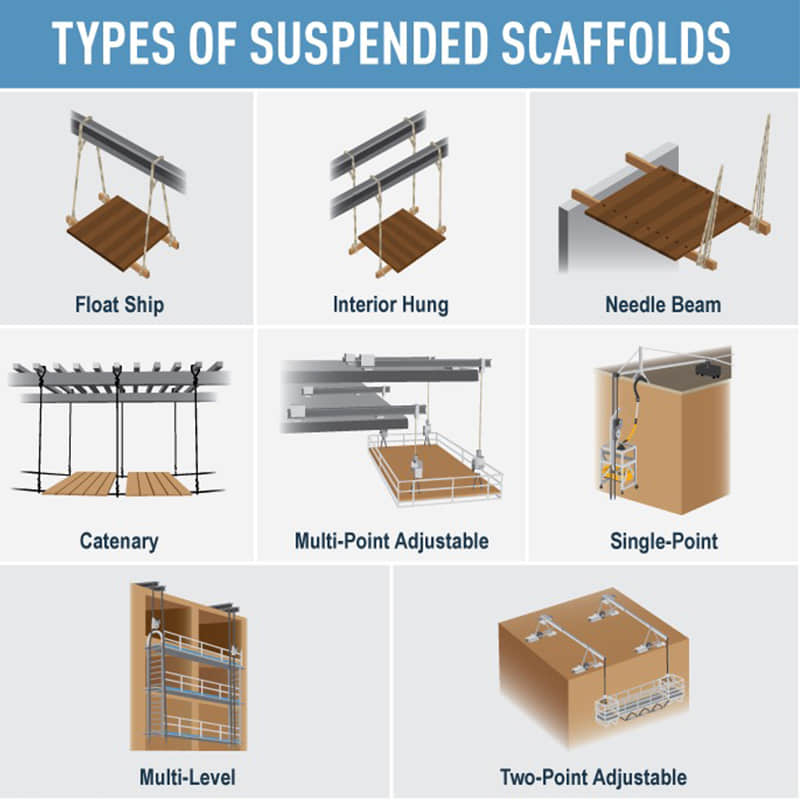
    In the global construction and high-rise maintenance industries, the most common type of suspended scaffold is the Two-Point Suspended Scaffold, professionally known as a Swing Stage. This system features a working platform suspended by cables or ropes connected to overhead outrigger beams or rigging structures, powered by manual or electric hoists at both ends. It is widely recognized as the industry standard for skyscraper window cleaning, exterior facade painting, high-rise bricklaying, and concrete structural repair due to its versatility, quick deployment, and robust load capacity.   Suspended Scaffold Types   1. Catenary Scaffold Catenary scaffolding uses steel cables or chains as supports, and the platform is suspended in the air through these supports. Its support system can span a larger span, and the height of the platform can be adjusted, which is suitable for construction tasks that need to cover a large area.   2. Float (ship) Scaffold Floating scaffolding is usually installed on the water surface, using buoys or other buoyancy devices to keep the platform afloat. The platform is supported by the buoyancy system and can be stably suspended in the water environment.   3. Interior Hung Scaffold Indoor suspended scaffolding usually uses steel cables or wire ropes to suspend the platform from the top structure of the building. It is very suitable for environments with limited space, and the platform can be flexibly adjusted to meet the needs of operations at different heights.   4. Multi-level Scaffold Multi-layer suspended scaffolding consists of multiple horizontal platforms, each located at a different height. It is usually equipped with a lifting device that can easily adjust the position of each layer of the platform for operations on high-rise buildings.   5. Multi-point Adjustable Scaffold This type of scaffolding provides a stable hanging platform through multiple support points, and the height of each support point can be adjusted individually. The platform can be freely adjusted at different heights to meet different construction needs.   6. Needle Beam Scaffold Structural features: Needle beam scaffolding supports the platform through one or more beams (needle beams), the ends of which are fixed to the superstructure or wall of the building and can bear a large weight. The platform is suspended from these beams to provide a stable working platform.   7. Single-point Adjustable Scaffold Single-point adjustable suspension scaffolding supports the platform through a single support point (usually a steel cable or wire rope), and the height of the platform can be adjusted by adjusting the support point. This scaffolding has a simple structure and is suitable for a smaller working range.   8. Two-point (Swing Stage) Scaffold Two-point suspended scaffolding (also called pod scaffolding or basket scaffolding) supports the platform at two points, usually suspended from the building by steel cables or wires. The platform can swing freely in the horizontal plane and flexibly adjust its position.           What Is The Most Common Type Of Suspended Scaffold?   In actual construction, the double-point suspension scaffold (Swing Stage) is the most common and widely used type. Its simple design and low cost make it the preferred equipment for aerial work. In addition, Catenary and Single-point Adjustable scaffolds are also widely used in specific scenarios because of their adaptability and economy.   Two-point (Swing Stage) Application scenarios: Double-point suspended scaffolding, often called hanging basket or pod scaffolding, is the most common type of suspended scaffolding and is widely used in facade construction, window installation, exterior wall cleaning, painting, and aerial work. Its structure supports the platform through two supporting points, which can provide good flexibility and stability, and is especially suitable for high-rise buildings. Why it is common: Due to its simple structure, flexible operation, relatively low cost, and strong adaptability, it has become the preferred equipment for high-altitude construction in many construction projects. Catenary Application scenarios: Chain scaffolding is mainly used for high-altitude operations that need to span a large area, such as facade construction of bridges, chimneys, high-rise buildings, etc. It can effectively cover a wider area by suspending the platform with steel cables or chains. Why it is common: It can adapt to large-span operations, and because the height of the platform can be flexibly adjusted, it is often used in complex high-altitude construction tasks. Single-point Adjustable Application scenarios: Single-point adjustable suspension scaffolding is mostly used for smaller exterior wall construction, window installation, and cleaning, and is suitable for operations with lighter loads and lower construction heights. Why it is common: It has a simple structure, is easy to install, and has a low cost. It is especially suitable for quick, small-scale construction and is commonly used in daily facade maintenance and cleaning operations.       The Main Features Of Suspended Scaffolding   Flexibility and adjustability: The suspended scaffolding platform can be adjusted for height and position according to different construction requirements. Save space: The suspended design takes no space on the ground, making it suitable for construction environments with restricted space. Quick construction speeds: fast installation and disassembly to enhance construction efficiency and cut down on construction time. Adapt to other construction environments: it can be adapted to other complex and high-altitude construction environments, such as high-rise buildings and water platforms. To provide a stable work platform: a safe and stable working platform is ensured by a stable support system. Large-area operations: can cover a larger operating area, are suitable for multiple people to work on at the same time, and improve working efficiency. Easy maintenance and inspection: allows easy maintenance and inspection work at heights and in inaccessible areas. High safety: provided with various safety protection devices enabling safe work at height.       Crucial Safety Requirements for Two-Point Suspended Scaffolds (OSHA Compliance)   Operating platforms hundreds of feet in the air leaves zero room for structural failure. Procurement managers and safety inspectors must ensure that every swing stage setup satisfies global regulatory standards (like OSHA 1926.452 and EN 1808): The 4:1 Safety Factor: The suspension ropes, outrigger beams, and hoist mechanisms must be engineered to support at least 4 times the maximum intended load. Independent Fall Arrest Systems: Every worker on a suspended scaffold must be anchored to an independent vertical lifeline using a full-body harness and a rope grab. Never anchor a fall-arrest line to the scaffold platform itself. Counterweight Calculation: Outrigger beams relying on counterweights must be mathematically calculated to prevent tipping. Tiebacks must be installed perpendicular to the building face as a secondary safety backup.       Key Factors In Choosing Suitable Suspended Scaffolding   Maximum choice of suspended scaffolding ensures safe, efficient, and smooth building construction. The choice is based on some basic considerations: Construction height and operating range Construction environment and terrain Load requirements Type of assignment Construction period and installation efficiency Security Budget and Cost Ease of operation Convenience of maintenance and inspection           Conclusion   If you are a scaffolding rental agency, high-rise construction firm, or building materials distributor, sourcing reliable, field-tested components is vital for your business reputation. AJ Building is a leading global manufacturer of premium ZLP630 and ZLP800 Electric Suspended Platforms (Swing Stages). Our systems are engineered to withstand the most demanding job site environments: High-Grade Materials: Available in hot-dip galvanized steel or lightweight, corrosion-resistant aircraft-grade aluminum alloy. Advanced Safety Locks: Equipped with certified LTD series hoists and LSB anti-tilting safety locks that instantly engage if a steel cable slacks or the platform tilts beyond 3–8 degrees. Global Certification: Built fully compliant with CE, ISO, and standard safety guidelines. 🏗️ Planning a high-rise project or restocking your rental fleet? Get factory-direct wholesale pricing on standard and customized swing stage systems. [Request a Quote from AJ Building Scaffold Experts Today] for immediate catalog access and engineering support.       FAQ   What Types Of Construction Projects Are Suspended Scaffolding Suitable For? Suspended scaffolding is suitable for aerial work, facade construction, glass curtain wall installation, building maintenance, painting, and cleaning. The application is thereby appropriate for accessing hard-to-reach areas, such as high-rise buildings, bridges, and water platforms, among others.   Is The Installation And Dismantling Of Suspended Scaffolding Complicated? Suspended scaffolding is relatively simple to install and dismantle, especially as modern systems are modular in design and can usually be erected and dismantled quickly. Operators need to be trained to ensure that the scaffolding is securely installed and operated in accordance with safety standards.   How Long Is The Maintenance Period Of Suspended Scaffolding? Maintenance of suspended scaffolding depends on usage, weather, and the type of scaffolding. Usually, support systems, platforms, connecting devices, and safety provisions should regularly be checked. For suspended scaffolding used over longer periods, detailed inspection is a must every 3-6 months; based on this inspection, defective parts must be repaired or replaced.       Read More   Suspended Scaffold Tips----NYC Suspended Scaffolding Hoists----SWINGSTAGING  
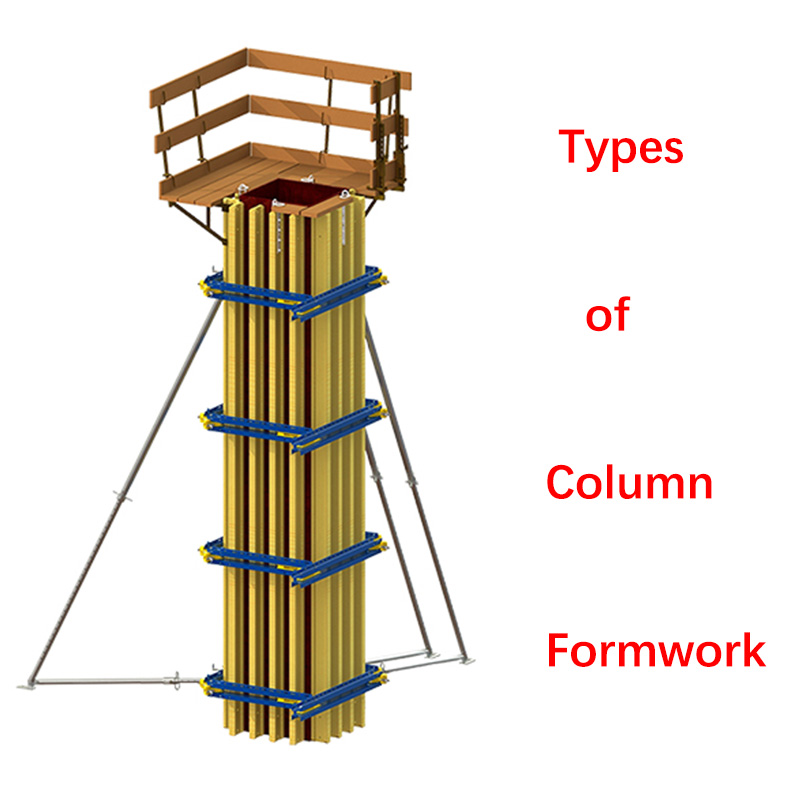
  • A Complete Guide to Types of Column Formwork
    A Complete Guide to Types of Column Formwork Jan 09, 2025
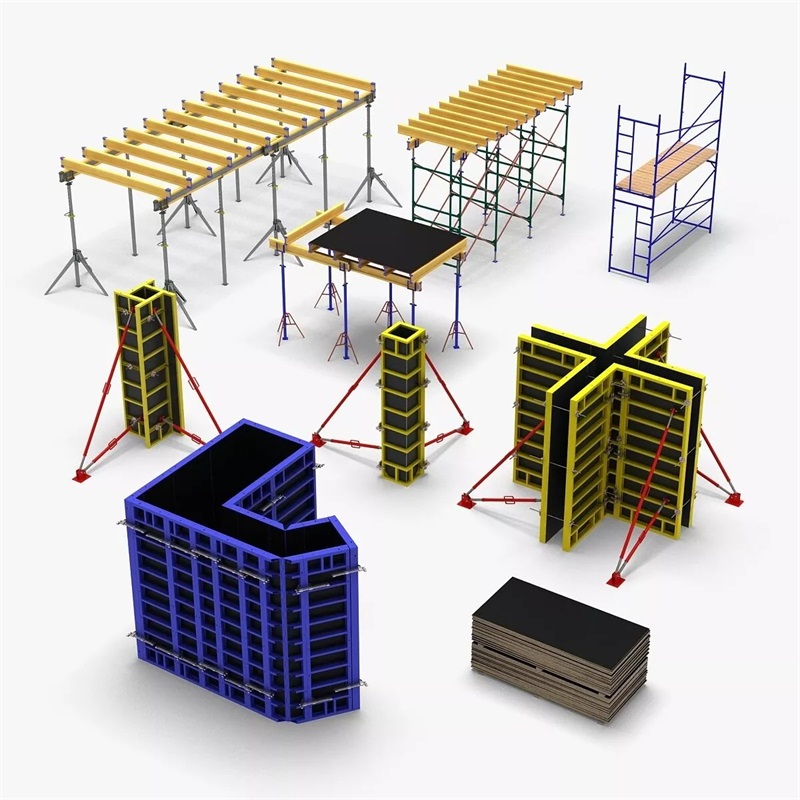
      Types of Column Formwork   Column forms are designed to hold the shape temporarily and support the purpose until it is set and hardened at that state. Hence, selecting the proper column formwork type will greatly affect your project schedule and cost. This guide sets forth the key types of column formwork and features to help you choose the right template for your project.   Timber Column Formwork Timber column formwork is one of the oldest and most versatile types of formwork used for concrete columns. Materials: Wood or Plywood Pros: Easily customized to a variety of shapes and sizes Affordable, ideal for small projects Cons: Poor dimensional stability Poor durability, wood and plywood are susceptible to moisture, rain, and insect attack. Best for: Temporary or short-term projects with custom or unique column shapes.   Steel Column Formwork   Steel column formwork with superior strength and durability, it’s ideal for large and repetitive projects. Material: Prefabricated Steel Sheet Advantages: High reusability Provides a smooth surface for concrete Resists warping and moisture Disadvantages: Heavier and more expensive Best suited for: Large buildings and high-rises   Aluminum Column Formwork   Aluminum column formwork combines durability with lightness for easy handling. Material: Aluminum Sheet Advantages: Lightweight and easy to assemble High reusability Quicker construction time Disadvantages: Higher initial cost Common projects: Projects that require fast construction and repeated use   Plastic and Fiberglass Column Formwork   Plastic and fiberglass column formwork systems are lightweight and corrosion resistant. Material: Reinforced Plastic or Fiberglass Advantages: Lightweight and easy to transport Good corrosion and weather resistance, not easily attacked by moisture, rust or insects Easy to process and reusable Disadvantages: Limited durability compared to steel or aluminum Best suited for: Small to medium-sized projects   Single-use Column Formwork Designed for one-time use, Single-use column formwork is a cost-effective solution for simple projects. Materials: Cardboard, plastic, a mixture of plastic and fiber reinforcements Pros: Low cost Easy to disassemble and dispose of Cons: Not reusable Best suited for: Low-budget, one-time use applications   Removable/Re-usable Column Formwork The removable/re-usable column formwork system is designed for multiple uses, balancing cost-effectiveness and durability. Material: Steel, Aluminum, or Plastic Pros: Cost-effective for multiple projects Easy to disassemble and transport Cons: High initial investment cost Common projects: Projects with repetitive construction elements   Modular Column Formwork The modular column formwork system provides flexible configurations for different column sizes and shapes. Material: Steel, Aluminum, or Plastic Pros: Versatile Easy to assemble with standardized panels Cons: Requires initial setup and investment Common projects: Projects requiring different column sizes         Specialized Column Formwork Solutions     Beyond the primary material types, several specialized solutions cater to particular column needs:   Adjustable Column Clamps: These metal clamps are used in conjunction with timber or plywood formwork to quickly adjust column dimensions and secure the panels. Circular Column Formwork: Designed specifically for round columns, these can be made from steel, fiberglass, or even disposable cardboard tubes (Sonotubes™) for single-use applications. Permanent Formwork: In some cases, the formwork is designed to remain in place after the concrete cures, becoming an integral part of the column. Examples include pre-fabricated concrete units or fiber-reinforced plastic (FRP) tubes that act as both formwork and a protective/decorative layer.     Formwork Demolding Cycles and Considerations   There are many de-molding cycles and considerations for the different types of formwork systems used at construction sites. In general terms, the molding cycle can be defined as the time used while striking formwork, ensuring neither affects concrete's strength and quality adversely. Different formwork types and types of structures to be built give rise to different time ranges.   Time of removal of column formwork: 24-48 hours. Considerations: Columns are vertical structures in which hydration takes place very rapidly up to strength. Given that the early closure of formwork occurs once the concrete has reached the specified strength, usually around 50%, the period within which the forms may be closed will generally be sooner.   Time of removal of slab formwork: general range of 7 to 14 days depending on span and load conditions. Considerations: For slabs, waiting periods should be concrete-grade-dependent and slab-thickness-dependent. The times for removal should, however, be done keeping in mind that any spans up to, and over, 4.5 meters are taken into account.   Time of removal of beam formwork: for side formwork, the interval is between 24-48 hours; for bottom formwork, 14-21 days. Considerations: The side forms of beams allow for quicker strikes, although the bottom formwork requires longer to stabilize the structure.   Wall formwork molding cycle: general range 24-48 hours. Considerations: Wall formwork can be stripped relatively early, thus correspondingly early than columns, once it attains adequate strength.   Demolding Considerations Concrete tests must be carried out by measuring the compressive strength of the cast cubes. Adhere to the specifications and rules of local code concerning the project. Use modern forms that allow for quick release to enhance the efficiency of operations. By fine-tuning the demolding cycle to meet site and structural conditions, the construction period can be optimized while assuring safe quality.       Choosing the Right Formwork: Key Considerations   With such a diverse range of options, making the right choice requires careful consideration of several factors: Project Budget and Timeline: Timber might be cheaper upfront for small jobs, but reusable steel or aluminum can be more economical for large, repetitive projects. Column Dimensions and Shape: Simple rectangular or circular columns are easier to form than complex, irregular shapes. Required Surface Finish: Do you need a perfectly smooth, architectural finish, or will a standard finish suffice? Labor Availability and Skill Level: Some formwork types require highly skilled labor for fabrication and assembly. Site Accessibility and Equipment: The availability of cranes and other heavy machinery will influence the choice between heavy steel and lighter alternatives. Environmental Impact and Sustainability Goals: Reusable formwork significantly reduces waste, aligning with greener construction practices.       Conclusion   In choosing column forms, due consideration must be given to the size, budget, and time of the project. Steel and aluminum forms are durable and reusable. Wood and disposable column shuttering are generally used for projects requiring short-term work. Modular and plastic forms promote ease, flexibility, and fast assembly. Nevertheless, careful consideration should be made in assessing a project to choose the form that achieves a proper mix of cost, efficiency, and quality.     FAQ   What is column formwork? Column formwork refers to temporary structures, which can create the outline of the concrete columns during construction. These forms hold the wet concrete in place until it sets and hardens sufficiently. They can be made with several different materials, with each offering its unique advantages to different projects.   What are the different types of column formwork? The various types of column formwork include: Wood Column Forms: the traditional cheap, and easily adjustable. Steel Column Forms: very strong and corrosion-resistant, and usually used for larger projects. Aluminum Column Forms: light, reusable, corrosion-resistant, for various types of construction. Plastic and Fiberglass Columns: the right choice for fast-paced finish jobs or mainly, for projects done on smooth finishes. Disposable Column Forms: made of cardboard or any similar material and disposed of after use; comparable with small one-time projects. Removable/Reusable Column Forms: Reusable numerous times, often made of aluminum or metal. Modular Column Forms: Prefabricated to accommodate easy alterations for shape and size, suited for intricate and massive-scale projects.       Related Articles   What is Column Formwork? ——eiffeltrading
  • Steel Formwork Design Essentials
    Steel Formwork Design Essentials Dec 31, 2024
    Steel Formwork Design Essentials   The process of "steel forming" refers to the various techniques used to shape steel into desired products after it has been produced as raw material (e.g., as ingots, slabs, billets, or coils). This is distinct from the initial steelmaking process, which involves converting iron ore and scrap into molten steel. The design of steel formwork comprises every link from material selection all the way to the implementation of specific design plans. This will detail the steps to be led in designing steel formwork.       1. Determine Design Requirements   1.1 Determine the structure type and purpose The designer must first ascertain what type of structure steel formwork will be used on, such as walls, floors, columns, etc. Different types of structures offer different requirements for formwork; for example, floor formwork must sustain a larger uniform load while column formwork must consider higher pressure.   1.2 Setting the conditions for concrete pouring Understanding the specific pressure applied to concrete (usually 80-100 kN per square meter) and the specific conditions of pouring (like unit pouring volume, speed of pouring, etc.) are also necessary, These factors form the basis for the parity strength and stability requirements of the material for the formwork design.       2. Material Selection   2.1 Selection of steel Choose the appropriate steel type with regard to project requirements. Generally, high-strength low-carbon or alloy steel is most often employed for formwork, owing to its good corrosion resistance and high strength. Commonly used steels include Q235, Q345, etc.   2.2 Anticorrosion treatment Since steel formwork needs to be used for a long time in the external environment, anti-corrosion measures need to be considered in the design. Common anti-corrosion methods include: · Hot-dip galvanizing: enhances the corrosion resistance of steel formwork and prolongs its service life. · Coating protection: Use anti-rust coatings (such as epoxy resin coatings) to increase the protective layer of the formwork.     3. Design The Size And Shape Of The Template   3.1 Determine the size of the template · Dimension design of steel formwork directly affects ease of stripping and transportation of the forms. The size of formwork shall be determined combining factors such as structural measurements, volume of the concrete to be placed, and transportation restrictions. · The standard template size is usually 1m × 1.2m, 1m × 2m, etc. Depending on the requirements of the specific structural design, the size of the template may need to be adjusted.   3.2 Designing the shape of the template The form for which the formwork is designed is dependent upon the specific configuration of the structure, such as rectangular, circular, and sloped. Steel currently can assume straight or curved forms, and complex shapes can be executed simply by combining a few more modules.     4. Calculate Load And Safety   4.1 Load analysis Assess the loads endured by the steel column mold in the process of pouring concrete, such as the weight of concrete, workers, construction equipment, and any other form of added loading. The analysis of the application of structural mechanics should be made to ensure that the formwork could take these pressures.   4.2 Computing support system The support system of the formwork (such as struts, pillars, and tie rods) must be designed with load distribution and stability in mind. In general, the support structure of the steel formwork system must meet the following requirements: Bearing Capacity: The prop system shall be sufficiently strong to support the loads exerted by formwork and concrete. Stability: The prop system should be stable enough to prevent the formwork from climbing or deforming during the placing of concrete.       5. Design Template Connection And Fixing System   5.1 Formwork board connection · The plates are connected by means of connectors (like bolts, clamps, etc.). At the design stage, connector selection and disposition should be supported by a deal that coordinates to enable the formwork plates not to move or deform during pouring. Common means of connection are: · Bearing Capacity: The prop system shall be sufficiently strong to support the loads exerted by formwork and concrete. · Stability: The prop system should be stable enough to prevent the formwork from climbing or deforming during the placing of concrete.   5.2 Fixing system design The fixing system of steel formwork usually includes: · Tie rod: used to fix the formwork laterally to prevent the formwork from expanding or moving due to concrete pressure. · Support column: Provide vertical support to ensure that the formwork does not tilt or sink. · Wing nut: used to fix the tie rod to ensure the stable connection between the tie rod and the template.     6. Template Surface Treatment And Demoulding Design   6.1 Surface treatment design In order to ensure that the surface of the steel formwork is smooth and avoid concrete adhesion, surface treatment is usually required. Common surface treatment methods include: · Coating treatment: The inner surface of the formwork is coated (such as applying a release agent) to prevent concrete adhesion. · Sandblasting or shot blasting: improve the surface roughness of the formwork and increase the adhesion of concrete.   6.2 Mold release design The demoulding design of the steel formwork should ensure that the formwork can be easily removed after the concrete solidifies. When designing, it is necessary to select a suitable release agent and arrange the contact surface between the formwork and the concrete reasonably to reduce adhesion.     7. Design For Reusability And Durability     7.1 Reuse A key goal of steel formwork design is to be able to be reused multiple times. The design should ensure the strength and durability of the formwork to withstand more than 50 cycles of use. Consider the durability of the connectors, support system and the formwork itself.   7.2 Formwork Storage and Transportation As steel formwork is usually heavy, a system needs to be designed to facilitate storage and transportation. For example, modular design allows formwork panels to be stacked efficiently, reducing transportation costs.     8. Security And Compliance Checks   8.1 Safety Standards The design of steel formwork must follow relevant safety standards to ensure that the formwork will not fail during pouring due to excessive load or improper connection. Especially in high-rise buildings or complex structures, the formwork design must take into account a higher safety factor.   8.2 Compliance The formwork design needs to comply with local building codes and standards, such as concrete construction safety specifications, building structure design specifications, etc.       9. Production And Construction   Once the design is completed, the production of steel formwork usually includes: · Material cutting and welding: Cut and weld the template panels according to the design drawings. · Surface treatment and assembly: Carry out surface anti-corrosion treatment and assemble each component according to design requirements. Through the above design steps, the steel formwork can not only ensure the safety and stability during the construction process, but also improve the construction efficiency through good structural design, and ensure the feasibility and economy of multiple uses.       Standards and Regulations   Steel formwork design must comply with relevant national and international building codes and safety standards. Examples include: ACI 347 "Guide to Formwork for Concrete": Provides comprehensive guidelines for formwork design and construction in the US. EN 13670 "Execution of Concrete Structures": European standard that includes provisions for formwork. OSHA (Occupational Safety and Health Administration) regulations: In the US, OSHA sets safety requirements for formwork erection, inspection, and removal. Local building codes and specific project requirements.         Advantages of Well-Designed Steel Formwork   Superior Concrete Finish: Produces smooth, high-quality concrete surfaces, often requiring minimal post-finishing. High Reusability: Significantly reduces material costs and waste over multiple projects. High Strength and Durability: Can withstand high concrete pressures and harsh site conditions. Dimensional Accuracy: Provides precise and consistent concrete dimensions. Faster Construction Cycle: Modular systems and ease of assembly/disassembly lead to quicker turnaround times. Reduced Material Waste: Due to reususability and often made from recyclable materials. Ideal for Repetitive Structures: Highly economical for projects with many identical concrete elements.       Summarize   The design of steel formwork is a systematic project, involving multiple links from demand analysis to production and construction. Through a scientific design process, it can be ensured that the formwork has sufficient strength, durability and reusability while bearing the concrete load. During the design process, clarifying project requirements, rationally selecting materials, accurately calculating loads, and optimizing connection and fixing systems are the keys to success. At the same time, surface treatment and demoulding design can significantly improve construction efficiency and the quality of the concrete surface. Modular design not only improves the adaptability of the formwork, but also reduces transportation and storage costs. Throughout the design and construction process, strict compliance with safety standards and building codes is the prerequisite for ensuring the safety and reliability of the steel formwork system. By optimizing the details of each link, steel formwork design can not only improve construction efficiency, but also reduce long-term costs, ultimately providing important guarantees for the smooth completion of the construction project.       FAQ   What are the common sizes of steel formwork design? Common sizes of steel formwork are 1m×1.2m, 1m×2m, etc., and can also be customized according to project requirements.   How to ensure the safety of steel formwork? Steel formwork design should follow local building regulations, calculate safety factors, and select high-quality connectors and support systems. The stability and bearing capacity of the formwork need to be strictly checked during construction.   What is the service life of steel formwork? Steel formwork can usually be reused more than 50 times. If well maintained and anti-corrosion treated, the service life can be further extended.       More Information   Concrete Formwork Design----ideCAD 120 Best Concrete formwork ideas in 2024----Pinterest
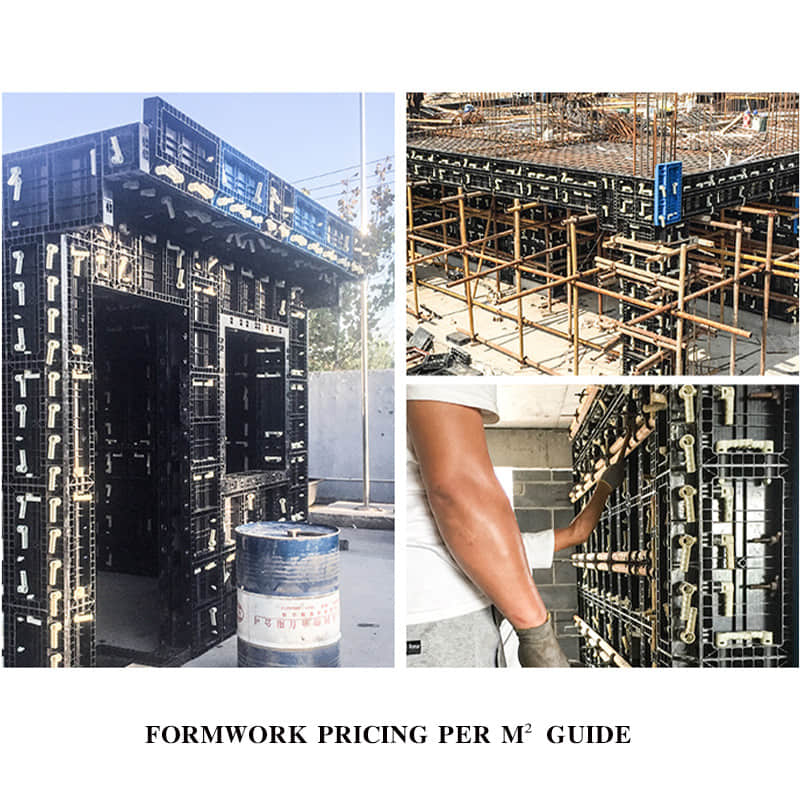
  • Formwork Pricing Per m² Guide
    Formwork Pricing Per m² Guide Dec 27, 2024
    Formwork Pricing Per M2 Guide Formwork Pricing Per m² is one of the most important indicators in building planning. Each new formwork has its distinct attributes related to cost-and-performance that shall avail its project of a set of considerations unique to the same. This blog will be providing the price range in dollars per m2 for all types of formwork, and material cost, labor cost, transportation, and storage costs will feature highly in assessing the appropriate type of formwork to be adopted for a project. This shall also ensure that for various projects-from residential units to bridges-there shall also offer a guideline for construction purposes and other practical advice with accurate costing facts and professional advice that will drive high performance on your project.       The Main Factors Affecting The Cost Of Formwork   The price of the formwork not only reflects the purchase cost. The cost of material, labor, transport, storage, and the reuse quotient influence the cost in the background. Each of the above factors would thus enable one to assess the total cost more accurately for the various different forms of formwork and choose from those based on project requirements.       Timber Formwork Cost Analysis Due to the versatility and low initial cost, timber formwork have a predominant use in small and short-term projects. In total, they cost billion rupees, or roughly $50-$100/m² . This cost aspect of wooden formwork is explained in detail: 1. Material cost The material cost of wooden formwork is usually $35-$80/m². 2. Labor costs Wooden formwork is easy to process and install, and the installation and removal costs are usually $10-$15/m² . 3. Shipping costs Wooden formwork is light, easy to transport, and inexpensive. The transportation cost is about $3-$5/m² . Compared with steel formwork and aluminum formwork, wooden formwork has more advantages in terms of economical transportation. 4. Storage costs Wood formwork has high requirements for storage conditions, especially in humid environments, and requires additional moisture protection. This increases storage costs by about $2-$3/m². Long-term storage may cause deformation or damage to the wood, so it is suitable for short-term use. 6. Reuse rate Wood formwork can usually be reused 4-6 times , making it ideal for small, one-off or low-budget projects. However, in high-frequency projects, its low reuse rate can lead to increased long-term costs. 7. Applicable scenarios Small construction projects such as residential and low-rise buildings. Disposable structures such as foundations or non-exposed concrete elements.     Steel Formwork Cost Analysis Steel formwork is a common option for big and high-strength projects because of its high strength, durability, and reusability. Total costs range from $60 to $120 per square meter. This is a detailed analysis of the steel formwork cost: 1. Material cost Steel formwork is more expensive due to its sturdiness and smooth surface, usually $40-$84/m². 2. Labor costs Steel formwork is heavy and complex to install, usually requiring professional technicians to install and remove, costing $10-$20/m² . 3. Shipping costs The weight of the steel formwork is a major factor affecting the shipping cost, which is usually $6-$10/m² . Shipping large quantities or over long distances may further increase the cost. Compared with wooden and plastic formwork, steel formwork is less economical to transport. 4. Storage costs Steel formwork needs to be stored in a moisture-proof and rust-proof environment to extend its service life. Storage costs are $4-$6/m². Although durable, steel formwork is prone to rust if stored in poor conditions, which affects its performance. 6. Reuse rate Steel formwork can usually be reused more than 50 times , which significantly reduces the average cost of use and increases its economy in long-term projects. 7. Applicable scenarios High strength concrete is used in structures like bridges, tunnels, and tall buildings. Large long-term projects also have economic advantages owing to their high recycling rate.     Aluminum Formwork Cost Analysis In the present day, aluminum formwork stands out among modern construction systems. Being lightweight, with a high reuse rate and great construction efficiency, its total cost ranges between $80-$150/m² . Here is the deeper analysis of aluminum formwork costs: 1. Material cost The material cost of aluminum formwork is relatively high , usually between $60-$120/m² . 2. Labor costs Aluminum formwork is lightweight and only requires a small number of people to complete the construction process. The labor cost is usually $8-$12/m² . 3. Shipping costs The weight of aluminum formwork is only about 1/3 of that of steel formwork, so the transportation cost is lower, generally $4-$6/m² . Its lightness and high durability have significant cost advantages in long-distance transportation. 4. Storage costs Aluminum formwork has extremely high corrosion resistance and oxidation resistance, and has a low storage cost of only $2-$4/m². Even in humid environments, the performance of aluminum formwork will not significantly decrease, thereby reducing storage management costs. 6. Reuse rate Aluminum formwork can usually be reused more than 200 times , which can significantly reduce the average cost of long-term projects and is the first choice for projects pursuing long-term cost-effectiveness . 7. Applicable scenarios High-rise buildings and residential projects are popular due to its lightness and efficient installation. Large projects, especially construction scenarios that require frequent disassembly and assembly.       Plastic Formwork Cost Analysis Lightweight, durable, highly reusable, and easy to clean plastic formwork is gaining acceptance in modern construction. Each m2costs around $70-$130. Detailed analysis of the cost of plastic formwork goes as follows: 1. Material cost Plastic formwork uses high-performance plastic , and the material cost is usually $50-$90/m² . 2. Labor costs Plastic formwork is designed as modular assembly, light and easy to install and disassemble, so the labor cost is low, generally $6-$10/m² . Compared with wooden formwork and steel formwork, the construction time is significantly reduced, further reducing labor costs. 3. Shipping costs Plastic formwork is lightweight, easy to stack and takes up little space, so the transportation cost is low, usually $3-$5/m² . For long-distance transportation projects, its lightness is a significant advantage. 4. Storage costs The weather resistance and corrosion resistance of plastic formwork make its storage cost low, generally $2-$3/m² . Even under open-air storage conditions, its performance will not be significantly reduced, and no special storage management measures are required. 6. Reuse rate Plastic formwork can usually be used more than 100 times . Compared with other formwork, its long-term use cost is significantly reduced, especially suitable for long-term or frequent disassembly and assembly construction projects. 7. Applicable scenarios Small and medium-sized projects such as residential buildings and industrial buildings. Long-term projects, especially those that require frequent template disassembly and assembly.       How To Choose The Right Formwork   In construction, the choice of formwork plays a key role in the quality, efficiency and cost of the project. Different formwork types are suitable for different construction needs. When choosing, you need to consider the following factors: Project size and type Project Budget Reuse requirements Construction conditions Duration requirements Storage and transportation conditions Environmental and sustainability considerations         When choosing formwork, you should combine project requirements, budget and construction conditions to maximize efficiency and cost-effectiveness. Small projects can choose wooden formwork or plastic formwork , while large projects are more suitable for steel formwork or aluminum formwork . By optimizing the formwork selection, you can not only effectively reduce the cost of formwork per square meter, but also improve construction efficiency and ensure the long-term economy and sustainability of the project.     FAQ What is formwork cost? Formwork costs are all costs associated with the formwork used to support and shape concrete in a construction project, including materials, labor, transportation, storage and maintenance. What are the economic advantages of highly reusable formwork?   Highly reusable formwork (such as aluminum formwork and plastic formwork) can significantly reduce the average cost in long-term projects, while reducing the frequency of replacement and maintenance, improving overall economics.     Related Articles Need Help Estimating Formwork Labor Cost.----REDDIT Formwork----WIKIPEDIA
  • Conventional Formwork Vs Aluminium Formwork
    Conventional Formwork Vs Aluminium Formwork Dec 24, 2024
    Conventional Formwork Vs Aluminium Formwork   Formwork is among the main supportive structural materials used in construction projects, and hence it has a direct bearing on the efficiency, quality and cost of construction. Various formwork systems can be adopted, among which conventional formwork and aluminum formwork are two common choices. Each of the formwork systems has certain advantages. There are unique advantages and disadvantages of both forms, and this also depends on the specific construction requirements and scales of projects. Knowing the very characteristics of the aluminum formwork and traditional will help the builders in a more needless manner in choosing appropriate choices at planning and implementation stages, thus making progress in building construction, cutting costs and ensuring quality. A long into the post to complete detailed comparative analysis of speed, cost, sustainability, quality, reusability, safety, etc., between aluminum formwork and conventional formwork, hoping to provide a closer perspective as to what to look for in either. guidance to help in making the right decision that meets the needs of your project.       What Is Conventional Formwork   Conventional formwork is mainly made from wood, plywood, moisture-resistant particle board, or steel.     Application Conventional formwork is used widely in building construction. It is mainly useful in residential buildings, bridges, and low-rise buildings. Wooden formwork can take care of curvilinear and slightly shaped structures. Steel formwork is best for concrete structures that need precision and great strength.     Advantage Wooden formwork: simple processing, strong adaptability, low price, and easy to make on site. Steel formwork: high strength, good durability, suitable for large-scale construction, and can withstand high pressure. Disadvantage Wooden formwork: easy to deform, short service life, and limited number of reuses. Steel formwork: heavy, expensive, and requires more equipment and labor for construction.     What Is Aluminum Formwork Aluminum formwork is a popular formwork used in the construction industry in recent years and is usually made of high-strength aluminum alloys. It provides a modern alternative to traditional methods    Applications Aluminum formwork is mostly used in large commercial buildings, residential projects and high-rise buildings, especially where precision, good surface quality and fast construction are required.   Advantage Lightweight: Aluminum formwork is lighter than steel formwork, making it easier to carry and install. Durable: It has good corrosion resistance and wear resistance, and can be reused more times. High precision: The surface is smooth and can ensure the fineness of the concrete structure. Save time: easy installation and fast construction. Disadvantage Higher cost: The initial investment of aluminum formwork is more expensive than conventional formwork. Transportation issues: Though light in weight, transport and storage require an adequate amount of planning.       Conventional Formwork Vs Aluminium Formwork   When choosing a formwork, in addition to considering the cost and availability of materials, it is also necessary to conduct an in-depth analysis of various aspects of performance, especially in terms of speed, cost, sustainability, quality, reusability, safety, etc. The following is a comparative analysis based on typical construction projects, combining common data and standards in the industry.   1. Speed Aluminum formwork : Installation time: Aluminum formwork is quick to install due to its modular and lightweight design. It only takes 1 to 1.5 hours to install one square meter of aluminum formwork on average, which is particularly suitable for construction projects that need to be completed efficiently and quickly. In some large projects, the installation speed can reach more than 200 square meters per day. Disassembly time: The disassembly time of aluminum formwork is shorter than that of conventional formwork, usually 0.5 to 1 hour per square meter, and it can be moved quickly. Conventional Formwork : Installation time: The installation of wooden and steel formwork is relatively slow. Wooden formwork needs to be cut and adjusted on site, and the average installation time is 2 to 3 hours per square meter. Although steel formwork is more stable than aluminum formwork, it is heavier and requires more labor, and the installation time is usually 1.5 to 2 hours per square meter. Disassembly time: Disassembly of wooden formwork encompasses an entirely different time scale. Wooden formwork usually takes from 1.5 to 2 hours for disassembly, while steel formwork needs from 1 to 1.5 hours for disassembly.   2. Cost Aluminum formwork : Initial cost: The initial investment in aluminum formwork is relatively high. Usually, the price per square meter of aluminum formwork is between $60-100 (depending on the region and manufacturer). For a 1,000 square meter project, the initial investment may reach $60,000 to $100,000. Long-term costs: Despite the high initial investment, aluminum formwork is extremely durable and reusable. After multiple uses, the cost per use is greatly reduced, and the average cost per use can be reduced to 5-10 US dollars per square meter. If the aluminum formwork is used more than 200 times, the average cost can be reduced to 1-2 US dollars per square meter. Conventional Formwork : Wooden formwork: The initial cost of wooden formwork is low, usually $5-10/m2. For a 1,000 m2 project, the initial investment in wooden formwork is only $5,000 to $10,000. However, wooden formwork can only be used 4 to 6 times and needs to be replaced after each use, so the long-term cost is high. Steel formwork: The initial cost of steel formwork is lower than that of aluminum formwork, about $50-80/m2, but due to its heavy weight and limited number of uses, the long-term cost is also higher. Steel formwork can usually be used 50 to 100 times, so the cost per use is between $10 and 20/m2.   3. Sustainability Aluminum formwork : Aluminum formwork is highly sustainable, and the material itself is recyclable. Aluminum formwork has a long service life and can usually be used more than 200 times. After each use, the aluminum formwork can still maintain high strength and an intact condition, reducing resource waste. Aluminum has a high recycling rate and can be reused after recycling, reducing the impact on the environment. Conventional Formwork : Wooden formwork is poor. Wood can usually only be used 4-6 times, and wooden formwork will have a certain degree of loss after each use, and cannot be reused for a long time. In addition, the disposal of wooden formwork will involve the consumption of forest resources and environmental pollution. Steel formwork is slightly less sustainable than aluminum formwork, but it is more sustainable than wood formwork because it can be used multiple times ( 50-100 times ). Steel formwork itself can be recycled, but it is heavier and uses more energy than aluminum formwork.   4. Quality Aluminum formwork : Aluminum formwork has high precision and can provide a smooth concrete surface. The corrosion resistance of aluminum alloy material makes the formwork less likely to deform during construction, thus ensuring the quality of the concrete structure. Due to the precise design of the aluminum formwork, the concrete is of high precision during construction, making it suitable for high-demand construction projects such as high-rise residential buildings and commercial buildings. Conventional Formwork : Wooden formwork is prone to uneven surfaces and strong water absorption, which may affect the surface quality of concrete. Especially in a humid environment, wooden formwork is prone to deformation, resulting in defects in the concrete structure. Steel formwork is better, but due to its heavy weight, it may cause certain precision errors during installation, especially when splicing on site.   5. Reusability Aluminum formwork : Aluminum formwork is highly reusable, and each formwork can be used more than 200 times, greatly reducing the cost of material replacement during long-term construction. The aluminum formwork is very easy to disassemble, clean, and maintain, can be efficiently reused, and is suitable for large-scale reuse. Conventional Formwork : Wooden formwork has poor reusability and can generally only be used 4 to 6 times. In addition, damaged parts need to be inspected and replaced after each use, which increases the cost of repair and replacement. Steel formwork is more reusable than wooden formwork and can usually be used 50 to 100 times, but it is also limited by factors such as usage conditions and maintenance conditions.   6. Security Aluminum formwork : The aluminum formwork is light in weight, which reduces the difficulty of manual handling during installation and disassembly, and reduces the risk of worker injury. Due to its fine structure, the aluminum formwork has high stability and is not easily deformed or damaged during disassembly. Conventional Formwork : Wooden formwork is light in weight and easily damaged during operation, which may increase safety hazards during construction. Steel formwork is heavy and requires more equipment for handling and operation, which increases the safety risks during operation.     The Real Cost Comparison: Initial vs. Long-Term ROI   A common misconception is that conventional formwork is always cheaper. While the initial purchase price of an aluminium system is higher, a comprehensive cost analysis reveals a superior long-term Return on Investment (ROI) for aluminium. Aspect Conventional Formwork (Timber/Plywood) Aluminium Formwork System Initial Cost Low. Material is inexpensive and readily available. High. Custom, high-strength aluminium alloy. Reusability Limited (20–30 times). Prone to warping, damage, and wear. High (200–300+ times). Highly durable and non-corrosive. Labor Cost High. Requires more hours and highly skilled labor for fabrication and maintenance. Low. Reduced hours and lower-skilled labor required for assembly/stripping. Waste & Safety High material waste; higher risk of on-site injury from heavy lifting and sharp edges. Minimal material waste; lightweight design enhances site safety and reduces fatigue. Long-Term ROI Low, due to high replacement costs and slow cycle times. High, due to amortization over hundreds of uses and significant time savings.     In Conclusion   Through detailed comparative analysis, aluminum formwork has shown obvious advantages in speed, cost, quality, reusability, safety, and sustainability, and is particularly suitable for large-scale, high-precision, and high-reuse projects. Although its initial cost is higher, it has a good long-term return on investment and is ideal for construction projects that require high construction quality and speed. Conventional formwork (wood formwork and steel formwork) has certain advantages in cost control and is suitable for projects with lower budgets or smaller scales. Although the initial cost of wooden formwork is low, its reusability is poor, and the long-term cost is high; steel formwork provides a good compromise in reusability and quality. In general, choosing the right formwork is not a simple cost consideration, but a comprehensive assessment of the project's scale, budget, construction requirements, environmental conditions, and construction period.       FAQ   Why is aluminum formwork more expensive than conventional formwork? The initial cost of aluminum formwork is higher, mainly because it uses high-strength aluminum alloy materials, and its sophisticated design and manufacturing process require more costs. In addition, the transportation, storage, and maintenance of aluminum formwork are also more complicated than conventional formwork. However, the long-term use and reusability of aluminum formwork greatly reduce the cost of a single construction, so it has a higher cost-effectiveness in the long run.   How reusable are aluminum formworks? Aluminum formwork is highly reusable. Typically, aluminum formwork can be reused more than 200 times, and each time it is used, the formwork still maintains a high-quality standard. This makes aluminum formwork very economical and sustainable in long-term projects. Traditional wooden formwork is usually only used 4-6 times, while steel formwork can be reused 50-100 times.     Read More Conventional Formwork-Established Formwork Methods --- RESEARCHGATE Types Of Modern Construction Formwork --- SLIDESHARE
  • Scaffolding Hazards: Identifying and Preventing Construction Risks
    Scaffolding Hazards: Identifying and Preventing Construction Risks Dec 24, 2024
    Scaffolding is an indispensable aspect of many construction assignments, supplying access support to workers in currently inaccessible areas. With that being said, how is scaffolding dangerous? Scaffolding is, by all means, beneficial for safety and efficiency on the construction site, but it can pose potential threats to workers when used or maintained improperly. With this awareness of the hazards surrounding the construction environment, precautions can definitely reduce the risks of accidents and injuries.         Falls From Height constitute The Vast Majority of Scaffolding Accidents     Falls are the leading cause of death on construction sites. Scaffolding is a primary source of this risk. These falls can occur due to: Missing or improper guardrails: The toprail, midrail, and toeboards are critical for preventing workers from falling off the platform. Lack of personal fall arrest systems: When platforms are not fully planked or guardrails are not feasible, workers must use personal fall arrest systems (PFAS). Unstable or incomplete platforms: Gaps in planking, overloaded platforms, or shifting planks can lead to trips and falls.   Preventive Measures: Ensure guardrails, midrails, and kickboards are always attached and that a fall protection system exists. Ensure scaffolding is cupped on a solid and flat surface. Employ base plates or mud sills to sufficiently secure scaffolding in case of necessity. Workers are trained in scaffolding use and fall protection measures, along with proper and regular safety inspections and supervision.         Structural Failure Hazard: Scaffold Collapse     A complete or partial collapse of a scaffold is a nightmare scenario. It can be caused by: Improper assembly or disassembly: Failure to follow the manufacturer's instructions or the project’s specific design plans can compromise the scaffold's stability. Inadequate foundation: Scaffolding must be erected on a stable, level base. Soft ground, debris, or a lack of base plates can lead to a collapse. Overloading: Exceeding the maximum intended load can put immense stress on the structure, causing it to buckle or fail. Damage to components: Damaged frames, ties, or braces can weaken the entire system.   Preventive Measures: Follow the manufacturer's specifications and obey all rules and regulations concerning the scaffold assembly. Check the scaffolding before each shift, remove broken or worn parts. Give particular attention to connections, joints, and brackets. Avoid overloading the scaffolding. The load rating of the scaffold should be marked and conspicuously adhered to.         Falling Objects: Hazards from Tools and Materials     Failure to secure tools, materials, or debris, or having an inconsistent scaffold with unnecessary items, exposes those below to the risk of injury from falling materials from the scaffolding on them.   Preventive Measures: Tools, equipment, and materials should remain secured at all times when not in use. Ties or tool lanyards should be used to avoid dropping equipment. Debris nets or catch platforms can be installed below the scaffold so that any falling objects can be captured. PPE for ground workers will include hard hats.         Improper Scaffolding Use: Lack of Training and Awareness     Unskilled and uneducated laborers with little or no training in scaffolding take the next step to wildly misusing scaffolding on site, creating all kinds of unsafe situations starting from improper assembly, going through safety protocol violations, and completely disregarding proper scaffolding safety gear.   Preventive Measures: Make arrangements to provide proper training for all personnel engaged in the erection, movement, or use of scaffolding in the safe use of constructing scaffolding, awareness about potential hazards, and correct usage of fall protection. Help to make sure that the workers are reminded before starting work about safe scaffolding practices and awareness of hazards through safety briefings and refresher training.         Poor Scaffolding Maintenance: Wear and Tear Over Time   Exposure to open elements, usage, or some physical accident may lead to damage. The integrity of scaffolding always deteriorates if regular maintenance is ignored, and can lead conjuring up an accident.   Preventive Measures:  Regularly inspect scaffolding, including the condition of planks, poles, couplers, and brackets. Any damaged part should be replaced right away.  In the event of sudden extreme weather, scaffolding that must have been used outdoors should be cleaned and inspected properly after the severe weather to ensure it is still fit for use.         Inadequate Scaffold Access: Climbing Hazards     The PE workers climbing on scaffolding or going to the respective floors without access will lead to falls and injuries.   Preventive Measures: The employer has to provide safe and designated means for workers to access different levels in scaffolding, like ladders or stairs. SCaffolding frames or pipes must not be used for climbing by workers unless they are specifically designed for the provision of safe access.         Electrical Hazards: Contact with Wires   Scaffolding set up near electrical wires poses a deadly electrical threat. Scaffolding constructed too close to electrical wires or a lack of awareness about electrical safety would cause workers to, out of ignorance, contact wires and experience electric shocks.   Preventive Measures: Extend scaffolding a safe, considerable distance from overhead wires; normally at least 10 feet from wires. Use insulated tools and wear appropriate gloves when working close to any electrical hazards. Avoid using metallic scaffolding materials near electrical wires. In a case where metal scaffolding is used, alternate non-conductive materials are recommended or proper grounding for scaffolding must be ensured. Train workers in electrical safety, enabling them to recognize and safely avoid hazards.         Weather-Related Hazards   Rain, snow, or ice weather creates a risk of slipping and falling. Strong winds can make scaffolding unstable, posing a danger to workers and the scaffolding itself.   Preventive Measures: Use non-slip decking material to alleviate slips. Do not work on scaffolding in inclement weather, such as wind and rain. Fasten scaffolding in place and use ties or guy ropes to stabilize it in windy conditions. Clear snow or ice from platforms before commencing work.         Uneven or Weak Foundations   Scaffolding erected on uneven ground or soft soil may tilt, sink, or collapse, endangering workers and bystanders.   Preventive Measures: Place the scaffold on a solid base plate or mud sill to evenly distribute the weight. Assess the ground conditions to ensure it can support the weight of the scaffold and its load. Use adjustable outriggers to compensate for uneven surfaces and keep the platform level. Inspect the scaffold foundation regularly, especially after environmental changes such as rain.         Exposure to Hazardous Materials   Workers using scaffolding for tasks such as painting, welding, or cleaning may be exposed to hazardous materials such as paint fumes, dust, or chemicals.   Preventive Measures: Equip workers with masks, respirators, gloves, and goggles depending on the specific hazards they may face. Install fans or air filters to improve airflow and reduce the concentration of airborne particles. Use sensors to measure and control the presence of hazardous gases or particles in the work environment.         Scaffolding Removal Hazards   The removal process can be dangerous due to the risk of falling components, loss of scaffolding stability, or improper material handling.   Preventive Measures: Use a systematic approach to scaffolding removal, working from the top down. Train workers to ensure they understand the removal process and are aware of the risks involved. Workers wear gloves, helmets, safety belts, and special tools for demolition. Remove braces or ties to maintain scaffolding stability only when support is no longer required. Limit access to the area beneath the scaffolding to prevent injuries from falling components.         Conclusion   Though scaffolding involves several risks, it is something indispensable for building construction. With an appropriate understanding of the possible hazards surrounding scaffolding and the precautionary measures taken accordingly, incorporating regular training, inspections, and compliance with scaffolding safety regulations will continue to help reduce risks and protect someone working on the site. Remain vigilant, keep safe, and remember that in situations of working at height, safety always comes first.       FAQ   What are the regulations regarding scaffold height and stability? Scaffolds over 10 feet high require fall protection systems. The scaffold must have a height-to-base width ratio not exceeding 4:1 unless tied or braced.   What training is required for scaffolding use? Workers must be trained on proper scaffold setup, hazard identification, and fall protection systems. Training must also cover load limits and emergency procedures.   Are there specific guidelines for scaffold use in bad weather? Scaffolding work should stop during strong winds, heavy rain, or ice formation. Inspect scaffolding after weather events to ensure it remains safe for use.     Read More 8 Scaffolding Hazards to Consider ——Scaffolding Solutions Scaffolding Hazard And Safety Practices—Canada Safety Training  
1 2 3 4 5 6 7 8 9 10 11 12 13

A total of13pages

Leave a Message
If you are interested in our products and want to know more details, please leave a message here, we will reply you as soon as we can.
Submit

Need Help? Chat with us

Leave a Message
If you are interested in our products and want to know more details, please leave a message here, we will reply you as soon as we can.
Submit

Our hours

Mon 11/21 - Wed 11/23: 9 AM - 8 PM
Thu 11/24: closed - Happy Thanksgiving!
Fri 11/25: 8 AM - 10 PM
Sat 11/26 - Sun 11/27: 10 AM - 9 PM
(all hours are Eastern Time)

Home

Products

contact